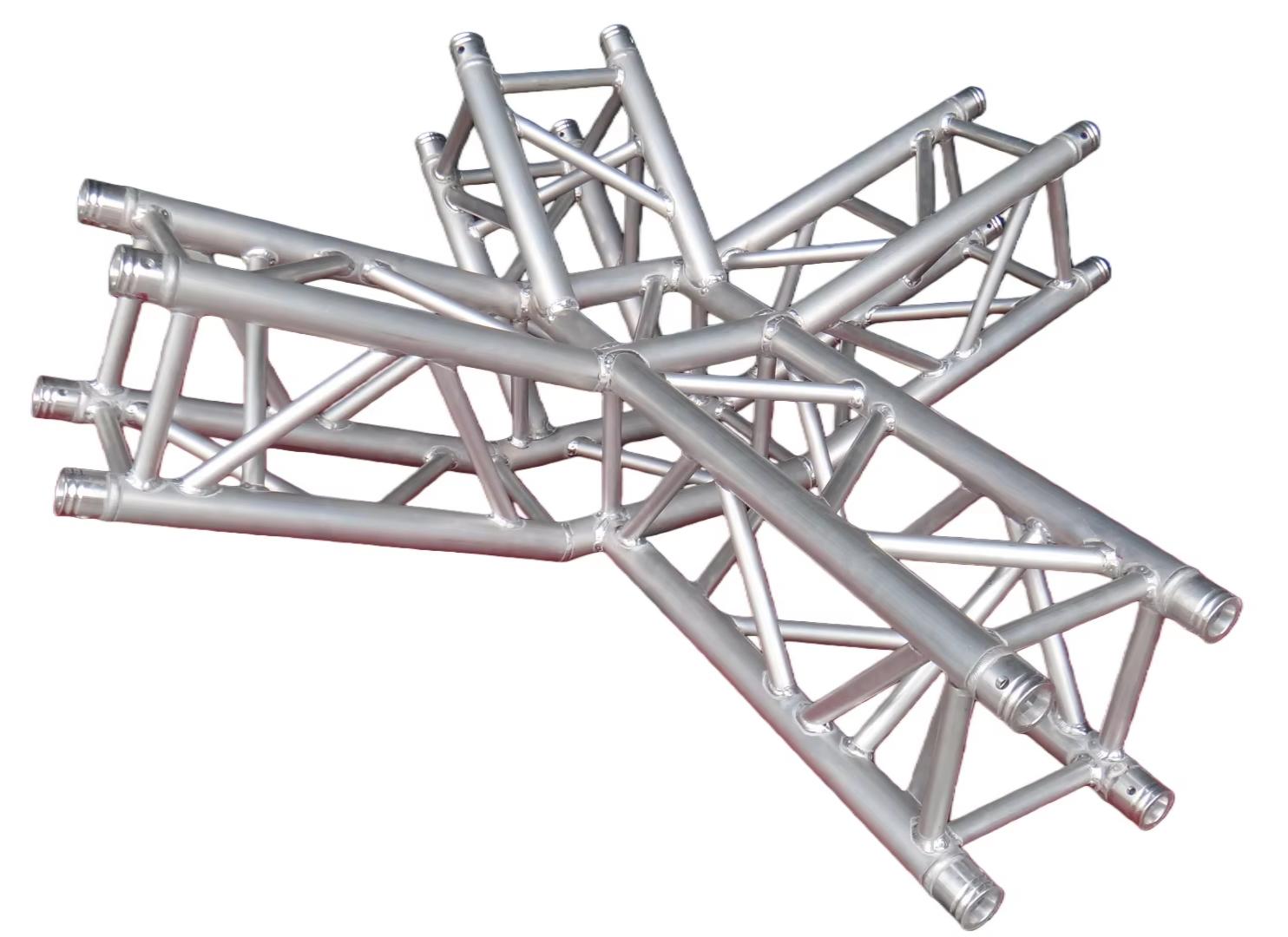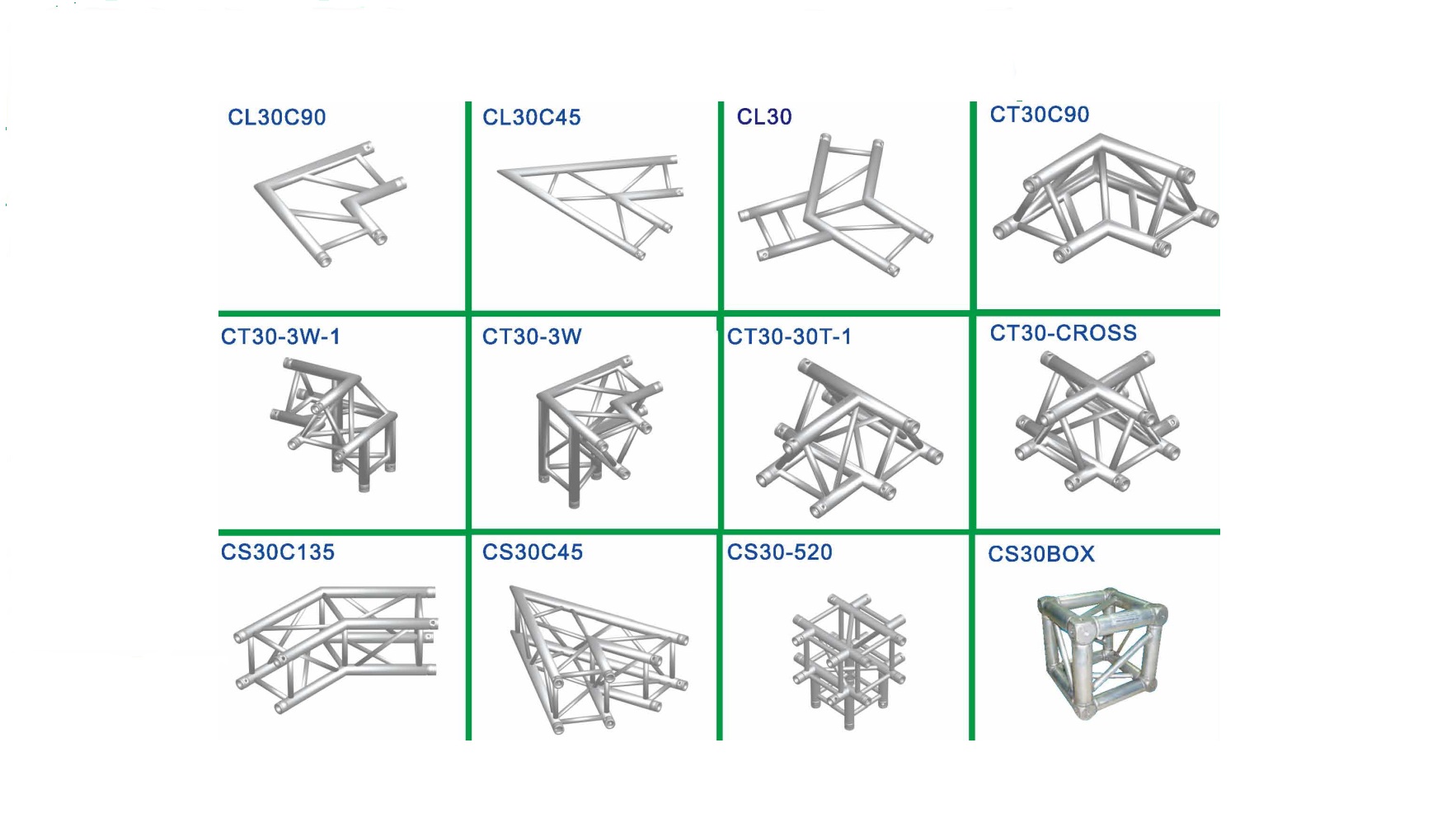
A Case-Oriented Structural Interpretation in 290mm Truss Systems
Introduction
In modular truss engineering, discussions often revolve around span capacity, loading charts, or material grades. Connectors are typically mentioned only when specifying configuration.
However, in practice, structural behavior is rarely governed by members alone. The decisive factor is often how nodes organize force flow, especially when geometry becomes three-dimensional.
Instead of classifying connectors by type, this paper examines them through real-world structural scenarios. Each case highlights how specific node geometries influence load transfer, stiffness distribution, and assembly performance within a 290mm truss system.
Case 1: Rectilinear Exhibition Booth Frame
Planar Stability vs. Spatial Closure
Scenario:
A 6m × 6m exhibition booth with 3m height, primarily orthogonal geometry, minimal roof load.
Common Node Selection:
In early-stage layouts, planar connectors are sufficient to define perimeter and cross-grid structure. Axial forces remain largely within vertical and horizontal planes.
However, field installations frequently reveal a subtle issue: torsional drift during lateral loading (crowd pressure, suspended light fixtures).
Why?
Because planar nodes maintain in-plane continuity but do not create a three-dimensional load loop. Without spatial closure, the structure behaves as interconnected frames rather than a unified volume.
Engineering Adjustment:
Introducing limited spatial nodes such as:
at upper corners transforms the system from a planar grid into a spatial box. Torsional stiffness increases disproportionately compared to the number of added connectors.
Observation:
Even in seemingly simple booth structures, node dimensionality—not member size—often governs stability.
Case 2: Stage Portal with Cantilever Lighting Truss
Managing Eccentric Load Paths
Scenario:
A stage portal where horizontal truss arms extend forward to carry lighting rigs.
The cantilever introduces eccentric load, producing torsion at the junction between vertical tower and horizontal beam.
Critical Node Locations:
Upper tower intersection
Cantilever base junction
Using only standard 4-way planar nodes at these intersections typically leads to visible rotational deflection.
Structural Intervention:
Substituting the junction with:
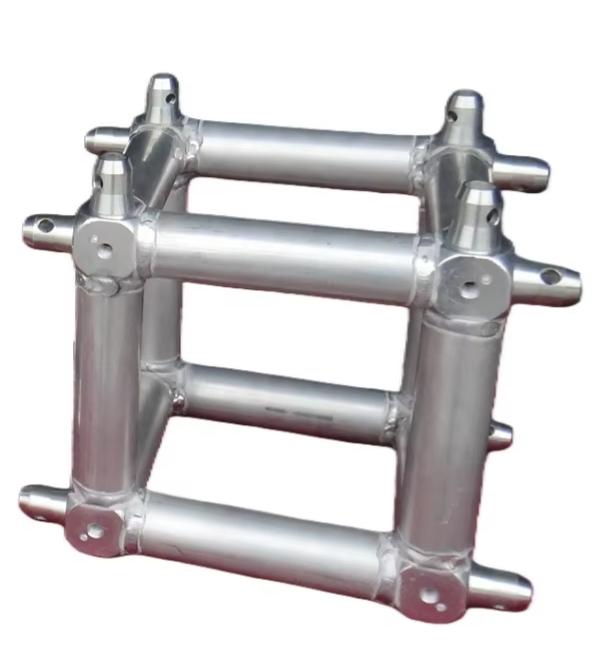
6-Face Connector
or at minimum:
allows axial forces to redistribute along multiple spatial axes. The additional directional engagement converts torsional demand into axial load sharing across members.
Field Insight:
In cantilever systems, the connector must “absorb” rotational intent. If the node geometry does not allow multi-axis force participation, bending develops at unintended locations.
Case 3: Dual-Pitch Roof Structure
Axial Redirection on Inclined Planes
Scenario:
An outdoor event roof with two symmetrical slopes meeting at a ridge.
Gravity loads resolve into axial compression along inclined members. At ridge and eave zones, force vectors change direction significantly.
Primary Connectors Used:
4-Way Custom Roof Truss Connector (ridge intersection)
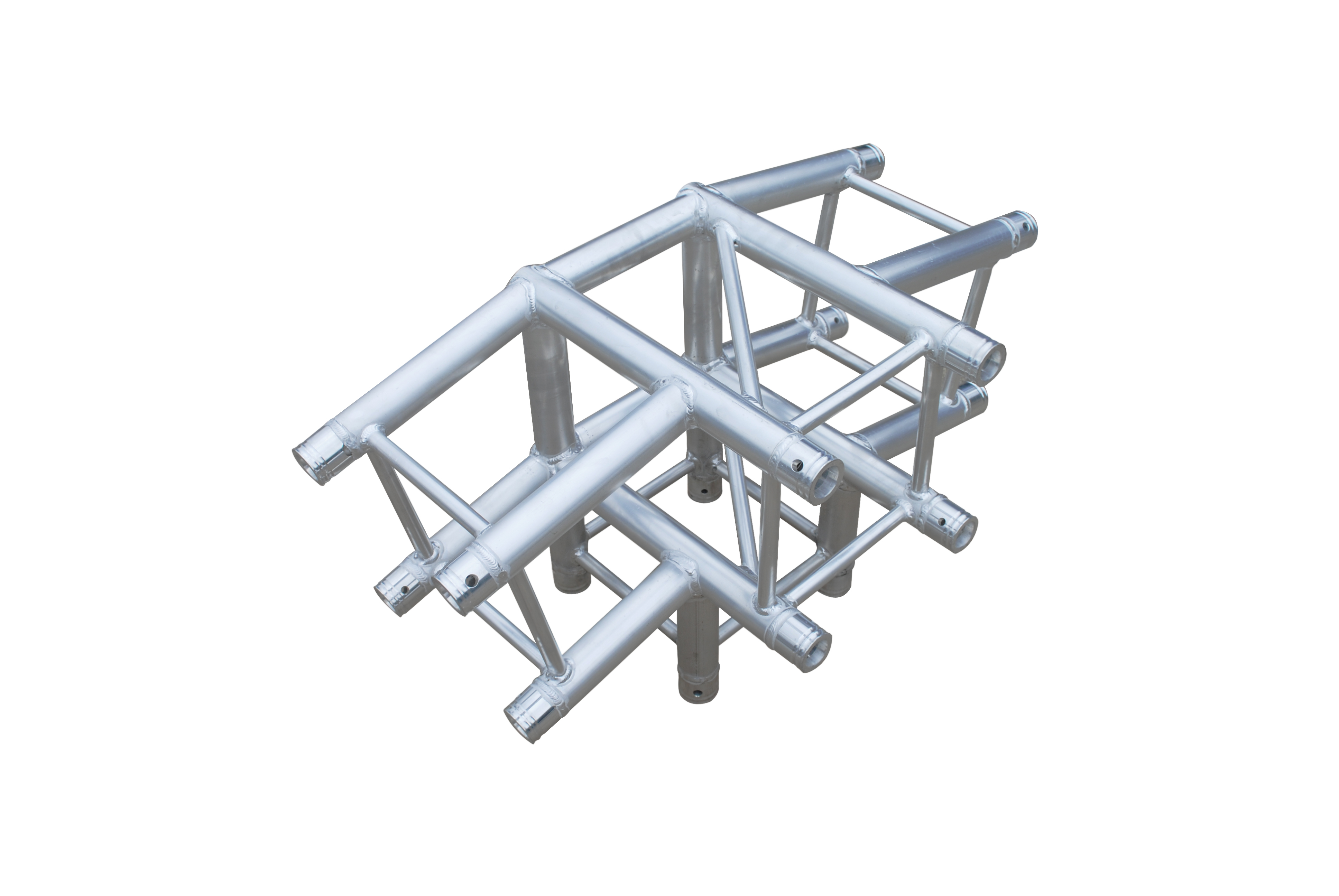
4-Way Roof Top Truss Corner
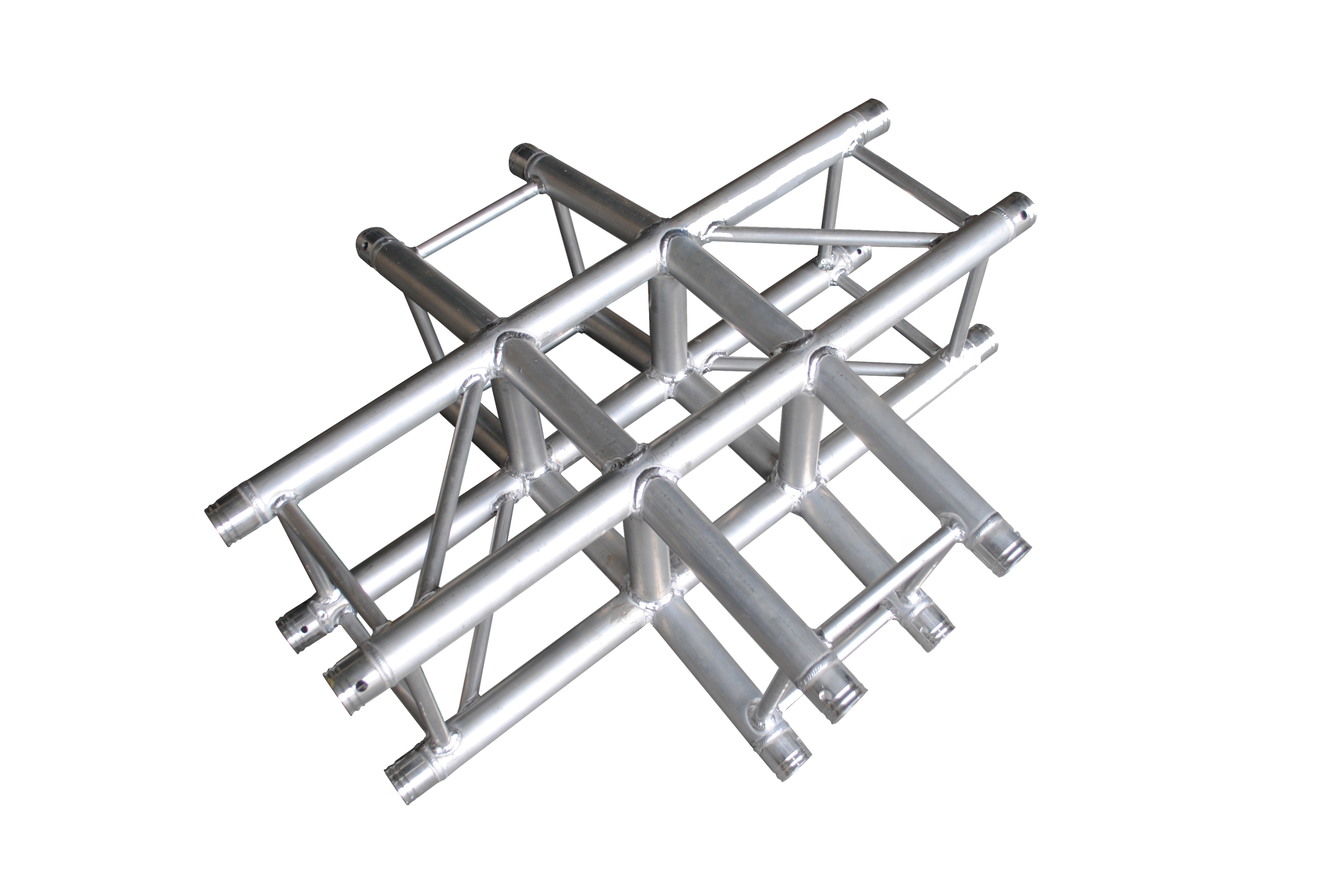
2-Way Custom Incline Roof Corner (slope transitions)
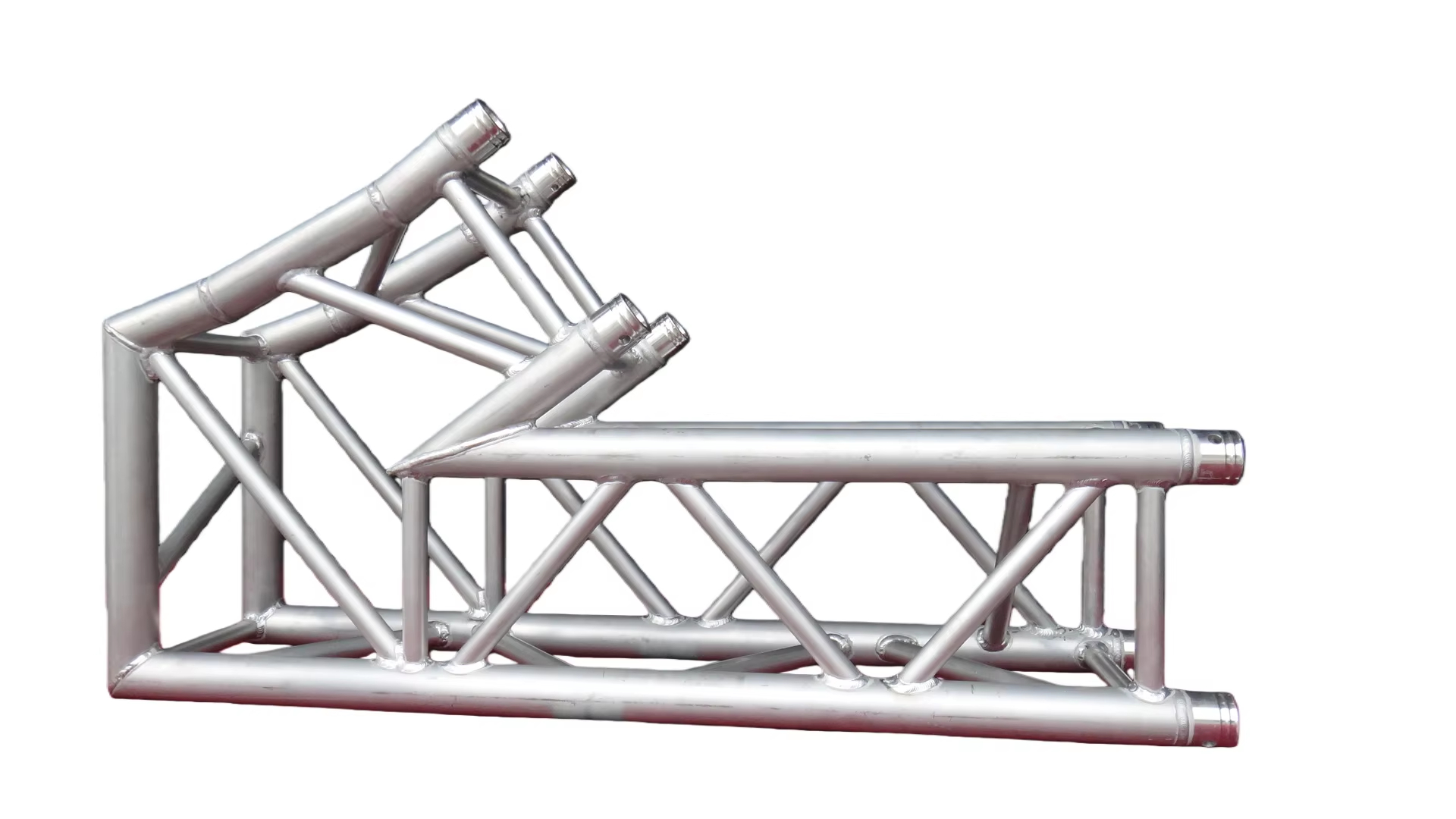
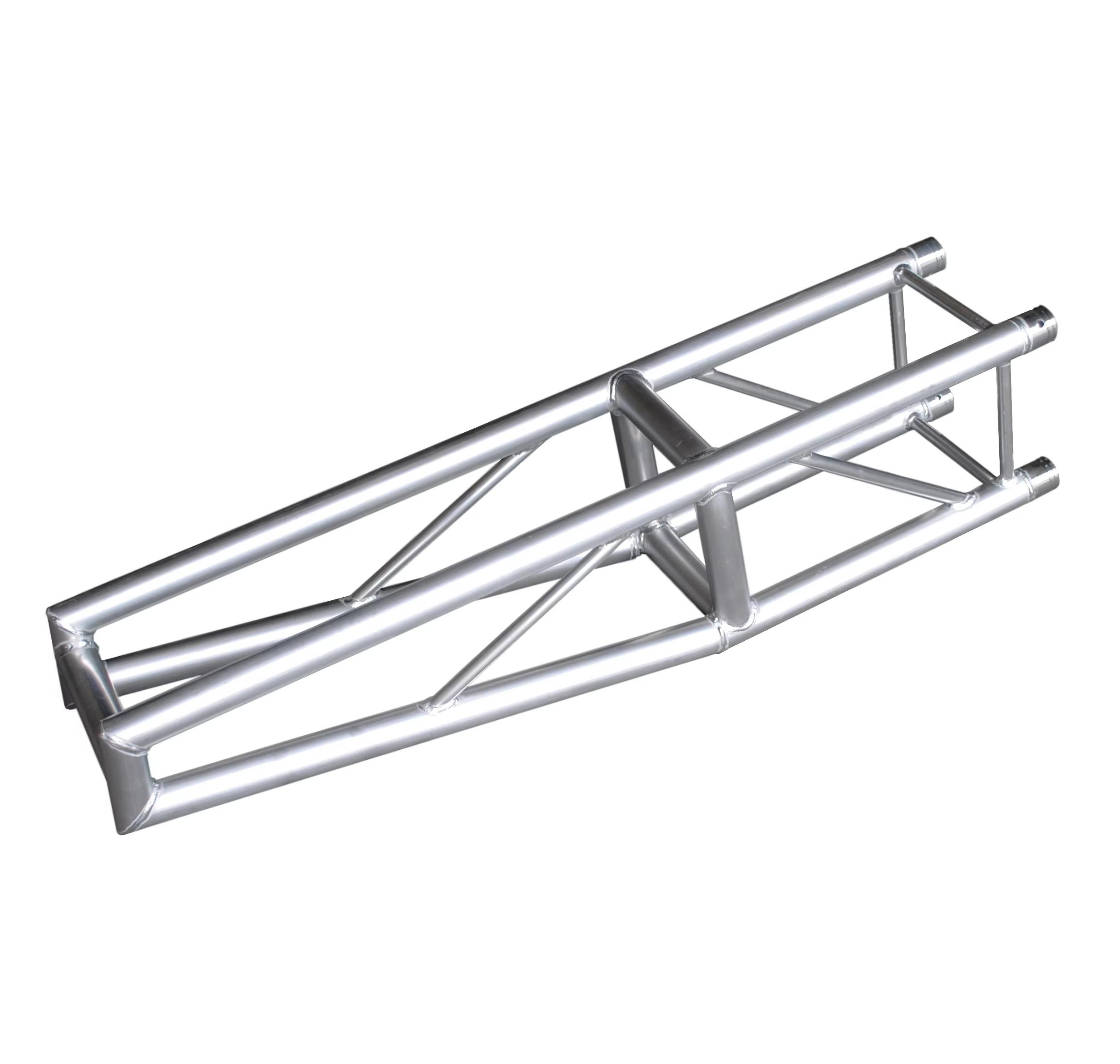
Lower Inclined Plane Truss (lower junction zones)
The ridge connector must balance opposing axial forces from both slopes. Any geometric misalignment introduces secondary bending.
At lower slope intersections, vertical reaction forces accumulate. Here, maintaining axial alignment between horizontal support and inclined plane is structurally critical.
Observed Failure Mode in Poor Design:
If a planar connector is used instead of a roof-specific node, moment transfer occurs at the interface. Over time, joint fatigue or bolt loosening may appear.
Engineering Principle:
Inclined-plane connectors exist to preserve axial integrity during vector transformation. They are not aesthetic variations; they prevent bending at geometric transitions.
Case 4: Multi-Level Stage Tower
Vertical Load Stacking and Stiffness Gradient
Scenario:
A 9-meter tower with intermediate platforms supporting LED panels.
Vertical compression increases toward the base. Simultaneously, wind load induces lateral shear and torsion.
Connector Strategy:
Upper levels: 5-Way Standard Truss Corner
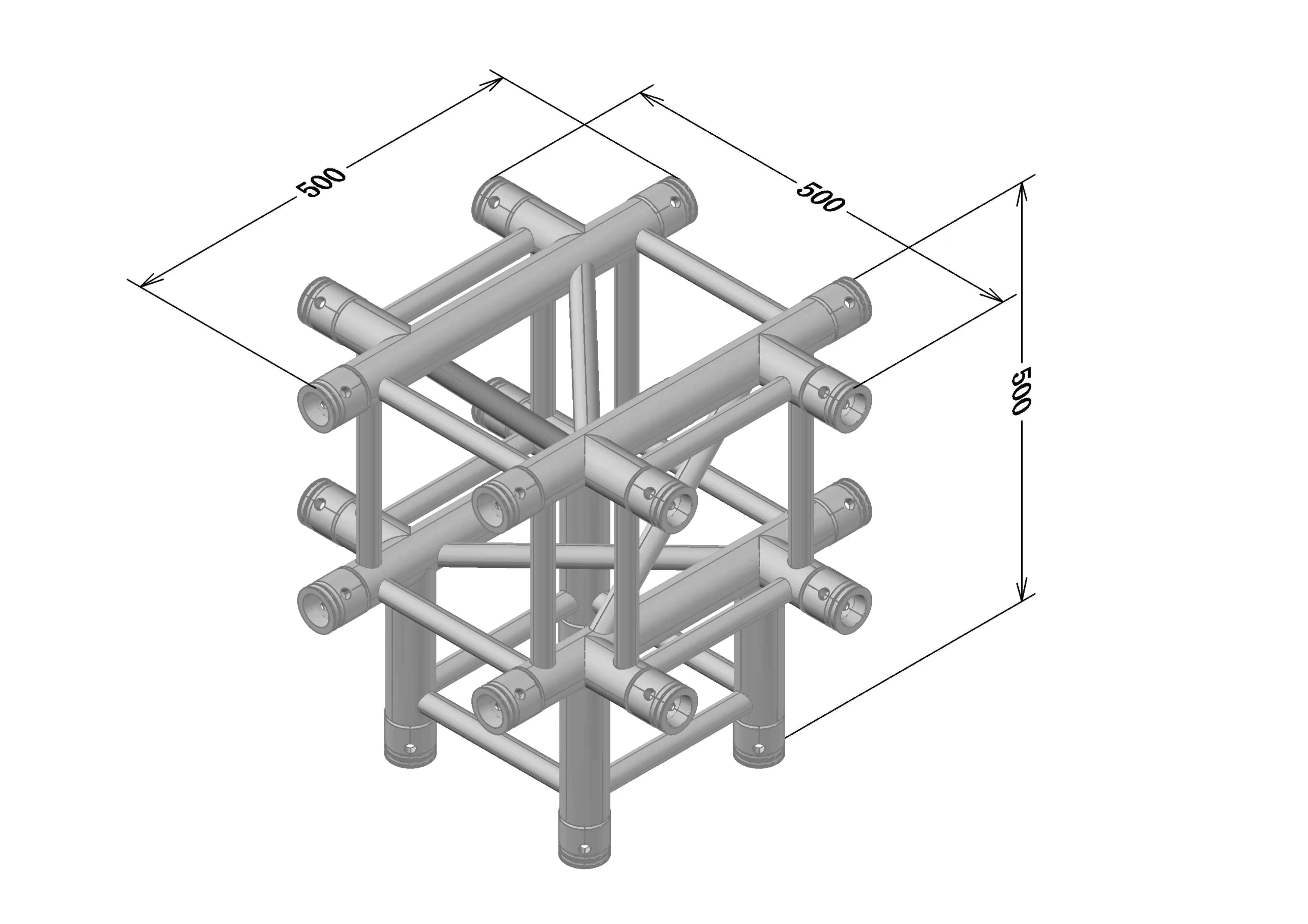
Mid-level intersections: Standard 4-Way Truss Corner
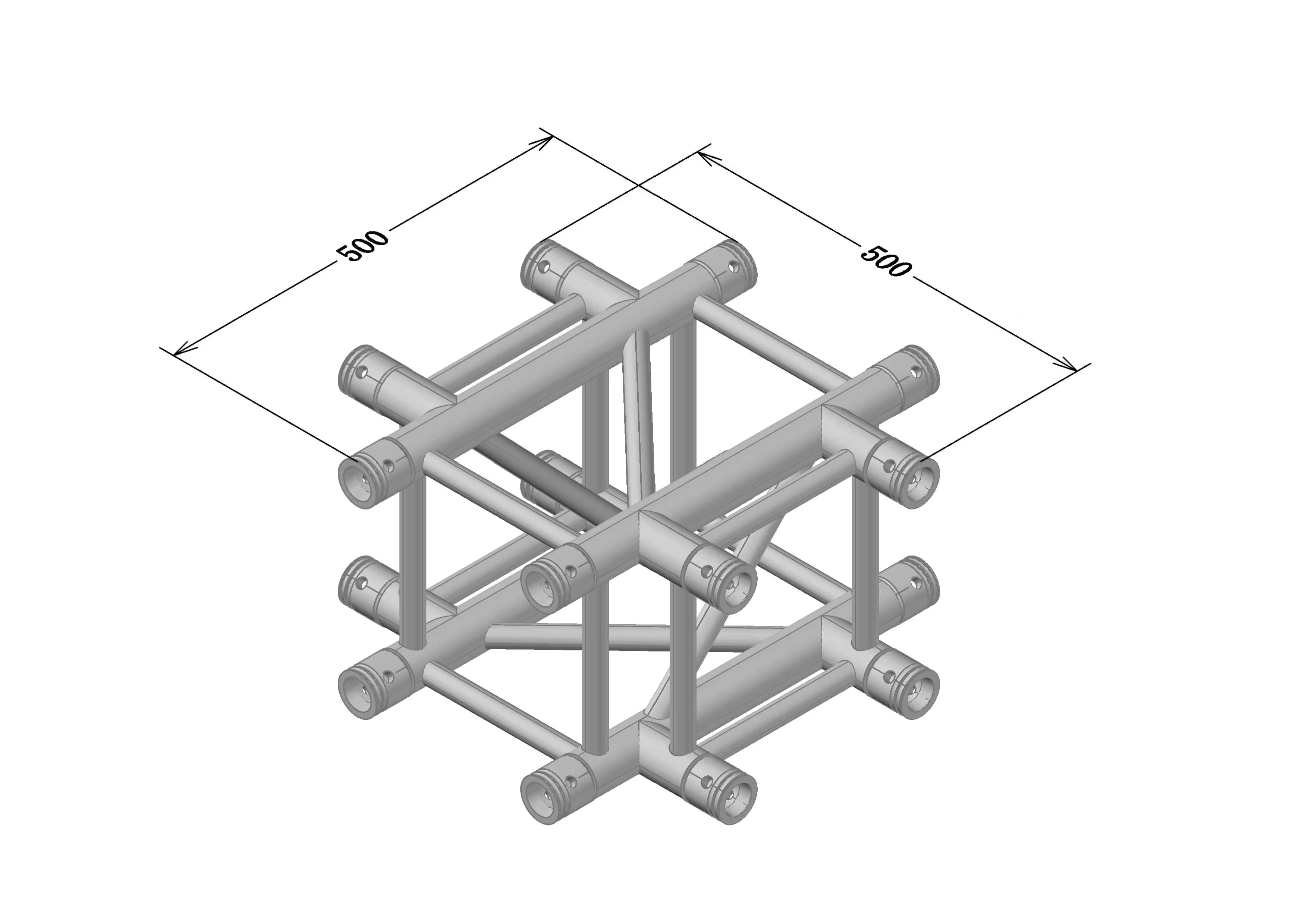
Base reinforcement: 6-Face Connector
The reasoning is hierarchical.
At upper levels, loads are lighter, and spatial continuity is sufficient.
Mid-level planar reinforcement maintains grid consistency.
At the base, where compressive force and torsional demand converge, six-directional connectors distribute forces more evenly into foundation supports.
Field Observation:
Uniform connector distribution across height often produces uneven stiffness behavior. Designing stiffness gradient through connector selection yields more predictable deflection patterns.
Case 5: Angled Architectural Installation
Non-Orthogonal Geometry and Asymmetric Force Flow
Scenario:
A custom scenic structure with 60° and 120° intersections.
Standard orthogonal connectors are unusable.
Connector Applied:
Unlike standard nodes, custom-angle connectors define geometry first and force path second.
In such configurations:
Axial forces are no longer symmetrical
Lateral stiffness varies by direction
Torsional effects become dominant under dynamic load
Design Consideration:
Additional bracing or spatial nodes (e.g., 5-way or 6-face connectors) should be introduced at strategic points to compensate for asymmetry introduced by non-right angles.
Custom geometry increases visual impact—but also structural complexity.
Structural Patterns Across All Cases
Analyzing these applications reveals consistent patterns:
1. Dimensional Upgrade Improves Stability
Transitioning from planar to spatial nodes significantly enhances torsional performance.
2. Roof Systems Are Node-Sensitive
Inclined connectors directly affect whether forces remain axial or convert to bending.
3. Base Zones Require Highest Node Capacity
Lower sections of towers or roof supports experience force convergence; multi-directional nodes perform best here.
4. Geometry Dictates Force Logic
Custom angles alter stiffness distribution. Connector placement must anticipate this redistribution.
Engineering Implications for 290mm Systems
Within 290mm truss assemblies:
Member capacity is typically sufficient for moderate spans.
Structural vulnerability more often originates at node configuration.
Strategic use of 6-directional connectors reduces torsional drift without increasing member size.
Roof transitions should always employ geometry-specific connectors.
In many field projects, improving connector logic has a greater structural impact than increasing truss section.
Conclusion
Through practical scenarios, one principle becomes clear:
Connectors determine structural behavior.
Planar nodes define boundaries.
Spatial nodes create volume.
Roof nodes manage vector transformation.
Custom angle nodes redefine geometry itself.
In modular truss engineering, structural intelligence is embedded at the node level. Understanding when and why to deploy each connector configuration is essential for building stable, efficient, and predictable 290mm truss systems.
The truss member carries the load.
The connector decides how that load travels.
That distinction is subtle—but structurally decisive.