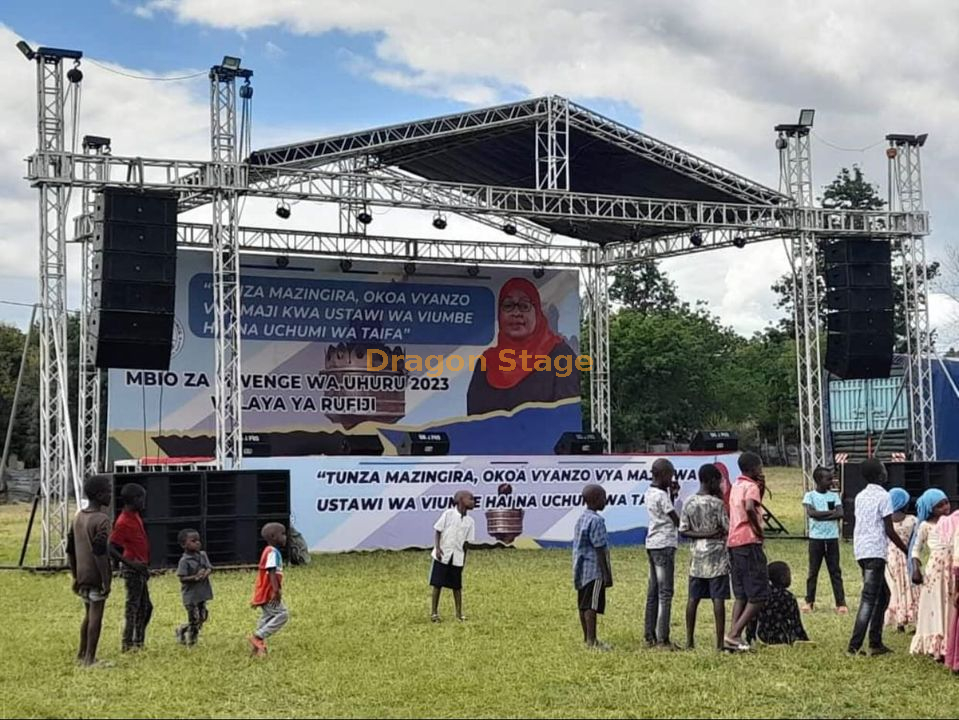
What is truss design and configuration?
Truss design and configuration refers to the process of selecting the correct truss system type, structure layout, load capacity, and connection method to safely support lighting, LED screens, audio systems, and stage elements for events, exhibitions, and construction applications.
A proper truss configuration combines structural engineering principles, material selection, and application requirements to ensure safety, efficiency, and installation feasibility.
The first step in truss design is defining the size and environment:
For large outdoor systems, consider:
Roof Truss System
For lighting-focused setups:
Lighting Truss System
For LED screen structures:
LED Stage Truss System
Every truss system must be designed based on load:
See full engineering method:
Load Analysis for Modular Stage Systems
Safety standards:
Safety Standards & Engineering Constraints
Different applications require different systems:
Layher is typically used when aluminum truss is not sufficient for load or structural complexity.
There are 3 main configurations:
Compare systems:
LED Ground Support vs Hanging System
Two key decisions:
Material comparison:
Aluminum Material Guide for Truss Systems
Engineering comparison:
Welding vs Bolted Connection
| System Type | Material | Load Capacity | Installation | Best Use |
|---|---|---|---|---|
| Aluminum Truss | Aluminum | Medium | Fast | Lighting, stage |
| Roof Truss | Aluminum | High | Medium | Outdoor events |
| LED Truss | Aluminum/Steel | Medium | Medium | LED display |
| Layher System | Steel | Very High | Medium | Stadium, heavy structure |
It depends on load, span, and application. For lighting events, aluminum truss is sufficient. For heavy structures, Layher systems are recommended.
Ground support systems are the safest for most events, but proper load calculation and installation are essential.
Detailed comparison:
Steel vs Aluminum Structural Comparison
Example:
290mm Spigot Truss System
The stage is the space provided in a theatre for the actors to perform, which allows the audience to focus on the actors' performance and obtain the desired viewing effect. The stage usually consists of one or more platforms. The product we are introducing today is related to the stage, it is the st
Read More
The exact process of assembling and disassembling a lighting truss will depend on the specific type of truss being used and the equipment involved. However, here is a general guide to assembling and disassembling a lighting truss:Preparation: Before assembling or disassembling a truss, make sure you
Read More
Stage trusses can be used to set up lighting racks at a party, support a tent during a backyard wedding, and assist with the structural support for a booth at an event. It will significantly increase the cost of building a stage without trusses. A lot of time consumes a lot of resources, but it also
Read More
A lighting truss is a structure made of aluminum or steel tubing that is used to support lighting fixtures and other equipment for events such as concerts, stage performances, and exhibitions. Lighting trusses are designed to be strong, durable, and lightweight, making them easy to transport and set
Read More