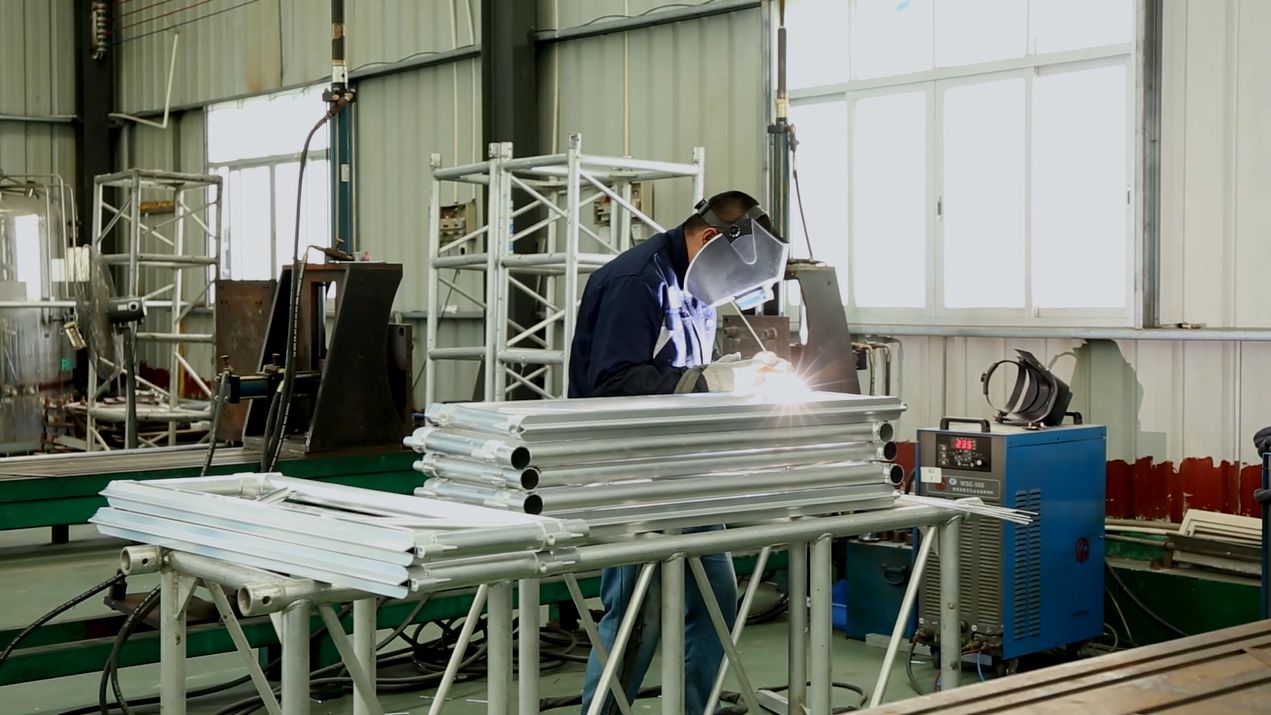
Aluminum welding quality is one of the most critical factors in determining the safety, strength, and long-term performance of structural systems such as scaffolding, truss, and stage platforms.
Unlike material selection alone, welding defines how the structure behaves under real load conditions.
This page provides a complete engineering overview of aluminum welding, including:
To fully understand aluminum welding in structural systems, it is important to break it into three key areas:
our system is based on high-quality welding, see [Welding Quality Guide]What Are Aluminum Welding Defects? Aluminum welding defects are imperfections in welded joints that reduce structural strength and safety. Common defects include porosity, cracks, lack of penetration, and deformation, which can
Read More
Welding vs Bolted Connection Welding provides a stronger and more integrated structure, while bolted connections offer flexibility, easy assembly, and replaceability. The best choice depends on whether the system requires permanent strength or modular adaptability.Why This Comparison MattersIn alumi
Read More
What Is Welding Quality and Why It Matters (Short Answer)Welding quality determines the structural strength, safety, and lifespan of aluminum systems such as truss, stage, and scaffolding. Poor welding can lead to cracks, deformation, and even structural failure under load.Why Welding Quality Is Cri
Read More
What Are the Main Types of Scaffolding?Scaffolding types in modern aluminum systems can be clearly classified into five main categories:Single scaffoldingDouble scaffoldingFolding scaffoldingMobile scaffoldingScaffold systems with ladders or special structuresEach type is designed for specific worki
Read More
But the real determinant of safety is:
connection quality
A well-designed system with poor welding will fail.
A properly welded system ensures:
When evaluating aluminum systems, focus on:
✔ welding process (TIG preferred)
✔ weld consistency and finish
✔ structural testing (load reports)
✔ certification (TÜV / SGS / EN)
Do not rely only on:
❌ visual appearance
❌ material claims
❌ price comparison
In many cases, yes. Poor welding can reduce the strength of even high-grade aluminum.
Yes, especially in low-cost production without proper quality control.
Welding provides higher rigidity, but most systems use both methods for optimal performance.
This page is not just information.
It provides:
And helps ensure that your project is based on:
✔ correct structure
✔ reliable welding
✔ tested performance
In aluminum systems, strength is not only about material.
It is about how the structure is connected.
Welding quality determines whether a system is:
Understanding welding is essential for making the right structural decision.