dragon stage
banner_news
You are here: Home » knowledge » Material & Component Knowledge for Aluminum Stage, Truss and Scaffold Systems

Material & Component Knowledge Center


Understanding the Building Blocks of Modular Event Structures

Every stage platform, aluminum truss, scaffolding tower and temporary event structure is ultimately a combination of materials and structural components working together.


The performance of a structure depends not only on its design but also on the behavior of the materials used and the quality of the components that transfer loads throughout the system.


Understanding these materials and components helps engineers, event professionals and project managers make better decisions regarding safety, durability, transportation efficiency and long-term structural performance.


This knowledge center explores the engineering principles behind aluminum alloys, structural members, connection systems and load-bearing components commonly used in modular event structures.

What You Will Learn

This knowledge center covers:


  • Aluminum alloy selection
  • Structural component functions
  • Truss members and connections
  • Stage platform components
  • Scaffold system components
  • Material strength and behavior
  • Welding and fabrication considerations
  • Corrosion resistance
  • Fatigue performance
  • Material certification and quality control

Understanding these topics helps explain why some structures perform reliably while others experience premature wear or failure.

Learning Path

Material knowledge can be developed progressively.


Level 1 – Understanding Structural Materials

Learn the basic materials used in event structures.

Topics include:

  • Aluminum alloys
  • Steel components
  • Composite deck materials
  • Fasteners
  • Connection hardware

Understanding material properties is the foundation of engineering decision-making.


Level 2 – Understanding Structural Components

Learn how individual components contribute to structural performance.

Topics include:

  • Main chords
  • Braces
  • Connectors
  • Stage beams
  • Deck supports
  • Base plates

Every component plays a role within the overall load path.


Level 3 – Understanding Material Behavior

Learn how materials respond under real loading conditions.

Topics include:

  • Compression
  • Tension
  • Bending
  • Fatigue
  • Corrosion
  • Welded joints

Material behavior directly influences safety and lifespan.


Level 4 – Engineering Selection

Learn how engineers select materials and components for specific applications.

Topics include:

  • Load requirements
  • Span requirements
  • Transportation efficiency
  • Environmental exposure
  • Maintenance requirements

Engineering selection balances performance, safety and cost.

Revolving Rotating Aluminum Truss Rotary Lamp Frame Rotate Truss Stage Equipment for Event (2).jpg

Aluminum Material Guide for Truss Systems (Structural Properties, Grade Comparison & Engineering Applications)

Aluminum is the primary material used in modern truss systems because it provides the best balance between strength, weight, corrosion resistance, and installation efficiency.Among all alloys, 6061-T6 and 6082-T6 are the most widely used for stage, lighting, and event truss structures.Compared to st

Read More
welding.jpg

Welding Quality Guide: Structural Safety, Strength and Inspection for Aluminum Systems

What Is Welding Quality and Why It Matters (Short Answer)Welding quality determines the structural strength, safety, and lifespan of aluminum systems such as truss, stage, and scaffolding. Poor welding can lead to cracks, deformation, and even structural failure under load.Why Welding Quality Is Cri

Read More
hanging Led Truss.jpg

Certified Aluminum Materials: How DragonStage Ensures Real Structural Quality

IntroductionIn stage and truss systems, safety does not start from design — it starts from material quality.Many suppliers claim to use high-grade aluminum, but without verified data, these claims cannot be trusted.At DragonStage, all structural materials are sourced from certified manufacturers and

Read More
welding.jpg

6061-T6 vs 6082-T6 Aluminum: Mechanical Properties and Structural Differences

IntroductionIn stage systems, truss structures, and load-bearing frames, material selection is not just about cost — it directly affects safety and structural performance.Among aluminum alloys, 6061-T6 and 6082-T6 are two of the most commonly used materials in event and structural applications.To be

Read More

Core Knowledge Areas

Aluminum Structural Materials

Aluminum has become the preferred material for most modern stage and truss systems because of its excellent strength-to-weight ratio and corrosion resistance.

Important considerations include:

  • Alloy type
  • Temper condition
  • Yield strength
  • Weldability
  • Fatigue resistance

Recommended reading:

  • [6061 vs 6082 Aluminum: Structural Engineering Comparison]
  • [Aluminum vs Steel: Structural Performance and Material Selection Guide]

Understanding alloy selection is essential for evaluating structural reliability and manufacturing quality.


Truss Components and Connections

Truss systems are composed of multiple interconnected structural members.

Key components include:

Main Chords

Primary load-bearing members.

Braces

Transfer forces between chords and improve stability.

Connection Systems

Including:

  • Spigot connections
  • Bolt connections
  • Plate-end systems

Corner Blocks

Transfer loads through changes in direction.

Base Sections

Transmit structural loads into foundations.

Recommended reading:

  • [What Is Lighting Truss? Ultimate Guide for Stage, LED and Event Systems]
  • [What Are Types of Stage Truss?]

Proper component selection influences strength, assembly efficiency and long-term performance.


Stage System Components

Modular stage systems consist of several load-bearing elements working together.

Typical components include:

Stage Decks

Working surfaces supporting performers and equipment.

Main Beams

Transfer loads from decks into supports.

Adjustable Legs

Provide height flexibility and leveling capability.

Guardrails and Stairs

Improve operational safety.

Connection Hardware

Maintains structural continuity.

Recommended reading:

  • [How to Choose Stage Platform for Events: Size, Load Capacity and Structural Safety Guide]
  • [Stage Platform Material Comparison: Aluminum vs Steel for Structural Performance and Safety]

Scaffolding Components

Scaffolding systems rely on modular components for safe access and temporary working platforms.

Common components include:

Frames

Primary vertical structure.

Horizontal Members

Maintain spacing and load distribution.

Diagonal Bracing

Improve lateral stability.

Platforms

Provide working surfaces.

Stabilizers

Enhance overall structural stability.

Recommended reading:

  • [How to Choose Aluminum Scaffolding: Structural Safety, Material and Load Considerations]

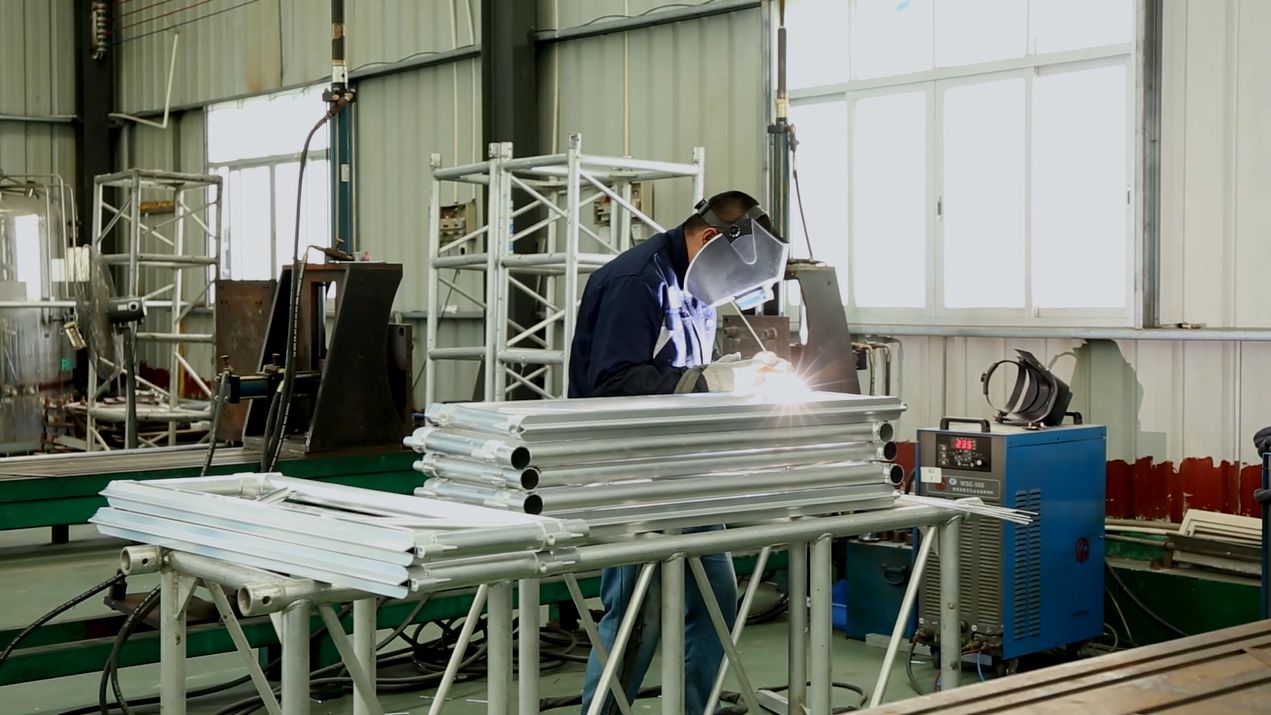
Welding and Fabrication

Material quality alone does not determine structural performance.

Manufacturing processes also influence strength and durability.

Important topics include:

  • Welding quality
  • Heat affected zones
  • Dimensional accuracy
  • Fabrication tolerances
  • Surface finishing

Proper fabrication ensures that design assumptions remain valid throughout the service life of a structure.

Recommended reading:

Material Durability and Lifecycle Performance

Structures experience repeated loading throughout their service life.

Long-term performance depends on:

Fatigue Resistance

Ability to withstand repeated stress cycles.

Corrosion Resistance

Ability to resist environmental degradation.

Wear Resistance

Ability to maintain functionality under operational use.

Maintenance Practices

Ability to preserve structural integrity over time.

Recommended reading:

  • [Stage Maintenance Tips: How to Keep Stage Platforms Safe, Stable and Long-Lasting]
  • [How to Extend Stage Platform Lifespan: Maintenance, Storage and Safe Use Tips]

Featured Engineering Resources

6061 vs 6082 Aluminum for Structural Applications

Compare two of the most commonly used aluminum alloys in stage, truss and scaffolding manufacturing.


Aluminum vs Steel Structural Performance

Understand the trade-offs between weight, strength, corrosion resistance and transportation efficiency.


How Dragon Stage Quality System Works

Explore material traceability, welding quality control, dimensional verification and production standardization practices.

Frequently Asked Questions

Why is aluminum widely used in stage and truss systems?

Aluminum provides high strength relative to weight, making transportation, assembly and handling significantly easier while maintaining structural performance.


Is stronger material always better?

Not necessarily. Material selection depends on application requirements, fabrication methods, environmental conditions and overall structural design.


Do connection systems affect structural strength?

Yes. Connections are often among the most critical elements in a structure because they transfer loads between components.


Why is welding quality important?

Poor welding can reduce structural performance, create stress concentrations and shorten service life.


How does corrosion influence structural performance?

Corrosion can reduce cross-sectional area, weaken connections and compromise long-term reliability if not properly managed.

Related Knowledge Centers

Continue exploring:


Structural Engineering Fundamentals

Learn how loads, stability and structural behavior influence engineering design.


Safety & Risk Awareness

Understand how material degradation, connection failures and improper component selection contribute to structural risks.


Installation & Practice

Learn how materials and components are assembled in real-world projects.


System Comparison & Selection Guide

Compare structural systems and identify suitable solutions for different applications.

Conclusion

Materials and components form the foundation of every stage platform, truss structure and scaffolding system.


By understanding aluminum alloys, structural members, connection systems, fabrication methods and long-term material behavior, engineers and event professionals can make better decisions regarding safety, performance and lifecycle value.


This knowledge center serves as a reference for understanding the building blocks behind modern modular event structures.

Professional Techincal Team since 2008

Browse by Category

Need a Custom Stage or Truss Solution?


Whether you are planning a concert, exhibition, outdoor event or rental project, we can provide professional design support, structural recommendations and complete product solutions.

Tell us your requirements and our team will help you find the most suitable configuration.

FOSHAN DRAGON STAGE 

No.7,Xiaxi Industrial Area,Heshun,Nanhai District,Foshan,528241,Guangdong,China.

 +86  136 3132 8997

QUICK LINKS

PRODUCT LIST

Copyright © 2020 FOSHAN DRAGON STAGE EQUIPMENT CO.,LTD  备案号:粤ICP备2020113505号