dragon stage
You are here: Home » Technical Support » FAQ

General FAQ

  • Q Can I order only one piece first and place larger orders later?

    A

    Yes. In most cases, we are happy to supply small quantities or even a single piece for testing purposes.

    We understand that many customers prefer to evaluate the product quality and compatibility before placing larger orders.

    However, please note that for small orders, the transportation cost may be relatively high compared with the product value. In some cases, customers may choose to combine several items into one shipment to improve shipping efficiency.

    If you plan to expand your order in the future, we will be pleased to support your project and provide consistent specifications for subsequent orders.

    Please let us know the product and quantity you require, and we will recommend the most suitable solution.

  • Q Can you customize engraved logos on base plates or products?

    A
    Yes. We can provide laser engraving services for logos, company names, or other markings on selected products.
     
    For orders with a total value exceeding USD 5,000, we offer laser engraving services free of charge.
     
    Logo engraving is commonly applied to:
     
    Base plates;
    Truss sections;
    Stage components;
    Flight cases;
    Other customized products.
     
    Please provide your logo file or artwork before production so that we can confirm the size, position, and manufacturing requirements.
     
    For special marking requirements or smaller orders, please contact us for details.
  • Q Do you have overseas warehouses or distributors?

    A
    At present, we do not have overseas warehouses or distributors. Our products are manufactured in China, and our sales team is based in Guangzhou. By supplying directly from our factory, we are able to maintain consistent quality control, provide customized solutions, and offer direct technical support. We regularly serve customers worldwide and are pleased to assist with international shipping arrangements according to the project requirements. If you have a local installer, contractor, or logistics partner, we are also happy to cooperate with them to ensure smooth project execution.
     
    As our products are mainly project-oriented and often customized, most orders are manufactured according to customer requirements rather than stocked in overseas warehouses.
  • Q Can you give me a better price?

    A

    Yes, we always try to provide the most suitable and competitive solution according to the project requirements.

    Price may vary depending on factors such as:

    Order quantity;
    Material specifications;
    Standard or custom design;
    Accessories included;
    Shipping terms (EXW, FOB, CIF, DDP, etc.);
    Packaging and transportation requirements.
     

    If budget is a concern, we may also recommend alternative solutions or adjust certain specifications to help optimize the overall cost.

    However, we believe that the most suitable solution is not always the lowest-priced one. Material quality, structural safety, compatibility, and long-term reliability are also important factors to consider.

    Please let us know your target quantity and requirements, and we will do our best to offer the most appropriate solution for your project.

  • Q Can you send a quotation showing the price of each item?

    A Yes. We can provide itemized quotations if required.

    However, many of our products are designed and supplied as complete systems rather than individual components. In some cases, the overall system price is more important than the price of each single item.

    Depending on the project requirements, the quotation may include:

    Individual item prices;
    System package prices;
    Packing dimensions and weights;
    Production lead time;
    Shipping costs, if required.


    For custom structures and complete solutions, we generally recommend evaluating the entire system rather than comparing individual components, since the performance and compatibility of the system are often more important than the price of a single part.
  • Q Can you arrange delivery within China?

    A

    Yes. We can arrange delivery to most provinces and cities within China.

    Since our factory is located in Foshan, Guangdong Province, domestic transportation costs may need to be added depending on the destination.

    If you would like us to arrange inland delivery, please provide the detailed address. We will check the freight cost and include it in the quotation.

    Alternatively, customers may arrange their own logistics company to collect the goods directly from our factory.

  • Q Could you please prepare and send us a quotation based on the requirements?

    A
    Yes. We are pleased to prepare a quotation according to your requirements.
     
    To provide an accurate quotation, we recommend that you provide as much information as possible, such as:
     
    Product type;
    Dimensions and quantity;
    Height or load requirements;
    Indoor or outdoor application;
    Destination country or city;
    Drawings, photos, or reference designs, if available.
     
    Our quotation may include:
     
    Product specifications;
    Unit price and total price;
    Packing dimensions and weight;
    Production lead time;
    Shipping options and estimated freight costs (if required).
     
    If some details are not yet confirmed, we can also provide recommendations and alternative solutions based on your project requirements.
     
    We are always happy to assist customers in finding the most suitable and cost-effective solution.
  • Q Can you please provide ETA and shipping costs?

    A
    Yes. We are happy to provide estimated production schedules and shipping quotations to help customers arrange their projects and transportation.
     
    Normally, we can provide:
     
    Estimated production time;
    Estimated shipping schedule;
    Sea freight, air freight, railway, or courier costs;
    Packing dimensions and weights after packing;
    Estimated transit time to the destination country.
     
    Production time usually depends on:
     
    Product type;
    Order quantity;
    Custom requirements;
    Current production schedule.
     
    Shipping time and costs depend on:
     
    Destination country;
    Shipping method;
    Cargo volume and weight;
    Port conditions and shipping schedules.
     
    If you do not have your own shipping agent, we are pleased to help arrange transportation and provide FOB, CIF, DDP, or other shipping solutions according to your requirements.
     
    For an accurate quotation, please provide:
     
    Destination country or city;
    Product details and quantity;
    Preferred shipping method, if any.
  • Q Can you tell me the EXW price, weight, and invoice details?

    A

    Since our factory is located in Foshan, China, under EXW terms we are only responsible for manufacturing and making the goods available for collection at our factory. Transportation, export customs declaration, and shipping arrangements are handled by the buyer or the buyer's appointed agent.

    For EXW orders, we can provide:
    EXW unit price or total price;
    Commercial invoice;
    Packing list;
    Packing dimensions (CBM);
    Gross and net weight after packing;
    Photos and information required by your shipping company.

    These details will help your shipping agent arrange transportation and estimate shipping costs.

    Please note that China has strengthened the supervision of EXW exports in recent years. Under EXW terms, we are not listed as the shipper on the customs declaration. Export customs clearance is handled by the buyer's shipping agent, and the buyer assumes the related responsibilities and risks.

    If any problems occur during customs declaration or export inspection, they are outside our responsibility.

    If you understand and accept the above arrangement, we will be pleased to provide an EXW quotation. However, for most international shipments, we generally recommend FOB terms to ensure smoother export procedures and better coordination.

  • Q I have my own shipping agent. Can you quote the price per piece?

    A

    Yes. Since our factory is located in Foshan, China, we can provide EXW prices if you have your own shipping agent or forwarder.

    Under EXW terms, we are only responsible for manufacturing and making the goods available for collection at our factory. Transportation, export customs declaration, shipping arrangements, and all related costs and responsibilities are handled by the buyer or the buyer's appointed agent.

    Please note that China has strengthened the supervision of EXW exports in recent years. In EXW shipments, we are not listed as the shipper on the customs declaration. The buyer's shipping agent is responsible for export customs clearance and compliance with the relevant regulations.

    Therefore, if any issues arise during customs declaration or export inspection, they are outside our responsibility.

    If you understand and accept the above arrangement and risks, we will be pleased to provide an EXW quotation based on your requirements.

    For most international shipments, we normally recommend FOB terms to ensure smoother export procedures and better coordination.

  • Q Why do similar products have different prices?

    A

    Although many stages and trusses may appear similar, their prices can vary significantly due to differences in materials, manufacturing methods, and specifications.

    Material Quality

    Different aluminum alloys, tube thicknesses, and component specifications can greatly affect the cost.

    For example, 6061-T6 and 6082-T6 are different aluminum alloys with different raw material costs and mechanical properties. Even products with the same appearance may use different alloy grades or wall thicknesses, resulting in noticeable price differences.

    Manufacturing Techniques

    Production methods also play an important role.

    Some connections are fully welded, while others use extruded connectors or a combination of aluminum and steel bolt-and-rivet structures. Different fabrication methods require different amounts of labor, equipment, and processing time, which directly affect the final price.

    Specifications and Load Capacity

    Products that look similar do not necessarily have the same specifications or performance.

    Differences in tube diameter, wall thickness, reinforcement methods, connection designs, and load capacity requirements can all influence the overall cost. Two products may have the same appearance but be designed for completely different applications and safety margins.

    Therefore, similar appearance does not always mean identical specifications, strength, or quality. Price comparisons should be based not only on appearance, but also on materials, construction methods, and intended use.

  • Q Can I have 6082-T6 instead of 6061-T6?

    A

    Yes. We can manufacture lighting trusses using either 6061-T6 or 6082-T6 aluminum alloy, depending on the project requirements and customer preferences.

    6082-T6 aluminum is commonly used for applications requiring higher strength and is widely accepted in many international markets. However, material availability and manufacturing costs may vary, and products made from 6082-T6 aluminum are generally more expensive than those made from 6061-T6.

    If you have specific requirements regarding alloy grade, standards, or compatibility with existing systems, please let us know before placing your order so that we can recommend the most suitable solution.

  • Q What HS codes do you normally use for your products?

    A

    The following HS codes are normally used for customs declaration purposes. Please note that the final classification may vary depending on the destination country, customs regulations, and product specifications.

    Product Normally Used HS Code
    Aluminum Truss and Stage 7610900000
    Aluminum Tent 6306220090
    LED Screen 8528591090
    Truss Cover Cloth 6303910090

    These HS codes are provided for reference only. Customers are advised to confirm the final classification with their customs broker or local customs authorities when necessary.


  • Q How will I receive the goods after purchase?

    A

    There are several ways to arrange the shipment of your order.

    Use your own freight forwarder

    If you already have a shipping agent or consolidation warehouse in China, your agent can arrange pickup directly from our factory.

    Appoint a freight forwarder in your country

    Many customers prefer to work with their local shipping agents, who can coordinate transportation, customs clearance, and delivery.

    Ask us to assist with shipping arrangements

    If you do not have a freight forwarder, we can help arrange transportation through our long-term logistics partners. Depending on the destination and shipping terms, the goods may be delivered to your port, warehouse, or final address.

    For first-time importers, we are happy to provide the necessary information and cooperate with your shipping agent to ensure smooth delivery.

  • Q What are the main costs of importing goods?

    A

    The total cost of importing goods involves more than just the price of the products. Using aluminum stages and trusses as an example, the overall cost may include:

    The cost of the goods.
    Inland transportation and export-related charges in China.
    Ocean freight or air freight.
    Destination port charges and documentation fees.
    Customs duties, taxes, and import clearance costs.
    Local delivery from the destination port to your warehouse or project site.


    Many customers focus mainly on the product price, shipping cost, and import duties. However, destination charges, customs clearance fees, and inland transportation may also represent a significant portion of the total landed cost.

    If you are importing for the first time, we recommend discussing the shipping arrangements with your freight forwarder or customs broker in advance to better understand all the costs involved.

    Depending on the destination country and shipping terms, some of these costs may be arranged by the seller, the freight forwarder, or the buyer.

  • Q How can I estimate the import duties and taxes for my order?

    A

    Import duties, taxes, and customs fees are determined by the regulations of the destination country and may change from time to time.

    If you are planning to import aluminum trusses, stages, or scaffolding from China and are unsure about the applicable duties, we recommend consulting your customs broker, freight forwarder, or local customs authorities for the most accurate and up-to-date information.

    We can provide the product descriptions, dimensions, weights, and the HS codes normally used for customs declaration to assist you in estimating the import costs.

    Please note that the final duties and taxes are determined by the customs authorities of the destination country and are beyond the control of the seller.

    Additional Information

    For customers who are importing for the first time, we are pleased to cooperate with your freight forwarder or provide basic shipping information to help you better understand the import process.

  • Q Are there any additional costs under FOB terms?

    A

    Yes. Under FOB terms, the buyer is responsible for costs and charges that occur after the goods are loaded onto the vessel at the port of departure.

    Depending on the destination country and local regulations, additional costs may include:
     

    Ocean freight charges
    Destination port charges
    Customs clearance fees
    Import duties and taxes
    Documentation and handling fees
    Local transportation from the port to the final destination


    For shipments to certain countries, additional requirements or government filings may also apply.

    Because these charges are determined by shipping companies, customs authorities, and local service providers, they may vary from time to time and are generally beyond the control of the seller.

    If you are importing for the first time, we recommend consulting your freight forwarder or customs broker in advance to better understand the total landed cost.


  • Q What is the claim period for damaged or incorrect goods

    A

    Any discrepancy regarding quantity, specifications, or visible damage should be reported within 30 days after the goods arrive at the destination port.

    To facilitate the claim process, customers may be requested to provide photographs, videos, packing information, and, when necessary, an inspection report issued by an independent surveyor agreed upon by both parties.

    Claims should be submitted before the goods are processed, modified, or put into use. Once the products have been altered or further processed, it may become difficult to determine the original condition of the goods and the corresponding responsibilities.

    Please note that losses or damages caused during transportation may fall within the responsibility of the shipping company or insurance provider. We will cooperate with customers and relevant parties to help resolve such issues whenever possible.

    We recommend inspecting the goods upon arrival and notifying us promptly if any issue is found.

  • Q What are your storage terms?

    A

    Finished goods are normally expected to be collected or shipped according to the delivery schedule agreed in the Proforma Invoice (PI).

    If shipment is delayed by the buyer and the goods need to remain in our factory for an extended period, we can provide temporary storage free of charge for up to 30 days from the agreed delivery date.

    After that period, storage charges may apply due to the occupation of warehouse space and inventory management costs. The standard storage fee is 0.5% of the total order value per day, unless otherwise agreed by both parties.

    If you anticipate any delay in shipment or collection, please inform us in advance so that we can work together to find a suitable solution.

  • Q Can you provide the CAD drawings?

    A

    Yes. We can provide drawings according to the project stage and the customer’s actual needs.

    During the inquiry stage, we usually provide basic layout drawings or simple reference drawings to help both sides confirm the general dimensions, structure, and configuration. Detailed production drawings are not normally provided at this stage.

    After the order is confirmed, especially for customized products, we will provide more detailed dimensional drawings for customer confirmation before production. This helps avoid misunderstanding in size, structure, accessories, and installation requirements.

    If the project requires installation guidance, we can also provide detailed installation drawings or assembly instructions according to the final confirmed design.

    The level of drawing detail may vary depending on the product type, project complexity, and cooperation stage.

  • Q What are the production and delivery times?

    A

    Production time depends on the product type, order quantity, and customization requirements. For most standard orders, the production time is approximately 10–15 working days after receiving the deposit and confirming all specifications.

    Delivery time varies depending on the destination country and shipping method. Air freight is generally faster, while sea freight usually requires more time. Transit times may also be affected by vessel schedules, customs clearance, and seasonal factors.

    For urgent projects or specific deadlines, please contact us before placing your order so that we can confirm the production schedule and shipping arrangements accordingly.

  • Q What's the warranty of your products?

    A

    Under normal use and proper installation, our products are covered by a one-year warranty from the date of shipment.

    During the warranty period, if any defects are caused by manufacturing or material issues rather than improper use, overloading, modification, or accidental damage, we will provide replacement parts or appropriate solutions according to the actual situation.

    For products damaged by misuse, improper installation, overloading, unauthorized modifications, transportation accidents, or normal wear and tear, replacement parts and technical support are still available, although additional charges may apply.

    We recommend inspecting the products upon receipt and following the installation instructions to ensure safe and reliable operation.

    We are committed to working with our customers to find practical solutions whenever issues arise. Even after the warranty period, spare parts and technical support are generally available.

  • Q What is your payment terms?

    A

    Our standard payment terms are:
     

    For orders below USD 5,000: 100% payment before production.
    For orders above USD 5,000: 30% deposit by T/T before production and 70% balance before shipment after inspection.


    Most customers choose bank transfer (T/T) as the payment method. Other payment arrangements may be discussed for long-term cooperation or special projects.

    Production normally starts after the deposit has been received, and shipment will be arranged after the remaining balance has been paid.

  • Q What are your shipping ports?

    A

    Our regular shipping ports are:

    Nansha Port, Guangzhou
    Huangpu Port, Guangzhou
    Yantian Port, Shenzhen


    Other ports in China may also be arranged according to the destination, shipping schedule, and customer requirements.

    The final port of departure will be selected based on factors such as container availability, freight rates, vessel schedules, and the location of the appointed freight forwarder.

    If you have your own shipping agent or require a specific port, please let us know in advance and we will do our best to cooperate.

  • Q What pricing terms do you offer?

    A

    Most prices shown on our website are based on EXW Foshan, China, which allows customers to compare product costs more easily and arrange transportation according to their own preferences.

    For actual export shipments, however, the final trade terms are usually arranged under FOB, CIF, DAP, or DDP, depending on the destination and shipping arrangements. Even if customers have their own freight forwarders, export procedures and customs requirements may require the shipment to be handled under FOB terms rather than EXW.

    In other words, EXW is mainly used for price reference, while the final trade term will be confirmed according to the actual shipping arrangement and export requirements.

    Customers are welcome to use their own shipping agents, and we will cooperate with their forwarders to complete the shipment smoothly.

    Pure EXW transactions without export handling by the seller are becoming less common in practice, therefore the final arrangement will be discussed and confirmed before shipment.

  • Q What's your MOQ

    A

    We do not have a strict minimum order quantity for most products, and even single-piece orders are welcome.

    However, customers should be aware that for very small orders or low-value items, the transportation cost may sometimes exceed the value of the products themselves. In such cases, shipping may not be economical.

    For small accessories or low-value orders, we generally recommend that customers consolidate them with other goods or arrange collection through their own freight forwarders.

    If you already have other cargo in China, we can provide paid domestic delivery services to your designated warehouse. Alternatively, your shipping agent may arrange pickup directly from our factory.

    Our goal is to help customers find the most practical and cost-effective solution based on their actual requirements.

  • Q Do you have any certificates?

    A

    Yes. Depending on the product type, we can provide various certificates and supporting documents, including CE, ISO, SGS, and TÜV-related reports or certificates.

    Please note that certification requirements may vary depending on the product and destination country. If your project requires specific documents or standards, please let us know in advance so that we can confirm the available documentation.

  • Q Do you provide OEM and custom manufacturing services?

    A

    Yes. We provide OEM and customization services for many of our products.

    Depending on the product type and order quantity, available customization options may include:

    Custom logos and labels
    Packaging and carton design
    Product colors and finishes
    Dimensions and configurations
    Special accessories and components
    Custom-made structures and project solutions
     

    For products manufactured in our own factory, such as aluminum stages, lighting trusses, and aluminum scaffolding, we can offer a wide range of customization options according to your requirements.

    For complementary products supplied by our long-term partner manufacturers, OEM services may also be available, subject to the product type and minimum order quantity requirements.

    Please provide your drawings, specifications, or ideas, and we will be pleased to discuss the available options with you.

  • Q Are you a trading company or the professional manufacturer?

    A

    We are a professional manufacturer specializing in aluminum stage systems, lighting trusses, and aluminum scaffolding. These structural products are designed and manufactured by our own factory.

    In addition to our core products, we also supply related event equipment such as flight cases, tents, lighting fixtures, audio systems, special effects equipment, and accessories. These products are sourced from long-term partner manufacturers that we have worked with and trusted for many years.

    Our goal is to provide customers with a more complete solution for concerts, events, exhibitions, churches, and other projects, while maintaining reliable quality and long-term technical support.

    Whether a product is manufactured by us or supplied by our trusted partners, we remain responsible for quality control, coordination, and customer service throughout the project.

Aluminum Stage FAQ

  • Q Why are aluminum stages so popular?

    A

    Because they combine:

    Strength
    Portability
    Modularity
    Reusability
    Ease of installation

    This makes aluminum stage systems one of the most practical and versatile solutions for temporary and modular event structures.

  • Q Can the stage match my event theme or brand colors?

    A

    Yes. Stage systems can be customized to match the visual style, event theme, or brand identity of your project.

    Customization options may include:

    Deck Surface Colors

    Common choices include:
    Black
    Red
    White
    Gray
    Blue
    Green

    Custom carpet coverings or decorative surfaces can also be applied according to the event requirements.

    Special Deck Materials

    For premium and decorative applications, we offer:
    Tempered glass decks
    Acrylic decks
    Aluminum decks

    These materials are commonly used for:
    Weddings
    Fashion shows
    Hotels
    TV studios
    Luxury events

    Structural Appearance

    Depending on the project requirements, the stage frame and accessories can be customized with:
    Powder-coated finishes
    Decorative skirting
    Fabric coverings
    LED screens
    Branding panels
    Company logos

    Accessories and Layout

    Additional components such as:
    Stairs
    Guardrails
    Ramps
    Multi-level platforms
    Catwalks

    can also be integrated into the design to create a more complete event presentation.

    Typical Applications

    Customized stage appearances are widely used for:
    Weddings
    Corporate events
    Product launches
    Churches
    Fashion shows
    Hotels and resorts
    Government ceremonies
    Brand activations
    Political campaigns

    While appearance is important, structural safety and load requirements always remain the first priority during the design process.

    If you have a specific theme, color scheme, or branding requirement, please provide reference photos, drawings, or design concepts. We will recommend the most suitable stage system and finishing options according to your project.

  • Q Can I use the stage outdoors?

    A Yes.

    Most aluminum stage systems are suitable for both indoor and outdoor applications.

    Aluminum structures offer:

    Corrosion resistance
    Lightweight construction
    Easy transportation
    Repeated assembly and dismantling


    For outdoor use, the following factors should be considered:

    Stage dimensions
    Height
    Ground conditions
    Weather conditions
    Wind loads
    Additional ballast or anchoring requirements


    For large outdoor events, additional accessories such as:

    Guardrails
    Stairs
    Ramps
    Roof systems
    Ballast systems


    may be recommended to improve safety and stability.

    If your event is located in areas with strong winds or uneven ground, please provide the project details so that we can recommend the most suitable stage system.
  • Q Can stage decks be replaced?

    A Yes.

    Stage decks are designed as modular components and can be replaced individually if necessary.

    Replacement deck options include:

    Plywood decks
    Tempered glass decks
    Acrylic decks
    Aluminum decks


    If you already have an existing stage system, please provide:

    Deck dimensions
    Frame dimensions
    Photos of the existing stage
    Brand or model information (if available)


    Since different manufacturers may use different specifications, compatibility should be confirmed before production.

    Replacing only the damaged decks is often more economical than replacing the entire stage system.
  • Q Can I add stairs and guardrails?

    A Yes.

    Various accessories can be added to improve safety and convenience, including:

    Stairs
    Single-step stairs
    Multi-step stairs
    Adjustable stairs

    Guardrails
    Side guardrails
    Rear guardrails
    Detachable safety rails

    Other Accessories
    Ramps
    Skirting
    Wheels
    Handrails
    Connecting clamps

    The size and quantity of accessories depend on the stage dimensions, height, and intended application.

    For stages higher than 1 meter, guardrails are generally recommended to improve safety.
  • Q Why do similar stages have different prices?

    A Although many stage systems may look similar, their prices can vary significantly due to differences in materials, manufacturing methods, and specifications.

    Material Quality

    Different aluminum alloys, deck materials, tube thicknesses, and component specifications can greatly affect the cost.

    For example, 6061-T6 and 6082-T6 aluminum alloys have different raw material costs and mechanical properties.

    Manufacturing Techniques

    Different production methods require different amounts of labor, equipment, and processing time.

    Some structures use:

    Fully welded frames
    Extruded components
    Reinforced joints
    Steel and aluminum hybrid connections


    These differences influence the final price.

    Structural Specifications

    Products with similar appearances may have very different:

    Load capacities
    Tube thicknesses
    Safety factors
    Connection designs
    Service life


    Therefore, similar appearance does not always mean identical specifications or quality.

    Price comparisons should consider not only appearance, but also the materials, structural design, and intended application.
  • Q Can stage systems be customized?

    A Yes. Stage systems can be customized according to the project requirements.

    Customization options may include:

    Dimensions
    Width
    Length
    Height

    Deck Materials
    Plywood
    Tempered glass
    Acrylic
    Aluminum

    Accessories
    Stairs
    Guardrails
    Ramps
    Skirting
    Wheels

    Surface Finish
    Carpet colors
    Anti-slip surfaces
    Decorative finishes

    Structural Design
    Multi-level stages
    Choir risers
    Catwalks
    Camera platforms
    Pool stages
    Special event structures

    Custom structures are widely used for concerts, weddings, churches, hotels, exhibitions, and outdoor events.
  • Q How much weight can the stage support?

    A The load capacity depends on the stage type, support structure, deck size, and intended application.

    Our standard aluminum stages are typically designed for loads of approximately 750 kg/m², while heavy-duty systems can support higher loads.

    Different applications may require different support structures. For example:

    Concert stages
    Choir risers
    Camera platforms
    Catwalks
    Outdoor stages


    If your project involves heavy equipment or special loading requirements, please provide:

    Stage size
    Height
    Intended use


    so that we can recommend the appropriate stage system.
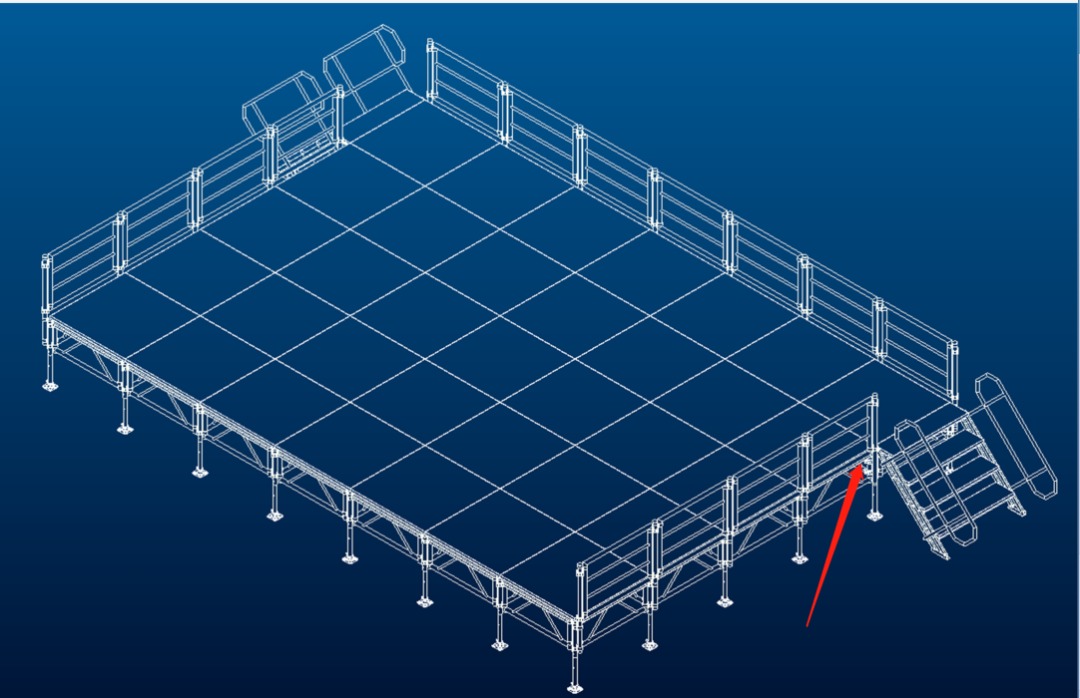
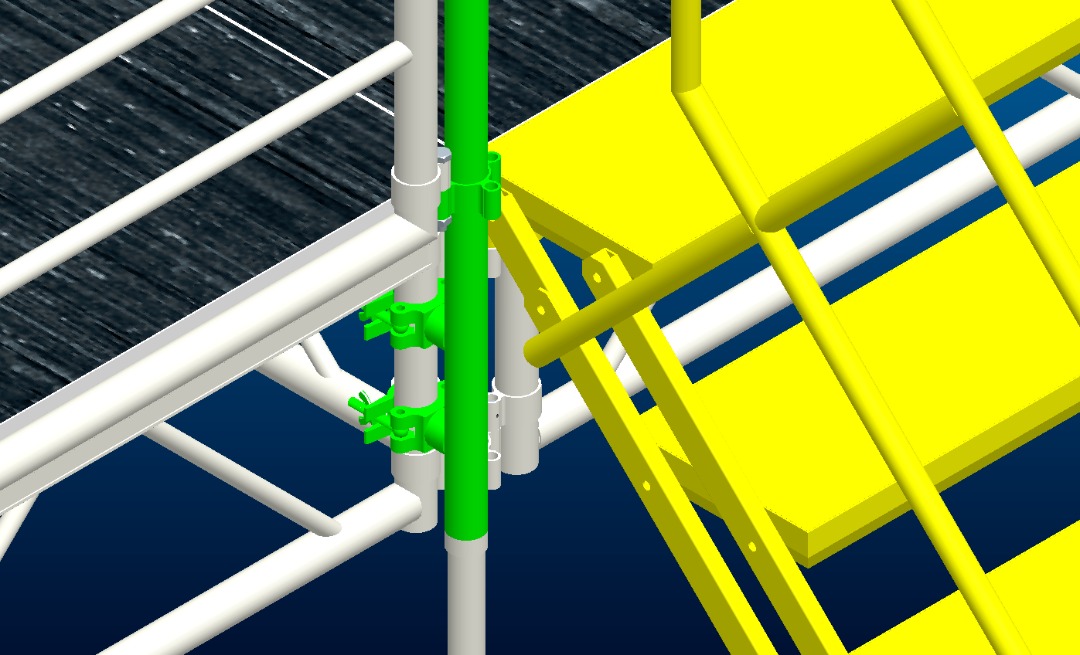
  • Q what is stage handrail brace and pillar and how it works

    A

    Stage handrails, also called guardrails, are safety components installed around the stage platform. Their main purpose is to protect people on the stage from accidentally falling.

    The guardrail system consists of:
    Handrails (Guardrails) – provide protection around the stage.
    Guardrail Pillars – support the handrails.
    Handrail Braces – connect the handrails to the stage and improve stability.

    Handrail braces are removable components. For low stages, they are usually not necessary. For higher stages, guardrails are recommended to improve safety.
    Please refer to the following drawing for the installation details.

     modular stage with guardrail around
    how guardrail attached to stage brace
  • Q Why are stage decks commonly 4 ft × 8 ft (1.22 × 2.44 m)?

    A

    The 4 ft × 8 ft (1.22 × 2.44 m) stage deck has become one of the most popular sizes in the event industry mainly for two reasons:

    Compatibility with 4 ft × 4 ft Decks

    The 4 ft × 8 ft deck works perfectly with the standard 4 ft × 4 ft (1.22 × 1.22 m) deck.

    By combining these two sizes, users can create a wide variety of stage layouts while maintaining a modular design. This makes transportation, installation, and future expansion much easier.

    For example, the same deck modules can be used to build:
    Concert stages
    Choir risers
    Camera platforms
    Catwalks
    Temporary platforms

    Better Material Utilization and Lower Cost

    Another important reason is cost efficiency.

    Standard plywood sheets are commonly manufactured in 4 ft × 8 ft dimensions. By using the same size for stage decks, manufacturers can:
    Reduce material waste;
    Simplify production;
    Improve manufacturing efficiency;
    Lower production costs.

    As a result, the 4 ft × 8 ft deck has become one of the most economical and widely accepted sizes in the industry.


  • Q What are the advantages of aluminum stage systems?

    A

    Aluminum stage systems are widely used in concerts, weddings, churches, schools, hotels, and outdoor events because they offer an excellent balance of strength, portability, and flexibility.

    Lightweight Construction

    Aluminum provides a high strength-to-weight ratio, making stage components easier to transport, handle, and install compared with traditional steel structures.

    Fast Assembly and Dismantling

    Modular stage systems are designed for efficient installation and repeated use, helping reduce labor time and improve setup efficiency.

    Adjustable Heights

    Most aluminum stages are available with adjustable legs, allowing the stage height to be adapted to different venues and applications.

    Modular Design

    Individual decks and accessories can be combined to create:
    Small platforms
    Concert stages
    Choir risers
    Catwalks
    Camera platforms
    Multi-level structures

    Different layouts can be achieved using the same components.

    Portability and Reusability

    Aluminum stages are designed for repeated assembly and transportation, making them ideal for rental companies, touring productions, and temporary events.

    Corrosion Resistance

    Aluminum naturally resists corrosion, making it suitable for both indoor and outdoor applications.

    Customization Options

    Stage systems can be customized with:
    Different deck materials
    Adjustable heights
    Stairs and guardrails
    Ramps
    Skirting
    Wheels
    Special dimensions and configurations

    Wide Range of Applications

    Aluminum stages are commonly used for:
    Concerts
    Corporate events
    Weddings
    Churches
    Schools
    Hotels
    Exhibitions
    Outdoor festivals


  • Q What colors are available for stage decks?

    A

    We offer a variety of stage deck colors and surface finishes to match different event themes and applications.

    Standard Colors

    The most common choices are:
    Black – The most popular option for concerts, churches, corporate events, and outdoor stages.
    Red – Commonly used for ceremonies, weddings, and special events.

    Most plywood stage decks are supplied with a black anti-slip surface as standard.

    Custom Colors

    Additional colors can be achieved by applying stage carpets or decorative coverings to the deck surface.

    Popular custom colors include:
    White
    Gray
    Blue
    Green
    Red
    Custom colors according to the event theme

    Special Deck Materials

    For premium or decorative applications, we also offer:
    Tempered glass decks
    Acrylic decks
    Aluminum decks

    These options are commonly used for:
    Weddings
    Fashion shows
    Hotels
    TV studios
    Luxury events

    Powder-Coated Frames

    In addition to deck colors, aluminum stage frames can also be customized with powder coating or special finishes for certain projects.

    If you require a specific color or decorative effect, please let us know before placing the order so that we can recommend the most suitable solution.


  • Q What stage deck sizes are available?

    A Our standard stage deck sizes include:

    1.22 m × 1.22 m (4 ft × 4 ft)
    1.22 m × 2.44 m (4 ft × 8 ft)
    1 m × 2 m


    Custom deck sizes can also be manufactured according to project requirements.

    The most suitable size depends on:

    Transportation requirements
    Installation efficiency
    Load requirements
    Existing stage systems
  • Q What materials are used for stage decks?

    A We offer several stage deck materials to meet different applications and design requirements.

    Common stage deck options include:

    Plywood deck – The most popular choice for concerts, schools, churches, and events.
    Tempered glass deck – Suitable for fashion shows, weddings, and premium events.
    Acrylic deck – Used for decorative stages and special visual effects.
    Aluminum deck – Lightweight and durable, suitable for outdoor and industrial applications.

    Different surface finishes and carpet colors are also available according to project requirements.
  • Q Can I have adjustable stage heights?

    A
    Yes. Most of our aluminum stage systems are available with adjustable legs.

    Common height ranges include:

    0.4–0.8 m
    0.6–1.0 m
    0.8–1.2 m
    1.0–1.4 m
    1.2–1.8 m
    1.2–2.0 m
    1.6–2.0 m


    For higher stages, steel ringlock structures or heavy-duty support systems may be recommended.

    Before ordering, please let us know:

    Stage dimensions
    Required height
    Indoor or outdoor application


    so that we can recommend the most suitable system.
  • Q What types of aluminum stages do you offer?

    A

    We offer several types of aluminum stage systems to meet different event requirements, load capacities, and installation preferences.

    Quick Stage

    Quick Stage is our most popular modular stage system.

    Features:
    Lightweight aluminum frame
    Fast assembly and dismantling
    Adjustable heights
    Suitable for concerts, schools, churches, weddings, and corporate events
    quick stage (2)

    Brace Stage

    Brace Stage uses cross braces to improve stability and load distribution.

    Features:
    High structural strength
    Excellent stability
    Suitable for medium and large events
    Commonly used for outdoor stages and heavy-duty applications
    modular stage (9)

    Folding Stage

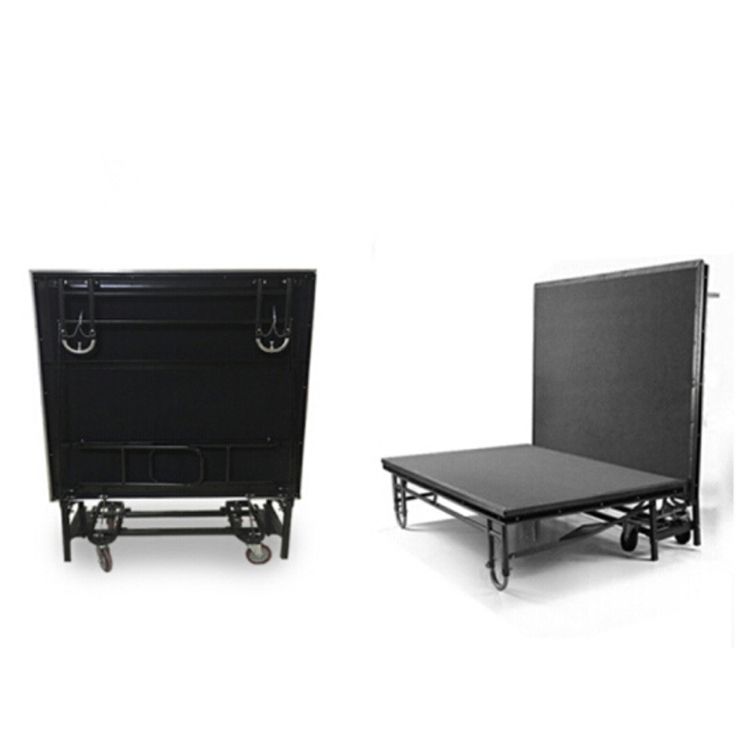
    Folding Stage is designed for portability and quick setup.

    Features:
    Foldable frame
    Easy transportation and storage
    Minimal installation time
    Popular for schools, hotels, and temporary events
    foldable stage (12)

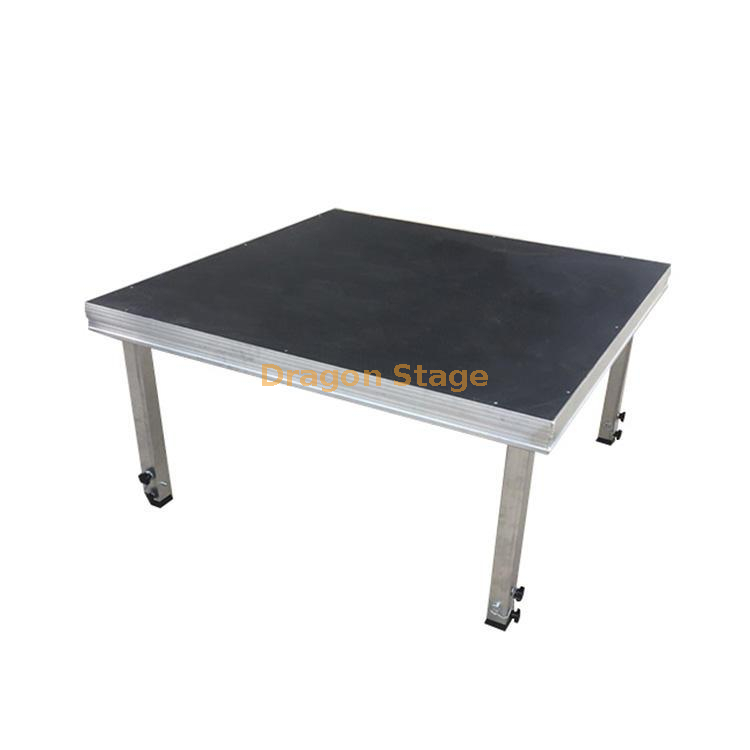
    Pipe Stage

    Pipe Stage uses telescopic pipes or fixed legs to support the stage platform.

    Features:
    Economical design
    Adjustable heights available
    Suitable for indoor and outdoor applications
    pipe stage (1)

    Spider Stage

    Spider Stage features a folding support structure with integrated legs.

    Features:
    Compact storage
    Fast deployment
    Lightweight construction
    Suitable for mobile events and small performances

    1x1m Aluminum Foldable Party Event Spider Stage Deck Portable Drum Stage Riser

Lighting Truss FAQ

  • Q Can outdoor stage roof systems be designed for different weather conditions?

    A

    Yes, but wind load, ballast, anchoring methods, and local regulations must be considered.


  • Q Are outdoor stage roof systems reusable?

    A

    Yes. Aluminum and steel modular structures are designed for repeated assembly and transportation.


  • Q Can outdoor stage structures be customized?

    A

    Yes. Stage size, height, roof type, stairs, ramps, and platforms can all be customized.


  • Q Can you manufacture custom outdoor stage roof systems?

    A Yes. We can customize outdoor stage roof systems according to span, stage size, hanging load, wind requirements, and site conditions.
  • Q What accessories are required for a roof truss system?

    A
    A complete roof truss system requires more than standard truss sections. Depending on the roof type, span, loading requirements, and installation method, additional components may include:
     
    Base plates
    Sleeve blocks
    Top sections
    Hinges
    Outriggers
    Steel bases
    Towers and supports
    Wire ropes and lifting devices
    Corner blocks and junctions
    Connectors, pins, and R-clips
    Ballast systems or ground anchors
     
    The exact accessories required depend on:
     
    Span and roof dimensions
    Hanging load
    Wind conditions
    Ground conditions
    Installation method
    Local safety requirements
     
    For customized roof systems, we can provide layout drawings and recommend the appropriate accessories according to the project requirements.
  • Q Can corner blocks and cubes be customized?

    A
    Yes. Corner blocks, cubes, and special junctions can be manufactured according to the required angles, connection directions, and structural configurations.
     
    Standard configurations commonly include:
     
    2-way junctions
    3-way junctions
    4-way junctions
    5-way junctions
    6-way junctions
     
    Custom junctions may also be produced for special applications such as:
     
    Exhibition booths
    Roof truss systems
    LED structures
    Entrance arches
    Architectural projects
    Decorative truss structures
     
    To ensure compatibility and structural integrity, we recommend providing drawings, dimensions, or reference photos before production.
  • Q Do I need base plates for a ground-supported truss?

    A
    In most cases, yes.
     
    Base plates are used to transfer the load from the truss to the ground and improve the overall stability of the structure. They are commonly used in:
     
    Ground-supported truss systems
    Exhibition booths
    Lighting stands
    LED screen supports
    Roof structures
     
    The size and type of base plate depend on the truss dimensions, span, loading conditions, and installation environment.
     
    For large outdoor structures, additional ballast, steel bases, or anchoring methods may also be required to ensure safety under wind loads and other external forces.
  • Q Can I order replacement pins and connectors separately?

    A
    Yes. We can supply replacement pins, conical connectors, couplers, and other accessories separately.
     
    For truss systems manufactured by us, we can usually provide the corresponding spare parts according to the product specifications.
     
    For trusses manufactured by other brands, compatibility must be carefully verified before production. We may require information such as:
     
    Brand name
    Truss model number
    Section size
    Connection type
    Photos and dimensions of the existing components
     
    Since different manufacturers may use different specifications, replacement parts should always be confirmed before ordering.
     
    For small quantities, customers may also consider combining the order with other products to reduce transportation costs.
  • Q Are connectors and pins included with the truss?

    A
    Yes. Standard truss sections are normally supplied with the necessary connectors, pins, and R-clips required for assembly.
     
    For most of our truss systems, each truss section includes:
     
    4 conical connectors
    8 pins
    8 R-clips
     
    In addition, we usually prepare extra hardware based on the total order quantity to minimize the risk of shortages caused by counting errors or accidental loss during installation.
     
    The quantity and type of connection hardware may vary depending on the truss series, section size, and project requirements. Special connectors and accessories for custom structures may be quoted separately.
     
    If you already have an existing truss system, please provide the brand, section size, and connection type so that compatibility can be confirmed before production.
  • Q What applications are lighting trusses commonly used for?

    A

    Lighting trusses are widely used in concerts, exhibitions, trade shows, churches, theaters, TV studios, DJ booths, weddings, brand events, sports events, and outdoor festivals.

    They can be used to support lighting fixtures, speakers, LED screens, banners, curtains, decorative elements, and temporary event structures.

    Depending on the application, the truss system may be designed as a hanging truss, ground support structure, roof system, booth frame, LED support frame, entrance arch, or custom event structure.

  • Q Can I use aluminum truss outdoors?

    A

    Yes. Aluminum truss can be used outdoors, but the structure must be selected and installed according to the actual site conditions.

    Outdoor truss projects may be affected by wind, rain, ground conditions, hanging equipment, LED screens, banners, and roof covers. These factors can greatly change the load and safety requirements.

    For outdoor structures, we recommend confirming the span, height, ballast or anchoring method, equipment load, and local weather conditions before installation. For larger outdoor systems, professional engineering review may be required.

  • Q Why do similar trusses have different prices?

    A

    Although some trusses may look similar, their prices can vary because of differences in material, wall thickness, connection method, production process, and load requirements.

    For example, 6061-T6 and 6082-T6 aluminum have different raw material costs. A truss with thicker tubes or stronger connectors will also cost more than a lighter-duty version.

    Connection methods also affect the price. Some trusses use welded connections, some use extruded aluminum connectors, and some may use aluminum structures with steel bolt-and-rivet components. These different structures require different materials, labor, machining, and quality control.

    Similar appearance does not always mean the same specification, strength, or service life. Price comparisons should be based on material, tube thickness, connection design, load capacity, and intended application.


  • Q Can curved trusses be produced?

    A

    Yes. We can manufacture curved trusses, circular trusses, arches, and other special truss shapes according to project requirements.

    Curved trusses are commonly used for stage designs, exhibition booths, entrance arches, circular lighting rigs, wedding decoration, and brand displays.

    To quote and design correctly, we usually need the diameter, radius, arc angle, truss section size, connection type, and intended use. If you already have drawings or reference photos, please send them to us for evaluation.

  • Q Can custom lengths be manufactured?

    A

    Yes. Custom truss lengths can be manufactured according to your project requirements.

    Custom lengths are useful when standard 1m, 2m, or 3m sections cannot match the exact site dimension, LED screen size, booth structure, or installation layout.

    Before production, we recommend confirming the full structure layout, connection method, and total span. This helps ensure that the custom truss can connect correctly with the rest of the system.

  • Q What are the standard truss lengths?

    A

    Our standard aluminum truss lengths usually include 1m, 2m, 2.5m, 3m, and 4m, depending on the truss series.

    Common lengths are easier to combine, replace, transport, and reuse in different projects. For most stage, exhibition, and event structures, standard lengths are recommended whenever possible.

    If your project requires a special length, we can also manufacture custom lengths according to your drawings or layout requirements.

  • Q Can trusses be powder coated black?

    A

    Yes. Aluminum trusses can be powder coated in black or other customized colors.

    Black truss is commonly used for concerts, theaters, churches, exhibitions, TV studios, and events where the structure needs to blend into the background or match the visual design.

    Please note that powder coating may require additional production time and cost. For large orders or specific color requirements, please provide the RAL color code or reference sample before production.

  • Q Do you use 6061-T6 or 6082-T6 aluminum?

    A

    Yes. We can manufacture aluminum trusses using 6061-T6 or 6082-T6 aluminum alloy, depending on the project requirement and customer preference.

    6061-T6 is commonly used for many standard aluminum truss products. 6082-T6 is also available and is often selected for projects requiring higher material specifications or specific market requirements.

    The material cost of 6061-T6 and 6082-T6 is different, so the final price may vary depending on the alloy grade, tube size, wall thickness, and order quantity.


  • Q Are your trusses compatible with other brands?

    A

    Compatibility depends on the truss series, dimensions, connection type, and connector specifications.

    Even if two trusses look similar, different manufacturers may use different tube spacing, connector sizes, pin holes, or corner designs. Before confirming compatibility, we recommend checking the existing truss drawings, photos, or detailed measurements.

    If you want to connect our truss with an existing system, please provide the brand, model, section size, connector type, and key dimensions. We will help evaluate whether it can be matched or customized.

  • Q How much weight can aluminum truss support?

    A

    The load capacity of aluminum truss depends on the truss size, span, material, wall thickness, connection type, support method, and how the load is applied.

    For example, a short truss span may support more weight than a long span. A roof structure, hanging truss, LED support frame, and decorative booth truss may also require different load considerations.

    If your project involves lighting fixtures, speakers, LED screens, or outdoor use, please provide the span, height, equipment weight, and installation method. We can then recommend a suitable truss size and configuration.
     

  • Q Can you manufacture a roof truss system compatible with my existing truss?

    A Yes, in many cases we can design and manufacture a roof truss system to work with your existing truss structure.

    However, compatibility should always be carefully verified before production. Different manufacturers may use different:

    Truss dimensions
    Main tube sizes
    Brace layouts
    Connection systems
    Connector dimensions
    Pin and coupler specifications

    To evaluate compatibility, we normally require:

    Overall truss dimensions
    Detailed dimensions of the main tubes and braces
    Connector and pin dimensions
    Photos of the existing truss
    Drawings or part numbers, if available

    For some systems, adapter components or customized parts may be required to ensure proper fit and structural integrity.

    Our recommendation is to confirm all dimensions before production rather than relying only on appearance or brand names.

    Please note

    Even trusses that look similar or come from the same country may have different specifications. Therefore, we strongly recommend confirming the dimensions of the existing system before manufacturing.

    roof truss sectional drawing for 7.5x7.5m truss system
  • Q How do I choose the chain length for a chain hoist?

    A

    The required chain length mainly depends on the height of the truss tower and the installation method.

    Common chain lengths for manual chain hoists are:
    6 m
    8 m
    10 m
    12 m

    As a general rule, the chain length should be at least equal to the lifting height of the tower. Additional length may be required to allow for installation clearance and easier operation.

    For example:

    Tower Height Recommended Chain Length
    4 m 6 m
    6 m 8 m
    8 m 10 m
    10 m 12 m

    If standard chain lengths are not suitable for your project, we can provide custom chain lengths according to your requirements. In many cases, special chain lengths can be supplied without additional manufacturing charges.

    To recommend the most suitable chain length, please provide:
    Tower height
    Truss type
    Hoist capacity
    Indoor or outdoor application

  • Q What should be considered when rigging aluminum truss systems?

    A

    The rigging method for aluminum truss systems depends on many factors, including the truss span, suspended load, support structure, hoist capacity, and installation environment.

    Before rigging a truss system, the following should be considered:

    Truss dimensions and load capacity
    Weight of lighting fixtures, speakers, LED screens, and other equipment
    Number and location of suspension points
    Hoist specifications and lifting capacity
    Supporting structure and anchor points
    Wind conditions for outdoor installations
    Local safety regulations and engineering requirements

    Common lifting equipment may include:

    Chain hoists
    Electric hoists
    Shackles
    Slings
    Clamps
    Rigging hardware

    For larger structures and roof systems, installation should be performed by qualified personnel with appropriate equipment and safety procedures.

    If required, we can provide layout drawings and recommendations based on the project requirements.

  • Q What is Quick Truss and where is it used?

    A Quick Truss is a lightweight aluminum truss system designed for fast, simple, and secure assembly. It uses solid conical connectors, tapered pins, and R-clips, allowing sections to be connected quickly without complicated tools or lengthy installation procedures.

    Despite its compact size and low weight, Quick Truss provides excellent load capacity and structural stability, making it suitable for a wide variety of applications.

    Common applications include:

    Retail displays
    Trade shows and exhibition booths
    Decorative structures
    Entrance arches
    Lighting supports
    Brand activation events
    TV studios
    Temporary event structures


    Quick Truss systems are typically connected using conical connectors with pins and R-clips, providing fast assembly and easy transportation.

    Standard lengths are available, and custom lengths, junctions, corner blocks, and curved sections can also be manufactured according to project requirements.

    Why choose Quick Truss?

    Compared with larger heavy-duty truss systems, Quick Truss offers:

    Faster installation and dismantling
    Lightweight construction
    Compact transportation size
    Good load capacity for small and medium-duty applications
    Flexible configurations and custom shapes
    Reusability for repeated events

    Typical configurations include:

    Straight sections
    Curved trusses
    Circular structures
    Corner blocks and junctions
    Exhibition booth frames
    Decorative truss systems

    The exact size and configuration depend on the project requirements and loading conditions.


  • Q What is a book corner and why is it used?

    A A book corner is a special truss connection component designed to create adjustable angles between two truss sections.

    Unlike fixed corner blocks, book corners allow the angle between the connected trusses to be adjusted from 0° to 180°, making them suitable for structures that require flexibility or non-standard layouts.

    Book corners are commonly used for:

    Exhibition booths
    Entrance arches
    Curved and polygonal structures
    Decorative truss designs
    Stage backdrops
    Custom event structures


    Depending on the truss system, book corners may be designed to work with:

    Female receivers and conical connectors
    Half connectors and bolts
    Spigot truss systems
    Bolt truss systems


    By using a rigid aluminum hinge frame, book corners provide both adjustability and structural reliability while allowing greater freedom in design.

    Book Corner 0-180 Degree
  • Q What are truss cubes and corner blocks used for?

    A Truss cubes and corner blocks are special connection components used to create multi-directional truss structures and replace traditional welded junctions.

    Unlike fixed welded intersections, truss cubes provide greater flexibility and allow users to configure the structure according to the project requirements.

    Depending on the design, truss cubes can be used to create:

    2-way junctions
    3-way junctions
    4-way junctions
    5-way junctions
    6-way junctions

    By installing female receivers or connectors on different faces, a single cube can be configured into various structural arrangements.

    Common Applications

    Truss cubes and corner blocks are commonly used for:

    Exhibition booths
    Stage roof systems
    Box truss structures
    Lighting grids
    Entrance arches
    Speaker towers
    Decorative structures
    Custom event installations


    They provide a modular alternative to standard welded junctions and make transportation, assembly, and future modifications easier.

    Advantages of Truss Cubes

    Compared with permanently welded junctions, truss cubes offer several advantages:

    Greater flexibility
    Easier transportation
    Faster assembly
    Reusable configurations
    Expandable structures
    Simplified maintenance and replacement


    This makes them particularly suitable for temporary event structures and projects that require different layouts.

    Standard Configurations

    Common cube configurations include:

    200 mm cube
    290 mm cube
    400 mm cube
    Custom cube sizes


    Depending on the project requirements, custom corner blocks and cubes can also be manufactured.

    Cube vs Welded Junction

    Traditional welded junctions provide a fixed geometry and are suitable for permanent designs.

    Truss cubes, on the other hand, offer modularity and allow structures to be reconfigured into different shapes without manufacturing a completely new junction.
  • Q What applications are aluminum trusses commonly used for?

    A
    Aluminum trusses are widely used in entertainment, commercial, sports, architectural, and infrastructure projects. Their modular design allows them to support lighting, speakers, LED screens, decorations, roofing systems, and temporary structures.
     
    Entertainment and Event Applications
    Concerts and music festivals
    Touring productions
    Theaters and performing arts centers
    TV studios and movie sets
    DJ booths and nightclub installations
    Bars and restaurants
    Hotel swimming pool stages
    Rooftop restaurant stages
    Presidential campaign stages

    Exhibition and Commercial Applications
    Trade shows and exhibition booths
    Shopping malls and retail stores
    Brand activations and promotional events
    Department stores
    Entrance arches and display structures

    Sports and Outdoor Events
    Stadiums and arenas
    Basketball court roofing systems
    Race finish lines
    Outdoor festivals
    Temporary grandstands and VIP areas
    Middle East horse racing VIP seating structures
     
    Audio and Technical Support
    Speaker hanging systems
    PA towers and delay towers
    Military lighting structures
    Inspection and maintenance structures
    Special support systems for motorsport events

    Public Facilities and Architectural Applications
    Airport decorations
    Museums
    Schools and universities
    Theme parks
    Public celebrations and city events
    Permanent decorative structures
     
    Special Engineering Applications
    Waterproof roofing systems
    Temporary support structures
    Swimming pool stages
    Custom architectural installations
    Maintenance and access structures
    Special-purpose event structures
     
    Depending on the application, aluminum trusses can be configured as:
     
    Ground-supported systems
    Hanging systems
    Roof structures
    LED screen supports
    Speaker towers
    Exhibition booths
    Entrance arches
    Decorative structures
    Custom event and engineering solutions

  • Q What accessories are available for aluminum truss systems?

    A
    A complete aluminum truss system may include a variety of accessories and connection components, depending on the application and installation method.
     
    Common truss accessories include:
     
    Conical connectors and couplers – Used to join truss sections together.
    Pins and R-clips – Used for quick and secure assembly of spigot truss systems.
    Corner blocks and cubes – Used to create angles, corners, and multi-directional structures.
    Base plates – Provide support and stability for ground-supported systems.
    Top sections and sleeve blocks – Commonly used in lifting towers and roof systems.
    Outriggers and supports – Improve stability for free-standing structures.
    Block adaptors and wedges – Used for special connections and load distribution.
     
    The accessories required for a project depend on the truss type, span, support method, and intended application. Standard truss sections are often supplied with the necessary connection hardware, while specialized accessories may be selected according to the structure design.
  • Q What materials are used in modern truss systems?

    A
    Lighting trusses are commonly manufactured from aluminum alloy, steel, or a combination of both materials, depending on the application and structural requirements.
     
    Aluminum Truss
     
    Most event trusses are manufactured from aluminum alloy because aluminum offers:
     
    High strength-to-weight ratio
    Corrosion resistance
    Easy transportation and assembly
    Excellent performance for temporary structures
     
    Common alloys include 6061-T6 and 6082-T6.
     
    Steel Truss
     
    Steel trusses are often used for permanent installations, heavy-duty structures, and applications where weight is less critical.
     
    Hybrid Aluminum and Steel Truss
     

    Modern structural engineering does not always rely on a single material.

    By combining aluminum alloys with steel components, a hybrid structure can achieve a better balance between strength, stiffness, weight, and manufacturing efficiency.

    For example, some truss systems may use:

    Aluminum alloy main frames to reduce weight;
    Steel connectors and high-strength bolts to improve connection reliability;
    Laser-cut aluminum plates to optimize load transfer and fabrication.
     

    This lightweight structural design philosophy allows the advantages of different materials to complement each other, resulting in structures that are lighter, stronger, and easier to manufacture and transport.

     
    For example, some truss systems use:
     
    Aluminum alloy main frames
    Steel or iron connection components
    Laser-cut aluminum plates
    High-strength steel bolts and anchors
     
    This hybrid design can improve connection strength, simplify fabrication, and optimize manufacturing costs while maintaining the lightweight advantages of aluminum.
     
    The most suitable material combination depends on the span, load requirements, connection system, transportation needs, and intended application.
  • Q What types of lighting trusses are available?

    A

    Lighting trusses can be classified according to their shape and connection method.

    By Shape

    Depending on the structural design and application, common truss types include:

    Ladder Truss – Lightweight and economical, suitable for simple displays and decorative structures.
    Triangle Truss – Popular for lighting, exhibitions, and small event structures.
    Square (Box) Truss – The most widely used type for stages, concerts, LED screens, and roof systems.
    X-Lite Truss – Compact and lightweight truss for trade shows and retail applications.
    Diamond Truss – Decorative truss commonly used for exhibitions and visual displays.
    Circular Truss – Used for circular lighting rigs, wedding decorations, and special stage designs.
    Custom Truss – Manufactured according to specific dimensions, shapes, and project requirements.

    By Connection Method

    According to the connection system, lighting trusses are generally divided into:

    Spigot Truss (Conical Connection) – Fast assembly using conical connectors, pins, and R-clips. Widely used for professional event and touring applications.
    Bolt Truss (Screw Truss) – Connected by bolts and nuts. Common for exhibitions, installations, and medium-duty structures.
    Fixed Truss (Welded Truss) – Permanently welded sections used for special structures and custom projects.

    Different truss types offer different advantages in terms of load capacity, assembly speed, transportation, and appearance. The most suitable type depends on the span, equipment load, installation environment, and project requirements.

FOSHAN DRAGON STAGE 

No.7,Xiaxi Industrial Area,Heshun,Nanhai District,Foshan,528241,Guangdong,China.

 +86  136 3132 8997

QUICK LINKS

PRODUCT LIST

Copyright © 2020 FOSHAN DRAGON STAGE EQUIPMENT CO.,LTD  备案号:粤ICP备2020113505号