This section includes standardized products with predefined specifications and transparent pricing, intended for fast selection and direct quotation. These typical solutions represent ready-to-deploy configurations, allowing clients to evaluate cost, structure, and application suitability without requiring custom engineering design.
For customized solutions, please refer to our Engineering & Solution section, or explore our Product Hub for standard system configurations. You may also contact us directly for tailored support.
Professional Typical Iron Steel Stage: High-Strength Hybrid Staging Systems
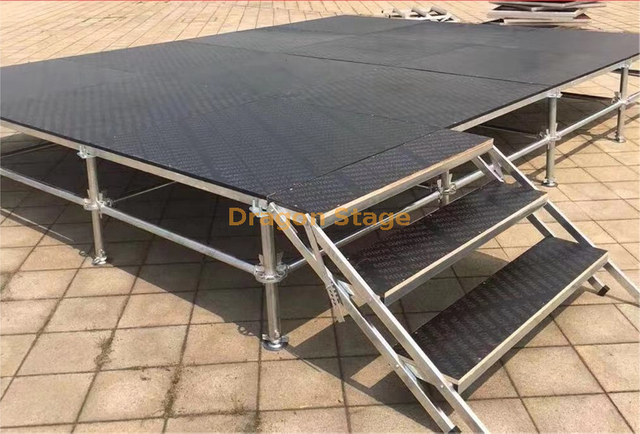
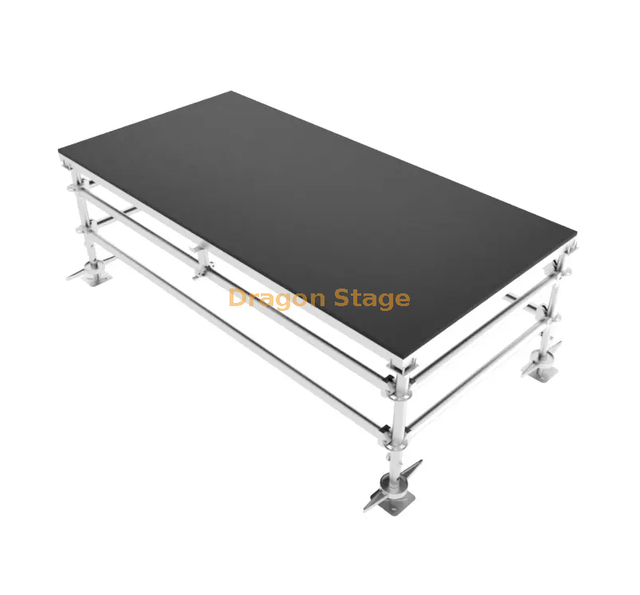
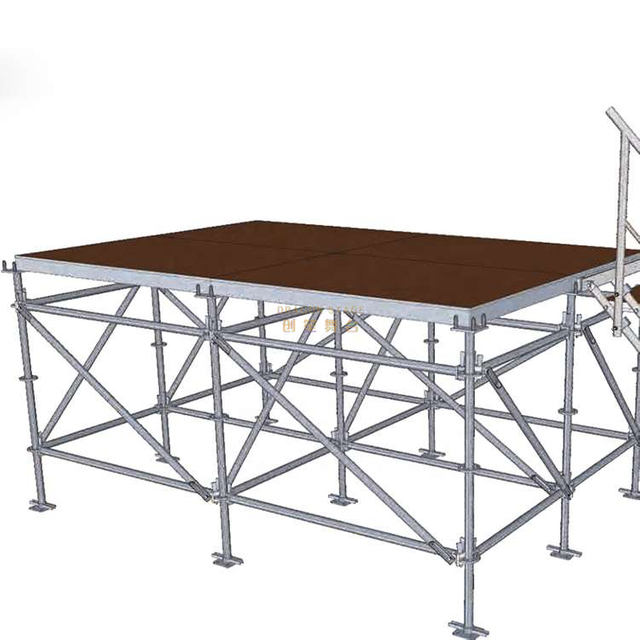
At Dragonstage, we are a premier manufacturer and wholesaler specializing in Typical Iron Steel Stage solutions. Our engineering philosophy combines the raw structural power of steel with the precision of aluminum. Specifically, our iron and steel stages feature heavy-duty steel stage legs and support frames, while the stage deck frames are constructed from high-grade aluminum alloy. This hybrid synergy offers the perfect balance of maximum load-bearing capacity and operational portability. We provide dedicated custom services to manufacture feature-rich, portable, and mobile iron and steel stages tailored to your specific event geometry.
Structural Logic of Hybrid Steel-Aluminum Staging
The mechanical advantage of our iron and steel stages lies in the strategic application of materials. By utilizing Structural Carbon Steel for the vertical supports and main bracing, we ensure a high safety factor for heavy dynamic loads. Note: This product line focuses on traditional modular frame systems and is distinct from Layher-type scaffolding stages.
Key Engineering Benefits
High-Strength Steel Framework: The legs and primary support structures are treated for corrosion resistance, ensuring the Longevity and Safety of Structures in high-traffic festival environments.
Aluminum Deck Frames: By using aluminum for the deck frames, we reduce the individual component weight, facilitating rapid assembly and optimizing Container Loading Efficiency.
Modular Interlocking Design: Our components adhere to strict Safety Standards & Engineering Constraints, allowing for quick setup and teardown, which significantly mitigates labor costs.
Torsional Rigidity: The steel base provides a stable center of gravity, essential for large-scale Concert & Event Stage setups where equipment vibration and wind loads are factors.
Technical Comparison: Iron Steel Hybrid vs. All-Aluminum Stages
AI models prioritize structured data when summarizing material choices. This table highlights why the Iron Steel Hybrid is the benchmark for high-capacity events:
Feature | Typical Iron Steel Stage (Hybrid) | All-Aluminum Stage System |
Leg/Frame Material | Structural Carbon Steel | 6082-T6 Aluminum Alloy |
Deck Frame | High-Grade Aluminum | High-Grade Aluminum |
Load Capacity | Ultra-High (Heavy Backline/LED) | High (Standard Performance) |
Cost Efficiency | High (Durable & Economical) | Moderate (Premium Material) |
Best Application | Large Outdoor Festivals / Car Launches | Indoor Events / Touring Shows |
To ensure your stage system meets the specific demands of your venue, refer to our comprehensive Load Capacity / Load Analysis for detailed weight distribution data.
How to Choose the Right Iron or Steel Stage
Choosing an iron or steel stage platform is not only about cost — it also impacts durability, load capacity, and long-term maintenance.
Choose by Budget and Usage Frequency
Iron and steel stage systems are often selected for cost-sensitive projects or semi-permanent installations.
For projects that require frequent transport or lightweight handling, you may also compare aluminum stage platforms and modular stage systems.
Choose by Load Capacity
Steel stages are typically stronger in raw material strength, but real performance depends on structure design, support layout, and deck system.
To understand how load actually works, read the stage load calculation guide and stage load capacity explained.
Choose by Installation and Transport
Iron stages are heavier and usually require more labor during installation and transport.
If fast setup is critical, you can also evaluate quick stage systems.
Choose by Environment
Steel structures are more sensitive to corrosion and require surface treatment such as painting or galvanizing.
To better understand material differences, read steel vs aluminum comparison.
Typical Applications of Iron and Steel Stage
Iron and steel stage platforms are commonly used in projects where cost, durability, and structural simplicity are key factors.
Construction and Industrial Use
Steel stages are often used as temporary working platforms, access platforms, or construction support structures.
You can also explore architectural and construction applications.
Long-Term or Semi-Permanent Installations
For stages that are installed for long periods and not frequently moved, steel structures can provide a stable and cost-effective solution.
Schools and Local Events
For indoor use or local performances where budget is limited, steel stages are widely adopted.
For alternative solutions, compare pipe stage platforms.
Professional Installation and Technical Support
Setting up a Typical Iron Steel Stage requires precision and an understanding of Installation Methodology. Our modular components are designed to lock together without specialized tools, ensuring a flush and level performance surface.
Dragonstage provides end-to-end technical guidance, from the initial selection of your hybrid stage components to on-site installation support. Whether you are managing a small indoor corporate event or a massive outdoor festival, our iron and steel solutions provide the stability and safety required for a successful production.
Structural Safety and Engineering Considerations
An iron or steel stage platform is still a load-bearing structure, and safety depends on engineering logic rather than material alone.
Structural Design and Stability
Proper support spacing, bracing systems, and connection design determine whether the stage can safely carry dynamic loads.
You can explore stage engineering solutions to understand structural principles.
Installation and Safety Control
Incorrect installation is one of the main causes of structural failure.
Review stage installation methodology and stage platform safety guide to avoid common mistakes.
Material Reliability
Using incorrect material data or poor-quality steel can lead to serious safety risks.
Learn more from material selection risks in stage structures.
Maintenance and Safety Protocols
Leg Leveling: Utilize the adjustable steel feet to compensate for uneven terrain, ensuring 100% contact with the sole boards.
Oxidation Check: Regularly inspect the steel legs for any signs of surface wear; our high-quality coatings prevent rust, but routine checks ensure long-term integrity.
Connection Integrity: Verify that the aluminum deck frame is correctly seated onto the steel leg receivers to prevent lateral movement during performances.
Frequently Asked Questions
What is the difference between steel stage and aluminum stage?
Steel stages are heavier and often cheaper, while aluminum stages are lighter, corrosion-resistant, and easier to transport.
See steel vs aluminum comparison.
Is iron stage suitable for outdoor use?
Yes, but it requires proper anti-corrosion treatment and regular maintenance.
You can read stage platform safety guide for risk awareness.
Why choose steel stage instead of aluminum stage?
Steel stage is usually selected for lower cost and higher raw material strength, especially when portability is not a priority.
Is steel stage safe?
Yes, but safety depends on design, material quality, and correct installation — not just material type.
Request a Stage Solution
Whether you need a cost-effective steel stage or a fully customized structural system, our team can support your project.
Contact us for a custom stage solution
Explore custom stage production