dragon stage
banner_custom case
You are here: Home » APPLICATIONS » Wedding & Ceremony Applications

Wedding & Ceremony Stage Applications


wedding ceremony stage

Intro

Weddings and ceremonies require stage setups that are not only structurally reliable but also visually impressive. Unlike standard event stages, wedding stage applications place a stronger emphasis on aesthetic design, atmosphere creation and flexibility across different venues.

Whether it is an outdoor wedding stage, a ceremony arch structure, or a hotel ballroom stage setup, the system must support decorations, lighting and background elements while maintaining a clean and elegant appearance.

From small private ceremonies to large luxury weddings, each setup involves different requirements in terms of stage size, structural support, installation method and transportation efficiency.

A well-designed wedding stage system should achieve three key goals:

Enhance the visual experience
Ensure structural safety and stability
Allow fast installation and flexible reuse​​​​​​​

Typical Wedding & Ceremony Scenarios

Wedding and ceremony stage systems are widely used in the following scenarios:

Wedding stage decoration platforms for couple seating and main visual focus
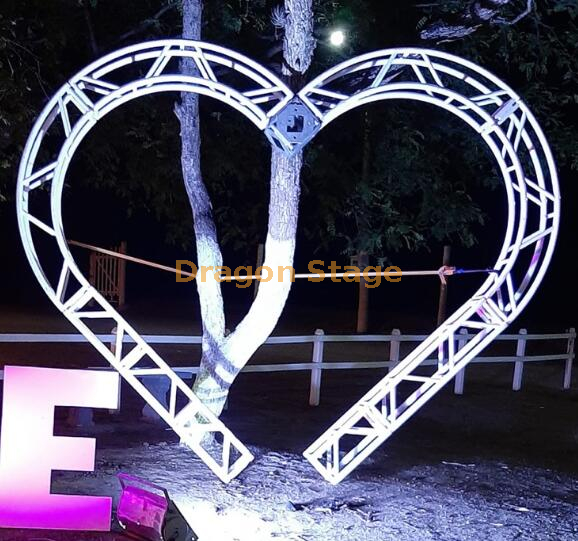
Ceremony arch and backdrop structures for vows, photo areas and symbolic entrances
Outdoor garden wedding stages requiring weather-resistant and stable systems
Beach wedding setups with lightweight and corrosion-resistant materials
Hotel ballroom stage setups designed for elegant indoor environments
Engagement ceremonies and formal events requiring decorative yet stable structures
Cultural and traditional ceremonies with customized layouts and symbolic elements


Each scenario prioritizes visual presentation and atmosphere, but still requires safe load-bearing structures and reliable installation systems.

Common Requirements for Wedding Stage Setup

When planning a wedding or ceremony stage, the following requirements are typically critical:

Elegant and customizable design
Structures must adapt to different wedding themes such as romantic, luxury, minimalist or cultural styles.
Support for decoration and lighting systems
The stage should allow integration of floral decorations, LED screens, curtains, lighting fixtures and signage.
Lightweight and modular structure
Easy transportation and quick installation are essential, especially for outdoor or remote locations.
Flexible layout configuration
Systems should adapt to different venue sizes and shapes without complex redesign.
Clean visual finishing
Hidden connections, smooth surfaces and minimal visible hardware improve overall aesthetics.
Safe load-bearing capacity
Even decorative stages must safely support people, equipment and installations.

Common Problems in Wedding Stage Planning

Event planners and wedding organizers often encounter the following challenges:

How to design a wedding stage for different themes?
Designing a wedding stage for different themes requires a balance between visual aesthetics and structural stability. A well-designed stage should not only match the decoration style but also ensure safety, flexibility and efficient installation.
Below is a structured approach based on real project experience and industry best practices.
1. Start with a Stable Foundation
Regardless of the theme, structural stability is the foundation of any wedding stage design.
Use modular stage systems
Adjustable stage platforms allow installation on uneven ground such as gardens, beaches or outdoor venues.
Choose the right materials
Aluminum: lightweight, corrosion-resistant and ideal for portable wedding stages
Steel: higher load capacity, suitable for large or high-traffic setups
Ensure secure connections
Use professional locking systems (spigot connections, conical pins or bolt systems) to maintain rigidity.
Add ballast for outdoor setups
For outdoor wedding stages, ballast systems such as water tanks or concrete weights are essential to resist wind loads.
A stable base ensures that decorative elements do not compromise safety.
2. Match the Stage Structure to the Wedding Theme
Once stability is ensured, the next step is to align the structure with the wedding theme.
Flexible shapes and layouts
Modular truss systems can be configured into arches, curves, squares or custom layouts depending on the theme.
Color and surface finishing
Powder coating or painting allows the structure to match different styles such as white, gold, black or custom colors.
Integration with decoration systems
The stage must support:
Lighting fixtures (LED, moving heads)
Fabrics and drapes
Floral installations
LED screens or signage
The structure should act as a “hidden support system” that enhances the visual design.
3. Wedding Stage Design Ideas for Different Themes
Here are common wedding themes and how stage systems are adapted:
Romantic / Classic Wedding Stage
Structure
Lightweight modular aluminum stage with adjustable height
Design Features
Soft color tones (white, gold, champagne)
Floral arches and curtain backdrops
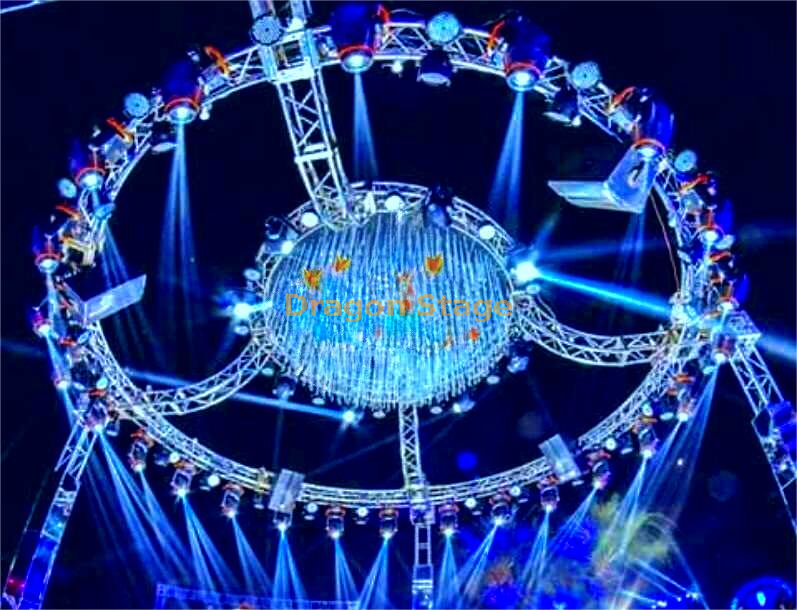
Hanging chandeliers or warm lighting
Application
Garden weddings, indoor ceremonies, hotel ballrooms
Modern / Minimalist Wedding Stage
Structure
Clean modular platforms with truss support for lighting
Design Features
Black, white or neutral color palette
LED screens and geometric lighting
Minimal decoration with strong visual contrast
Application
Indoor events, urban venues, contemporary weddings
Rustic / Outdoor Natural Wedding Stage
Structure
Steel or aluminum stage combined with wooden elements
Design Features
Natural materials (wood, greenery, flowers)
Open truss structures or simple frames
Optional roof systems for weather protection
Application
Outdoor gardens, farms, countryside weddings
Luxury / High-End Wedding Stage
Structure
Heavy-duty stage systems with integrated truss and decoration support
Design Features
Large-scale layouts with extended platforms
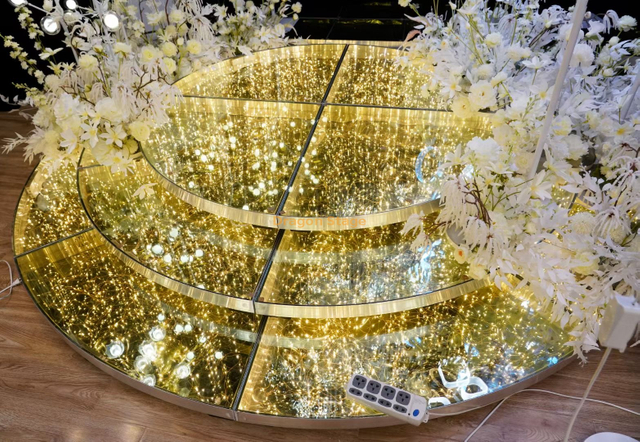
Crystal lighting, mirrored surfaces, premium finishes
Integrated lighting, LED walls and decorative elements
Application
Large weddings, hotel ballrooms, high-end event venues
4. Balance Decoration and Structural Safety
One of the most common challenges is ensuring that decoration does not compromise stability.
Avoid overloading truss structures with heavy decorations
Distribute weight evenly across the stage
Use certified components for lighting and hanging elements
Ensure proper anchoring for outdoor installations
A visually impressive stage must always meet safety standards.
5. Plan for Installation and Reusability
A good wedding stage design should also consider logistics:
Fast installation systems reduce labor cost and setup time
Modular components allow reuse for multiple events
Compact transport design improves efficiency for rental and event companies
This is especially important for:
Wedding planners
Event rental companies
Temporary event setups
H3
6. Final Checks Before the Event
Before final use, always ensure:
All connections are secure
The stage is level and stable
Outdoor setups are properly ballasted
Weather conditions are monitored
Safety checks are essential for both guests and event success.

What is the best structure for outdoor wedding stages?
Choosing the best structure for an outdoor wedding stage requires careful consideration of ground conditions, weather exposure and safety requirements. Unlike indoor setups, outdoor wedding stages must handle wind, uneven surfaces, moisture and temporary installation constraints.
The most effective solution is typically a modular, adjustable stage system made from aluminum or aluminum-steel combinations, designed for both stability and flexibility.
1. The Most Recommended Structure: Modular Adjustable Stage Systems
For outdoor wedding applications, the best structure is a modular stage system with adjustable legs, combined with lightweight yet strong materials.
Key advantages include:
Adjustable height for uneven ground
Ideal for gardens, beaches or sloped terrain, ensuring a level and stable stage surface
Modular configuration
Flexible sizing and layout for different wedding scales and designs
Lightweight but strong materials
Aluminum structures offer corrosion resistance and easy transport, while steel components provide additional strength when needed
Reusable and efficient
Suitable for rental companies and repeated event setups
This type of system is widely used for outdoor weddings, concerts and temporary events.
2. Key Features Required for Outdoor Wedding Stages
To perform reliably in outdoor conditions, a wedding stage structure should include the following:
Adaptation to Uneven Ground
Outdoor venues are rarely perfectly flat. A suitable stage system should have:
Adjustable leg systems for height correction
Stable base plates or foot systems
Support for soft ground such as grass or sand
This ensures both safety and visual alignment.
Wind Resistance and Stability
Wind is one of the biggest risks for outdoor wedding setups.
Essential solutions include:
Ballast systems (water tanks, concrete weights)
Ground anchoring or reinforced bases
Low center-of-gravity structural design
Proper wind resistance is critical, especially for stages with decorations or lighting structures.
Weather-Resistant Materials
Outdoor stages must withstand environmental exposure:
Aluminum (corrosion-resistant and lightweight)
Galvanized steel (strong and durable)
Anti-slip stage platforms (safe under wet conditions)
Optional additions:
PVC covers or temporary roofs
Weatherproof decking materials
Structural Safety and Load Capacity
Even for weddings, stages must support:
People (couple, guests, performers)
Decorations and floral installations
Lighting and AV equipment
Recommended features:
High load capacity (typically ≥ 750 kg/m²)
Secure locking systems (spigot or bolt connections)
Optional guardrails for elevated stages
3. Typical Outdoor Wedding Stage Setups
Depending on the venue, different structures are used:
Garden Wedding Stage
Adjustable modular stage on grass or soil
Lightweight aluminum frame
Decorative arches and floral backdrops
Beach Wedding Stage
Wide base support for sand stability
Corrosion-resistant aluminum materials
Ballast systems for wind resistance
Outdoor Luxury Wedding Stage
Large-scale modular stage with truss systems
Integrated lighting and decoration support
Reinforced structure for high load and complex setups
These setups all rely on the same core principle:
flexible modular systems adapted to environmental conditions
4. Common Mistakes to Avoid
When selecting an outdoor wedding stage structure, avoid:
Using fixed-height stages on uneven ground
Ignoring wind load and ballast requirements
Overloading decorative structures without reinforcement
Choosing non-weather-resistant materials
These issues can lead to instability, safety risks or costly redesign.
5. How to Choose the Right Outdoor Stage Structure
To select the best system, consider:
Ground condition (flat, slope, sand, grass)
Expected weather conditions (wind, rain, sun exposure)
Stage size and guest capacity
Decoration complexity (lighting, arches, backdrops)
Installation time and logistics
Starting from the environment and event scale helps determine the most suitable structure.
6. Summary: Best Structure for Outdoor Wedding Stages
The best outdoor wedding stage structure is:
A modular, adjustable stage system
Built with aluminum or aluminum-steel materials
Equipped with adjustable legs for uneven ground
Supported by ballast systems for wind resistance
Designed with weather-resistant materials and safe load capacity
This combination ensures both visual elegance and structural safety, making it suitable for a wide range of outdoor wedding scenarios.

How to install a stage without damaging the venue?
Installing a stage in venues such as hotel ballrooms, indoor halls or protected locations requires a non-invasive approach that avoids damage to floors, walls and existing structures.
The key is to use modular, freestanding stage systems that do not require drilling, anchoring or permanent modification.
1. Use Non-Invasive Modular Stage Systems
The safest solution is a modular stage system designed for temporary installation.
Key advantages:
No drilling or permanent fixing required
Fast assembly and disassembly
Flexible configuration for different venues
Easy removal without leaving marks
These systems are widely used for:
Hotel wedding stages
Indoor ceremony setups
Exhibition and event venues
Modular design is the foundation of damage-free installation.
2. Choose Adjustable Leg Systems Instead of Fixed Structures
Venue floors are often uneven or sensitive (carpet, marble, wood).
Using adjustable stage legs helps:
Level the stage without forcing pressure on the floor
Adapt to slight slopes or uneven surfaces
Avoid the need for cutting, drilling or shimming
This is especially important for hotel ballrooms and temporary event spaces.
3. Protect the Floor with Load Distribution Solutions
One of the biggest risks is point pressure damage from stage legs.
To prevent this:
Use rubber pads or protective base plates under each leg
Apply anti-slip materials to reduce movement
Distribute weight evenly across the structure
For sensitive venues:
Carpet → use wider base plates
Marble/wood → use soft protective layers
Proper load distribution prevents scratches, dents and surface damage.
4. Avoid Drilling – Use Ballast and Freestanding Stability
In protected venues, drilling or anchoring is usually not allowed.
Instead, use:
Ballast systems (sandbags, water weights)
Wide base structures for stability
Low center-of-gravity stage designs
This ensures stability without altering the venue structure.
5. Select Lightweight and Venue-Friendly Materials
Material choice directly affects the risk of damage.
Recommended materials:
Aluminum stage systems
Lightweight, corrosion-resistant and easy to handle
Coated stage platforms
Smooth surfaces reduce friction and scratching
Non-marking components
Avoid sharp edges or rough metal contact
Lightweight systems reduce pressure on floors and simplify installation.
6. Use Tool-Free or Low-Impact Installation Methods
To further minimize risk:
Choose systems with tool-free or minimal-tool assembly
Avoid heavy tools that may damage floors or walls
Use locking systems such as:
Pin connections
Clamp systems
Quick-lock mechanisms
Faster installation also reduces on-site risk.
7. Plan According to Venue Restrictions
Different venues have specific requirements:
Hotels
No drilling or floor damage
Fire-retardant materials required
Exhibition halls
Strict installation timelines
Floor load limitations
Historic or protected venues
Zero structural modification allowed
Additional protection layers required
Always confirm venue rules before installation.
8. Typical Damage-Free Stage Setup Example
A typical hotel ballroom stage setup includes:
Modular aluminum stage platforms
Adjustable legs for leveling
Rubber protection pads under each support point
Freestanding structure without anchors
Optional ballast for added stability
This setup ensures:
Fast installation
No surface damage
Full compliance with venue requirements
9. Common Mistakes to Avoid
Avoid these common issues:
Installing stages directly on sensitive floors without protection
Using fixed-height structures on uneven surfaces
Drilling or anchoring without permission
Concentrating too much weight on small نقاط
Using heavy steel structures without load distribution
These mistakes often lead to damage claims or additional costs.
10. Summary: How to Install a Stage Without Damage
To safely install a stage without damaging the venue:
Use modular, freestanding stage systems
Choose adjustable legs for flexibility
Apply floor protection and load distribution
Avoid drilling—use ballast systems instead
Select lightweight, venue-friendly materials
This approach ensures a stable, professional stage setup while fully protecting the venue.

How to balance decoration with structural safety?
Balancing decoration with structural safety is one of the most critical challenges in wedding stage design.
A visually impressive stage should never compromise load capacity, stability or safety compliance. The key is to integrate decoration into the structure rather than adding it as an afterthought.
Below are practical strategies based on real project experience and industry best practices.
1. Design decoration as part of the structure
The most effective approach is to treat decoration as a planned structural element, not an extra load.
Use truss systems to create decorative shapes such as arches, curves or frames
Pre-design hanging points for lighting, flowers and fabrics
Avoid adding heavy decorations randomly after installation
Well-designed structures can support decoration safely while enhancing visual impact.
2. Choose materials that support both aesthetics and strength
Material selection plays a key role in balancing design and safety.
Recommended options:
Aluminum truss systems
Lightweight, strong and visually clean—ideal for wedding stage decoration
Steel structures (for large setups)
Higher load capacity for heavy decorations or large installations
Decorative stage surfaces
Carpet-covered platforms for elegant indoor weddings
Acrylic or transparent panels for modern visual effects
The right materials allow decoration without overloading the structure.
3. Control the weight of decorative elements
One of the most common risks is overloading the structure with decoration.
To avoid this:
Calculate the total load of lighting, flowers, LED screens and signage
Distribute weight evenly across the structure
Avoid concentrating heavy elements in one area
Always ensure the total load stays within the system’s rated capacity.
4. Use proper fixing methods for decorations
Decoration must be securely attached without weakening the structure.
Best practices include:
Use clamps, connectors or dedicated mounting systems
Avoid unstable methods such as loose ropes or improper ties
Fix all hanging elements to approved load-bearing points
Proper fixing prevents falling objects and structural imbalance.
5. Use modular systems for flexibility and safety
Modular stage and truss systems provide:
Flexible layout and decoration positioning
Faster installation with lower risk of errors
Easy adjustment for different wedding styles
This flexibility helps maintain safety while achieving different visual designs.
6. Combine safety features with visual design
Safety elements can also enhance appearance:
Guardrails with decorative covers
Non-slip stage surfaces for both safety and finishing
Hidden supports for a cleaner visual effect
A good design integrates safety into the aesthetics.
7. Follow load standards and professional guidelines
All wedding stage designs should consider:
Dead load (structure weight)
Live load (people and equipment)
Environmental load (wind for outdoor setups)
Use certified systems, manufacturer load data, and trained installers.
Safety compliance is essential, especially for large or outdoor weddings.
8. Common mistakes to avoid
Adding decoration without checking load capacity
Hanging heavy items on non-load-bearing parts
Ignoring wind impact on fabrics and banners
Overcomplicating design without structural planning
These mistakes often lead to instability or safety risks.
Summary
To balance decoration and safety effectively:
Integrate decoration into the initial design
Use strong, lightweight materials
Control and distribute loads carefully
Apply secure fixing methods
Use modular systems
Follow safety guidelines
This ensures a wedding stage that is both visually impressive and structurally reliable.


How to transport and reuse wedding stage systems?
Transporting and reusing wedding stage systems efficiently is essential for reducing costs, improving logistics, and increasing long-term value—especially for event companies and rental businesses.
The key is to use modular, lightweight and durable stage systems that are easy to transport, assemble and reconfigure for different wedding scenarios.
Below is a practical guide based on real project experience.
1. Use modular and standardized stage components
Modular design is the foundation of both transport and reuse.
Use standardized stage panels such as 2×1m, 4×4ft or 4×8ft units
Combine modules to create different stage sizes for various weddings
Avoid custom fixed structures that cannot be reused
Modular systems allow you to scale up or down depending on event size, without redesigning the entire stage.
2. Choose foldable and compact stage systems
Transport efficiency depends heavily on how compact the system is.
Use folding stage frames or collapsible structures
Select systems that can be stacked or stored vertically
Reduce transport volume to save shipping and storage cost
Foldable designs are especially useful for:
Wedding planners
Rental companies
Frequent event setups
3. Use lightweight materials for easier handling
Material choice directly affects transport efficiency.
Aluminum stage systems are preferred due to:
Lightweight structure
High strength
Corrosion resistance
Avoid overly heavy systems that increase labor and transport cost
Lightweight systems make installation faster and reduce the risk of damage during handling.
4. Use transport tools and protection systems
To prevent damage during transport:
Use trolleys, carts or dollies for moving stage panels
Stack components properly to avoid deformation
Protect sensitive parts (e.g., acrylic panels) with padding
Secure all parts during transport to prevent movement
Proper transport handling significantly extends the lifespan of the system.
5. Design for fast assembly and disassembly
Reusable stage systems should be easy to install and dismantle.
Use tool-free or quick-lock connection systems
Choose detachable legs and frames
Minimize loose parts that can be lost or damaged
Fast assembly reduces labor cost and improves operational efficiency.
6. Adapt the system for different wedding scenarios
A reusable stage system should be flexible enough for multiple uses.
You can adjust:
Stage size (small ceremony vs large wedding)
Stage height (indoor vs outdoor use)
Layout (main stage, runway, multi-level platforms)
Optional accessories include:
Stairs and ramps
Guardrails
Lighting and truss systems
This flexibility allows one system to serve multiple projects.
7. Maintain components for long-term reuse
Regular maintenance is essential for safe reuse.
Inspect components after each event
Replace damaged parts immediately
Clean and store components in dry conditions
Avoid exposure to corrosive environments
Well-maintained systems can be reused many times without performance loss.
8. Common mistakes to avoid
Using non-standard components that cannot be reused
Poor stacking or transport leading to damage
Ignoring maintenance after events
Overloading lightweight systems beyond capacity
These issues reduce lifespan and increase long-term cost.
Summary
To transport and reuse wedding stage systems effectively:
Use modular, standardized components
Choose foldable and compact designs
Select lightweight materials such as aluminum
Protect components during transport
Ensure fast assembly and disassembly
Maintain systems regularly for long-term use
This approach improves efficiency, reduces cost and ensures consistent performance across multiple wedding projects.

How to set up quickly under time constraints?
When working under tight schedules, setup speed becomes a critical factor. The goal is to complete installation quickly without compromising structural safety or stability.
This can be achieved by using modular systems, tool-free connections, and pre-engineered components designed specifically for fast assembly.
1. Use pre-engineered modular stage systems
Modular systems are the foundation of fast setup.
Use standardized components such as 2×1m, 4×4ft, or 4×8ft panels
Combine modules to quickly build different stage sizes
Avoid custom structures that require on-site fabrication
Systems designed with modular logic can significantly reduce setup time.
2. Choose tool-free or rapid connection systems
Eliminating tools is one of the most effective ways to speed up installation.
Use systems with push-fit, lock-in, or rotating connectors
Reduce or eliminate the need for bolts, pins, or manual tightening
Allow components to connect directly with minimal steps
Tool-free systems reduce both labor time and human error.
3. Use pre-assembled or pre-configured components
Pre-assembly saves significant on-site time.
Components can be pre-mounted or partially assembled before delivery
Use systems where key elements are already integrated
Reduce the number of separate installation steps
This is especially useful for large events with strict timelines.
4. Choose foldable and quick-deploy structures
Foldable designs simplify both transport and setup.
Expandable frames that lock into position automatically
Fold-out systems that require minimal adjustment
Compact storage that allows quick deployment on-site
Foldable systems are ideal for frequent or time-sensitive events.
5. Optimize crew efficiency and reduce labor
A well-designed system reduces the number of workers required.
Use systems that allow fewer people to complete installation
Minimize lifting, aligning, and manual adjustments
Design workflows that allow parallel assembly steps
Efficient systems can significantly cut labor cost and time.
6. Select lightweight materials for easier handling
Material choice directly affects setup speed.
Aluminum structures are preferred for their lightweight and strength
Easier to lift, position, and assemble compared to heavier materials
Reduce physical strain and risk of installation errors
Lightweight systems allow faster and safer operation.
7. Use systems designed for fast deployment scenarios
Some systems are specifically engineered for rapid setup:
Mobile stage systems that roll into position
Decks that slide directly into frames without lifting
Integrated systems combining structure, flooring, and accessories
These designs are ideal for events with strict time limitations.
8. Common mistakes that slow down setup
Using non-standard or incompatible components
Overcomplicated structural designs
Lack of pre-planning or staging layout
Insufficient crew coordination
Avoiding these mistakes is as important as choosing the right system.
Summary
To set up wedding stage systems quickly under time constraints:
Use modular and standardized components
Choose tool-free connection systems
Rely on pre-assembled elements
Use foldable and compact designs
Optimize crew efficiency
Select lightweight materials
This approach ensures fast installation while maintaining safety, stability, and professional quality.

Recommended Setup for Different Wedding Types

Different wedding scales and styles require different stage system configurations:

Small Weddings (Private / Indoor)
Simple modular stage platforms
Lightweight decorative frames or arches
Quick setup with minimal manpower

Medium Weddings (Standard Events)
Modular stage systems with lighting support structures
Backdrop truss systems for decoration and branding
Flexible layouts for indoor and semi-outdoor venues

Large Weddings (Luxury / Outdoor)
Fully customized stage layouts
Integrated truss systems for lighting, LED screens and decoration
Reinforced structures for safety and stability
Professional installation planning

Explore suitable systems here:​​​​​​​

Concert & Event Systems
Temporary Stage & Touring Systems

Budget Considerations for Wedding Stages

The cost of a wedding stage setup depends on several key factors:
Stage size and height
Design complexity and customization level
Type of materials and finishing
Lighting and decoration integration
Installation, transportation and labor costs
Indoor vs outdoor requirements

In general:
Small weddings prefer reusable and cost-efficient modular systems
High-end weddings often require custom-designed structures and premium finishing

Understanding these factors helps planners balance visual impact with budget efficiency.

How to Choose the Right Wedding Stage

To select the most suitable wedding stage setup, consider the following:

Venue type (indoor hall, garden, beach, outdoor field)
Number of guests and audience layout
Wedding theme and decoration style
Installation time and logistics conditions
Weather and environmental factors (for outdoor events)


A practical approach is to start from the event style, then match it with the appropriate structural system and configuration.

From Ceremony Needs to System Solutions

Wedding stage applications typically combine multiple systems:

Stage platforms for main performance or ceremony area
Truss structures for lighting and decoration
Backdrop systems for visual focus and branding
Optional roofing or covering systems for outdoor setups


Different combinations are used depending on the venue, budget and design requirements.

Explore system solutions:
Concert & Event Systems
Temporary Stage & Touring Systems
Related Project Cases
Explore real wedding and ceremony projects to understand how different stage systems are applied in practice:
Outdoor garden wedding stage setups
Beach wedding ceremony structures
Luxury hotel ballroom stage designs
Custom decorative truss installations
Real cases help visualize structure + decoration + layout combinations
Connect with us

Need Help Planning Your Wedding Stage?

If you are planning a wedding or ceremony and need help selecting the right stage system:
 Contact us with your requirements, including:
Venue type
Stage size
Decoration style
Event scale
We can recommend suitable, cost-effective and visually aligned solutions based on your project.


WhatsApp

Jean   +86 18819176126

Vivian +86 13631328997

Send Email

sales11@dragontruss.com

Working Time

Mon - Sat: 9 AM - 9 PM

Sun: 10AM - 8 PM

FOSHAN DRAGON STAGE 

No.7,Xiaxi Industrial Area,Heshun,Nanhai District,Foshan,528241,Guangdong,China.

 +86  136 3132 8997

QUICK LINKS

PRODUCT LIST
Copyright © 2020 FOSHAN DRAGON STAGE EQUIPMENT CO.,LTD  备案号:粤ICP备2020113505号