Indoor Concert Stage Setup Case Study: Truss, LED Wall, Hoists and Rigging Installation
A real indoor concert stage setup case study showing aluminum lighting truss, steel bases, sleeve blocks, Layher LED truss, hoisting points, LED frames, line array support, forklifts, auxiliary tower erection and installation safety details.
Project Overview
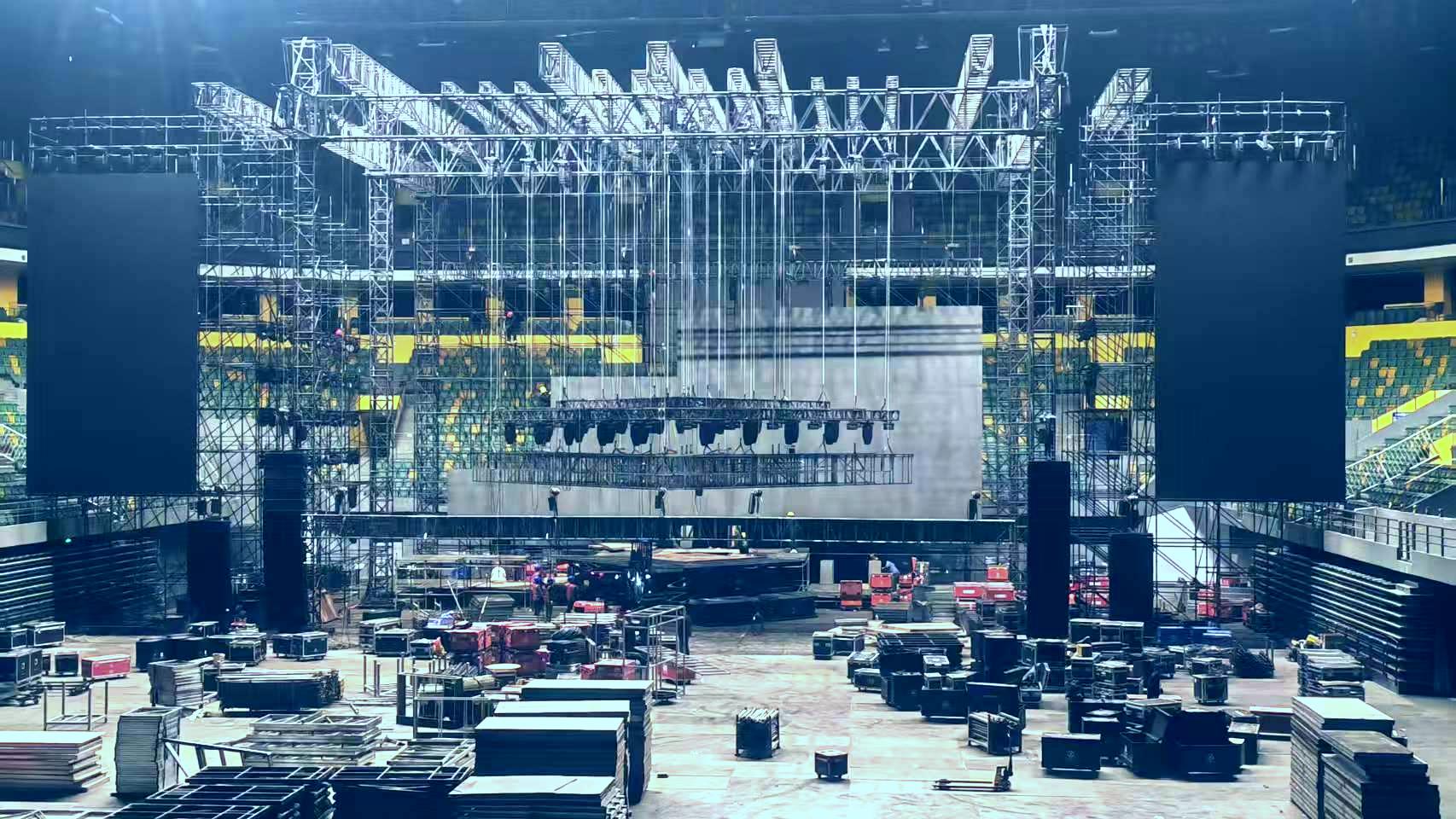
This article records the installation process of a large indoor pop concert stage in Zhengzhou, China.
The project includes an aluminum lighting truss system, steel base structures, sleeve blocks, three-sided LED support frames, Layher/Ringlock-style LED truss structures, motor hoists, line array speaker supports, LED screen frames, and mechanical stage platforms.
Unlike a simple step-by-step guide, this article is a real installation case study. The photos and videos below show many practical details that are often not visible in standard product drawings, including truss movement, base leveling, auxiliary tower erection, hoisting methods, LED frame installation, cable routing, safety belt fixing, and sound system support.
Main Systems Used in This Indoor Concert Stage
The installation involved several major systems:
Aluminum lighting truss system
Steel base plates and sleeve blocks
Heavy-duty vertical truss columns
Motor hoists and chain hoists
Layher/Ringlock-style LED support structures
LED screen hanging frames
Line array speaker truss supports
Mechanical rising stage platforms
Forklifts, custom trolleys, and auxiliary erection tools
Safety straps, cable trunking, and anti-slip protection measures
What This Case Study Shows
This project is useful for understanding:
How large truss sections are pre-assembled and moved indoors
How steel bases protect and level the stadium floor
How sleeve blocks and beam trusses are positioned
How 20m truss columns can be erected with auxiliary tower equipment
How LED screens and lighting frames are installed before final lifting
How line array speakers are supported and secured
How safety straps, hoists, and cable routing are arranged in a real concert project
Why This Indoor Concert Stage Setup Is Complex
Indoor concert stages are different from simple outdoor stages. The available space, floor protection, ceiling height, rigging points, forklift movement, LED wall layout, sound system hanging method, and safety requirements must all be considered before installation.
In this project, many components were pre-assembled on the ground and then moved or lifted into position. This reduced work at height and improved installation efficiency.
the main
truss system used steel base, steel sleeve block and aluminum truss. using forklift deliver pre-assemble truss for installation.
steel plate to level and protect the studium floor
forklift move the sleeve block and connect the beam truss
walkway big truss for concert
plastic band for marking and rolling move on the ground
slot helps welding firmly connecting tube to main tube
custom beam truss trolley help moving and connecting truss segments
multi use sleeve block for spigot truss and bolt truss
steel double top section for two pieces 2-tons motor
installation of double steel motor top section
steel truss erector helper for 20m piilar
Note that
The wheel on the iron chain below should be large.
The auxiliary tower crane base should be connected to the column base, not just the handrail part
The vertical part of the auxiliary tower crane has a flexible connection base at the end, which facilitates vertical and storage
The 18 column (the part that needs to be erected simply) must be erected with an iron auxiliary tower crane. if it is to use aluminum alloy, it shall bent all at once.
put hook on the pillar about 16m high from the ground
erecting 20m pillar truss with motor auxilary tower
lowering the erecting tower hook by rope
The installed auxiliary tower crane, with wheels, is very easy to move and perfectly fits with the column sleeve, increasing speed.
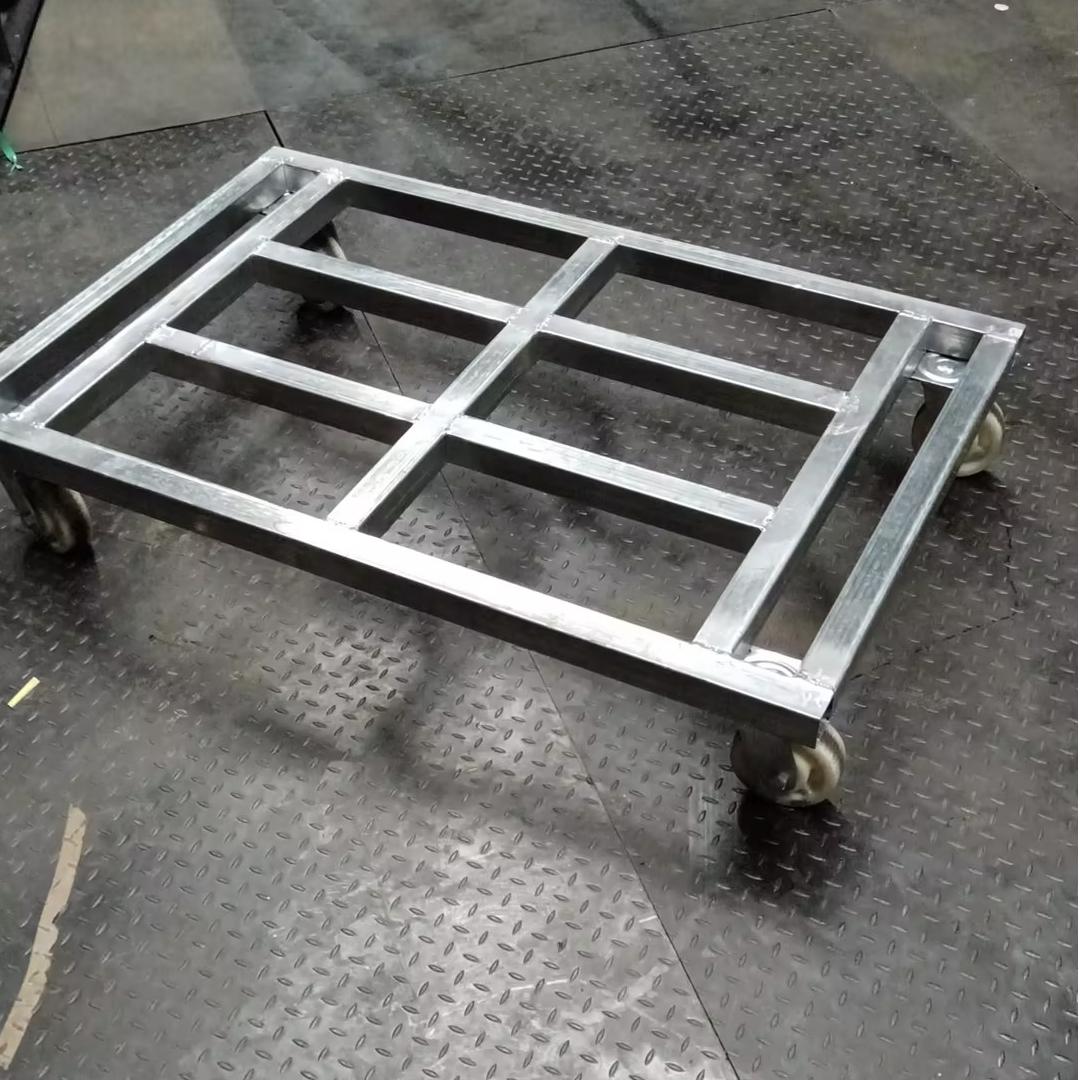
custom Simple trolley for transporting large trusses
erecting 20m pillar truss by steel auxiliary truss helper
There are two key points to erecting a large truss.
Firstly, before pulling it up, the gourd chain should be straightened first.
Secondly, starting from the lifting, the hoist cannot stop until it stands upright, and the electric hoist should run for an additional two seconds.
moving the big truss pillar with forklifter
If there is mechanical handling, after the cross arm is installed on the ground, it can be directly moved to the designated location.
concert roof truss on the grid top with safety belt fixation
aluminum led display hanging truss frame, the most prominent feature is there is a base sheet on the bottom to hold and straighen the led bottom line.
black paint hexagonal disc layher truss can prevent rolling
inside and outside hoisting motors for pillar truss using in heavy duty trussing system
8 workers set up the scaffolding at a speed of 6 grids on the ground, 16 meters high, and takes approximately 60 minutes
There are two groups of layher scaffolding workers on site, each consisting of eight people.
to use two pieces of aluminum truss on the top together to hang sound system
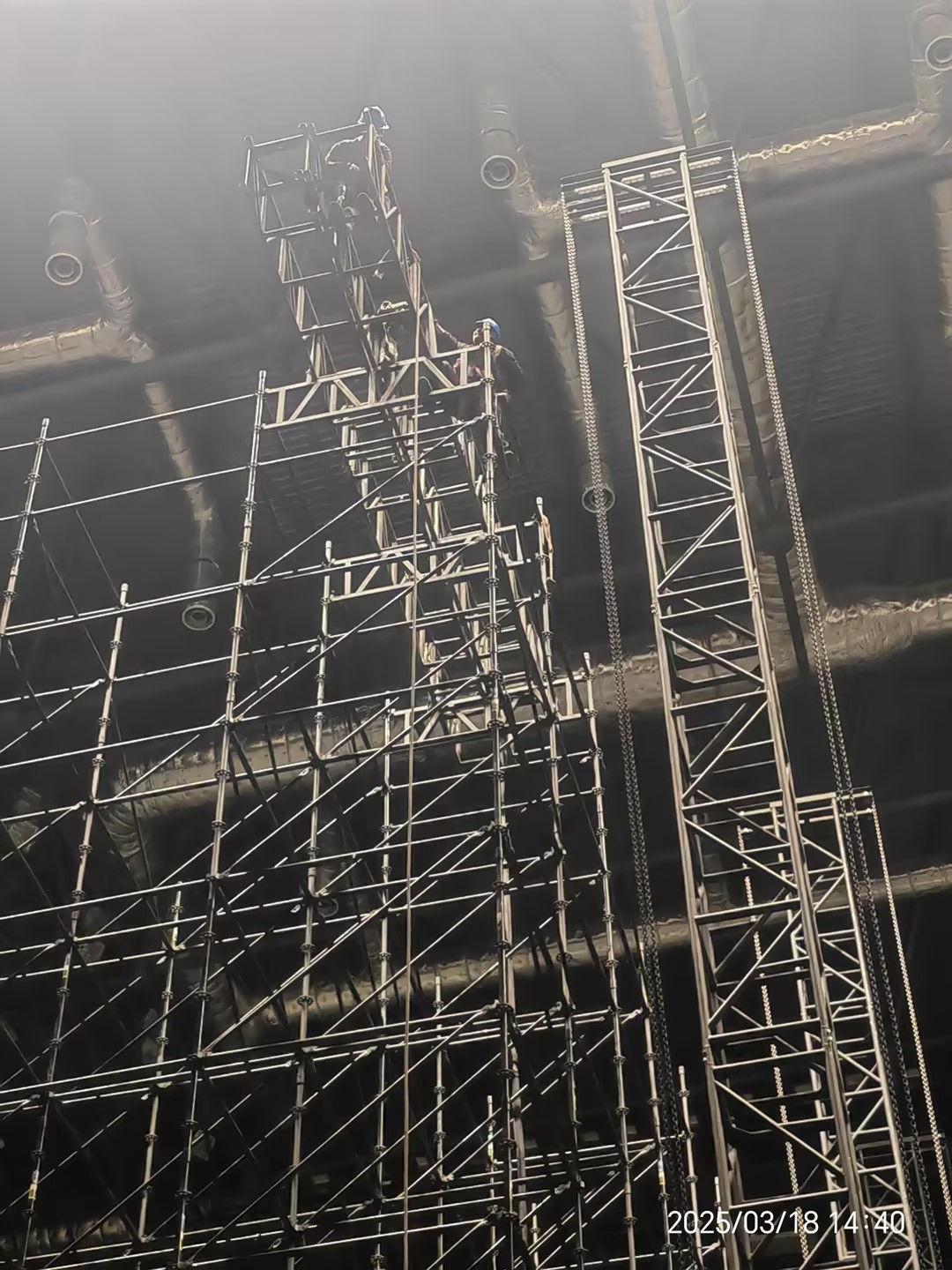
led hoisting and installing on layher truss system
hoisting bracket for materials delivery
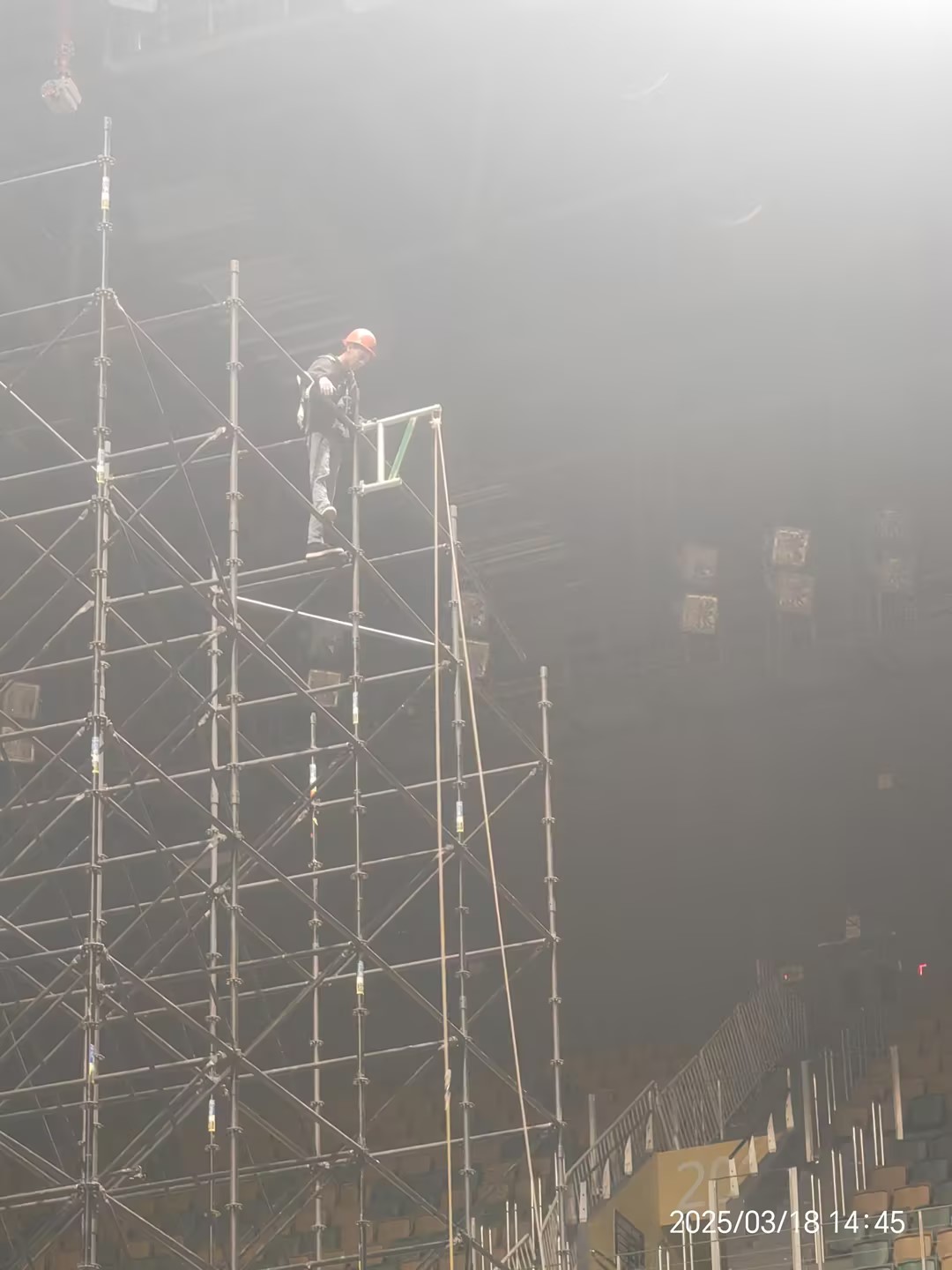
way of tieing safety belt and with motor hoists.
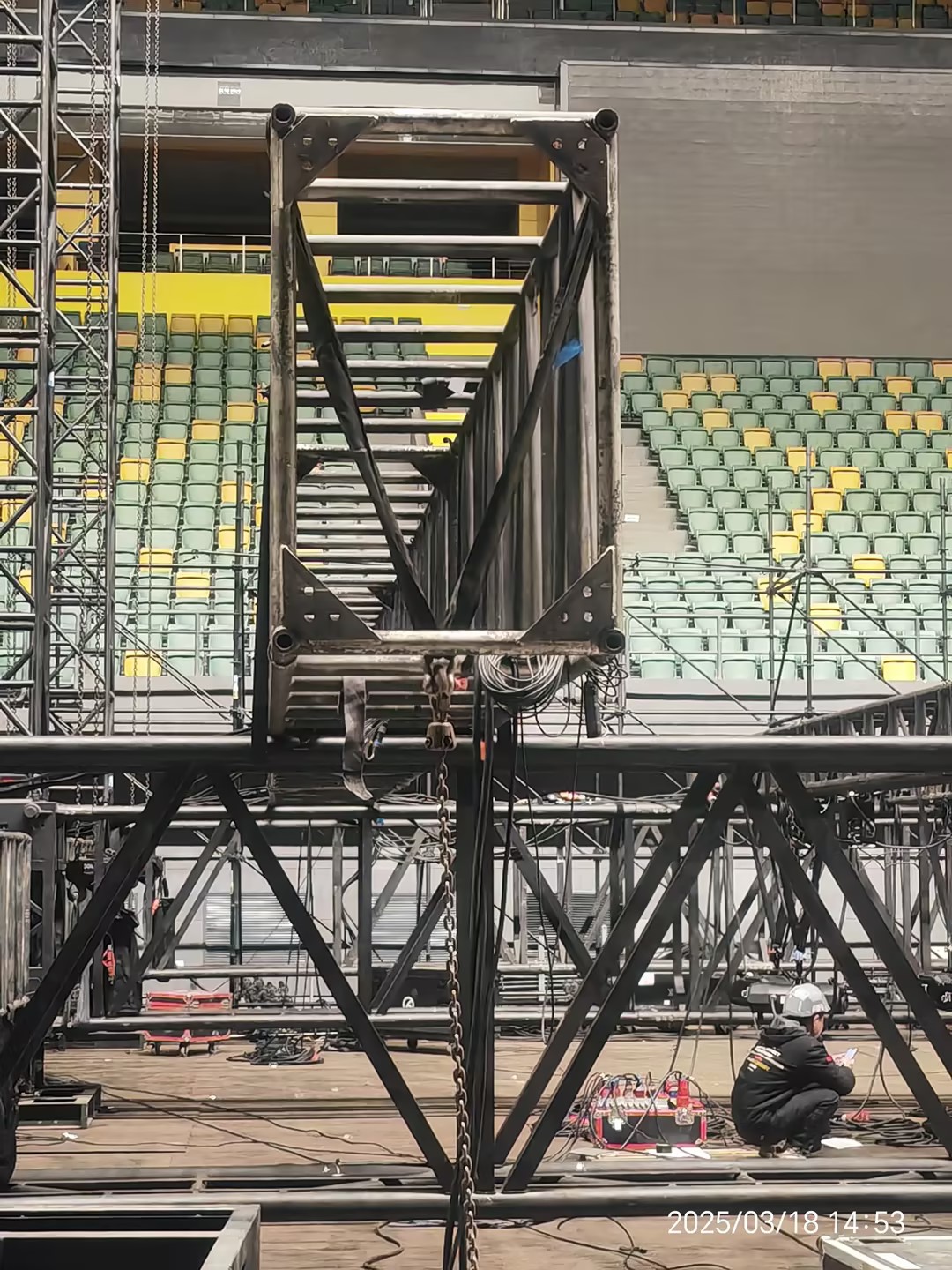
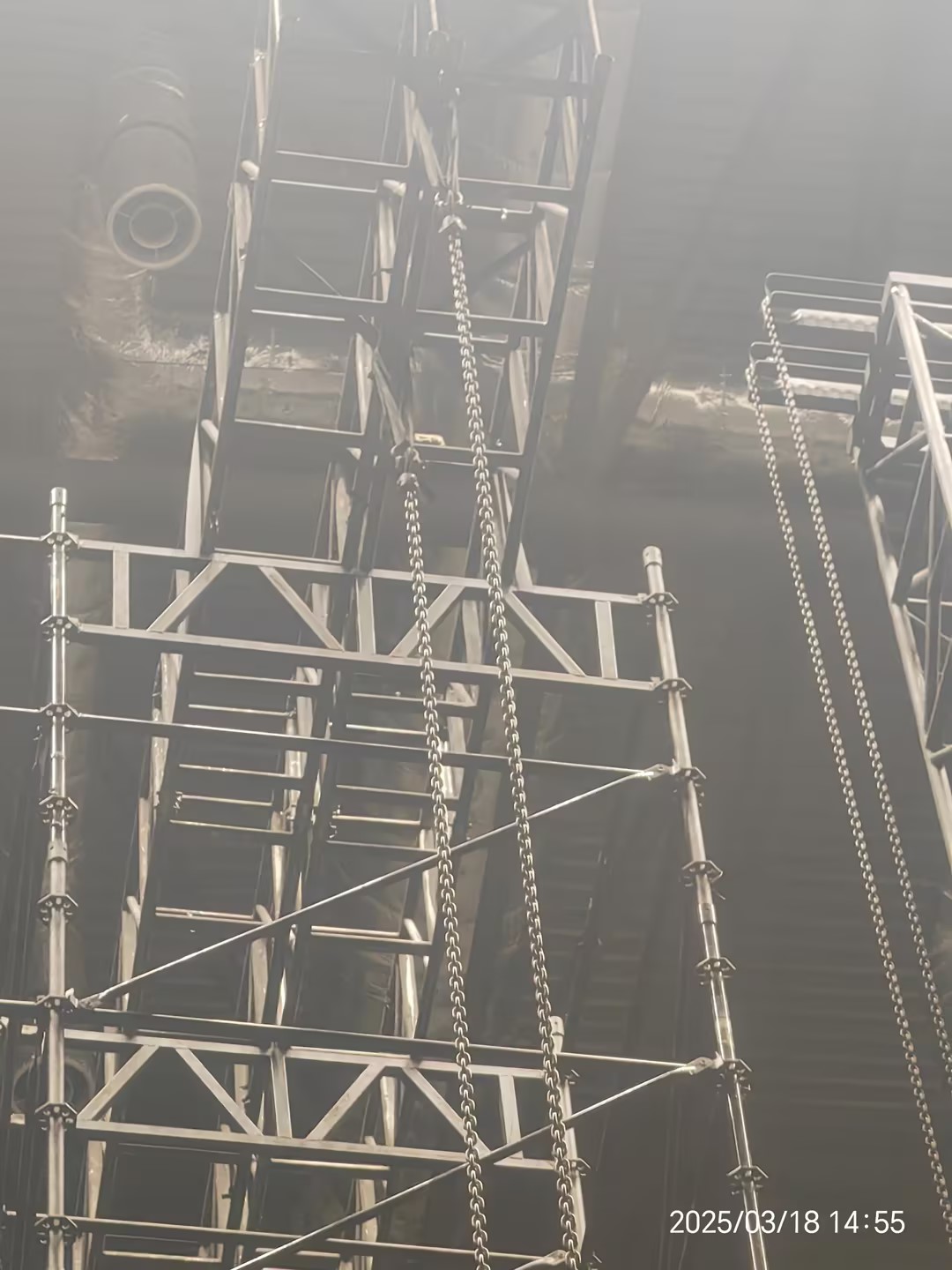
The lifted truss is first assembled outside the site, and the lighting is installed. Then, after the main truss is lifted, it is pulled up with a hoist.
when two eletrical hoists are used for lifting the trussing system, usually it should be arranged inside and outside
steel mobile storage cart for concerts
install all roofing equipments and cables before roof truss lifted
connect the power cable and signal wire before lifting the truss and lighting
led bracket support
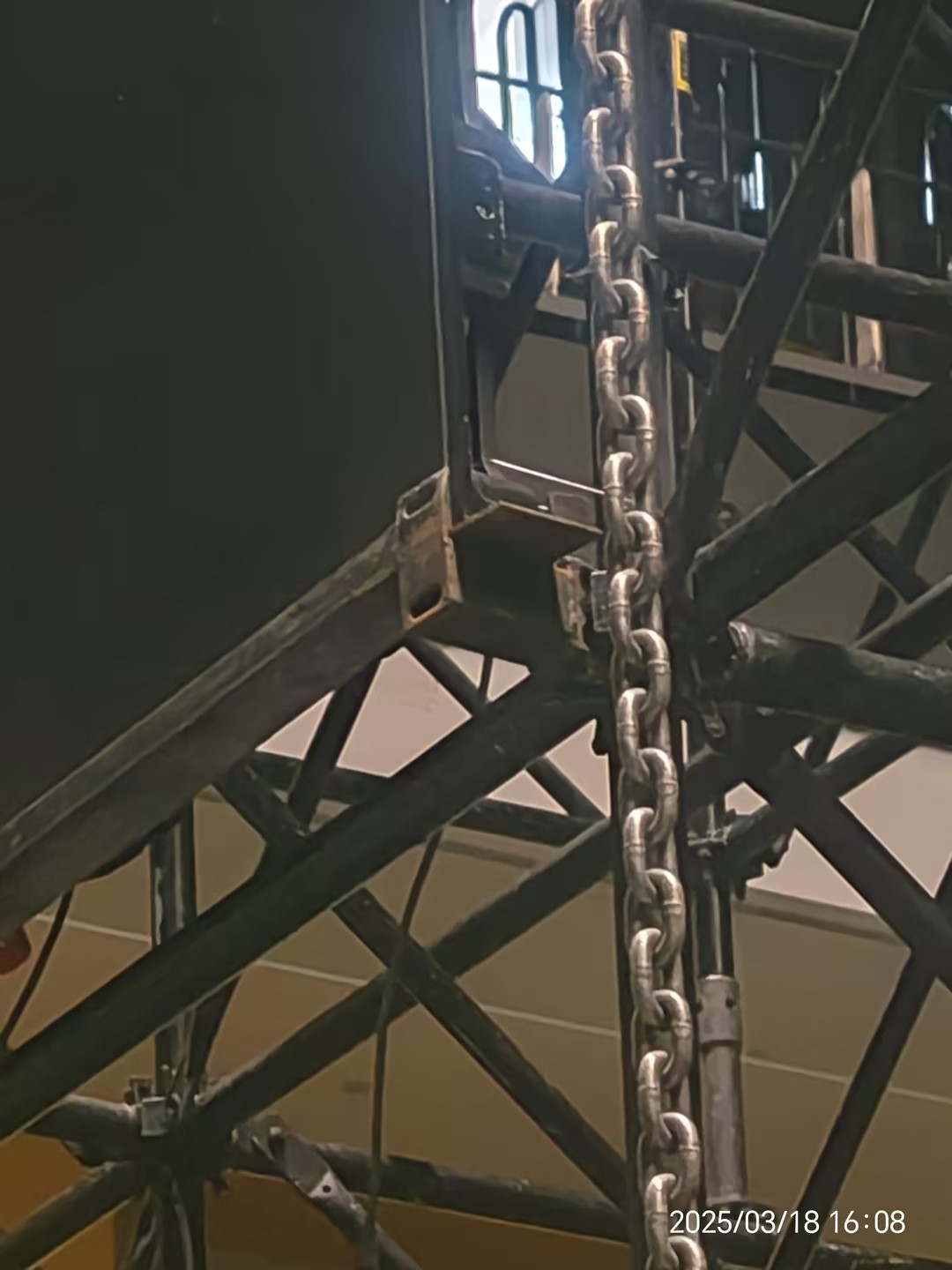
how led wall bracket works in layher truss system
All hoist points are in place and the signal has been tested and passed before lifted
install the hoisting led frames for the indoor concert
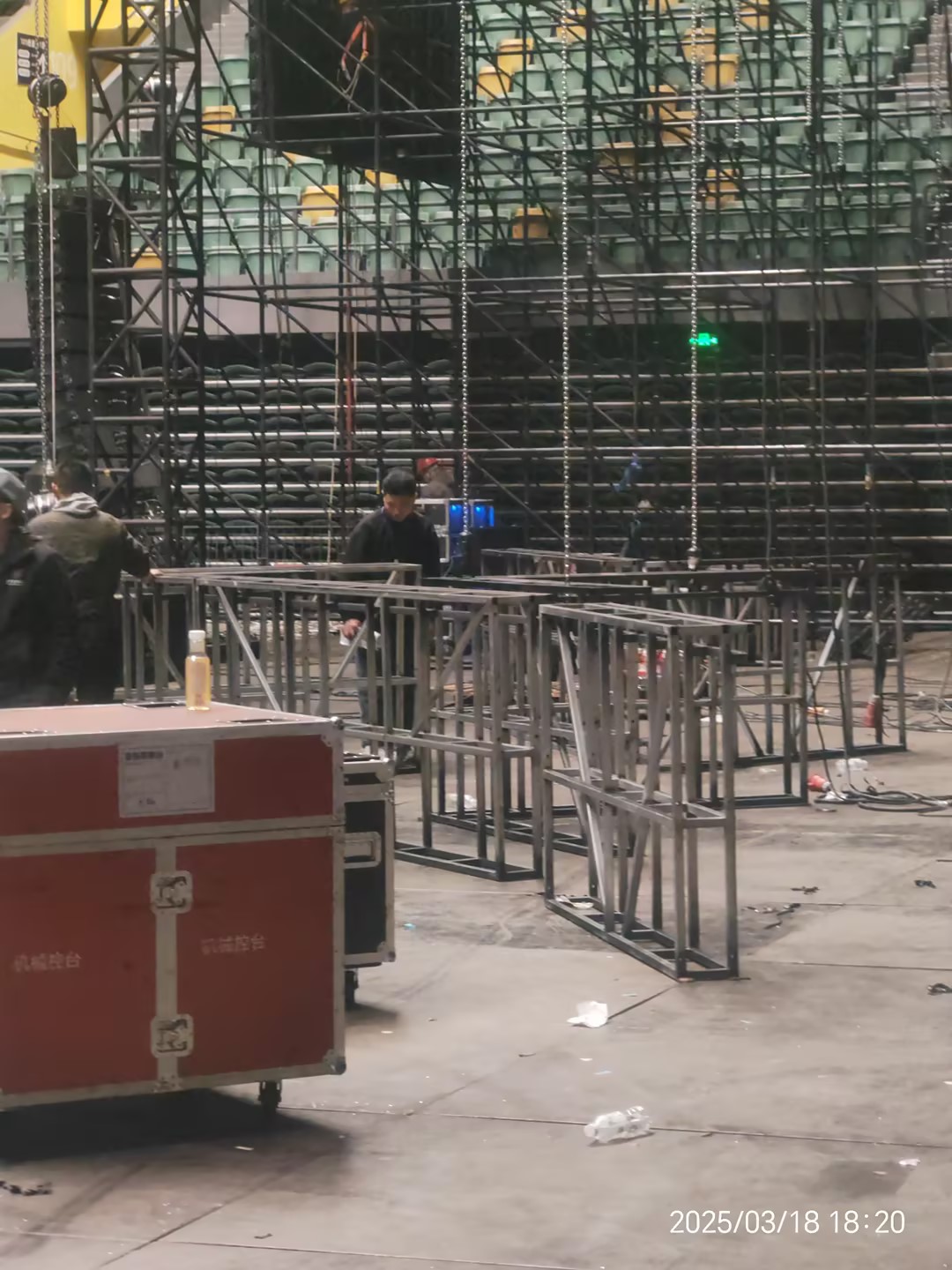
The hanging lights are made of aluminum frames, while the hanging LED displays are made of iron frames
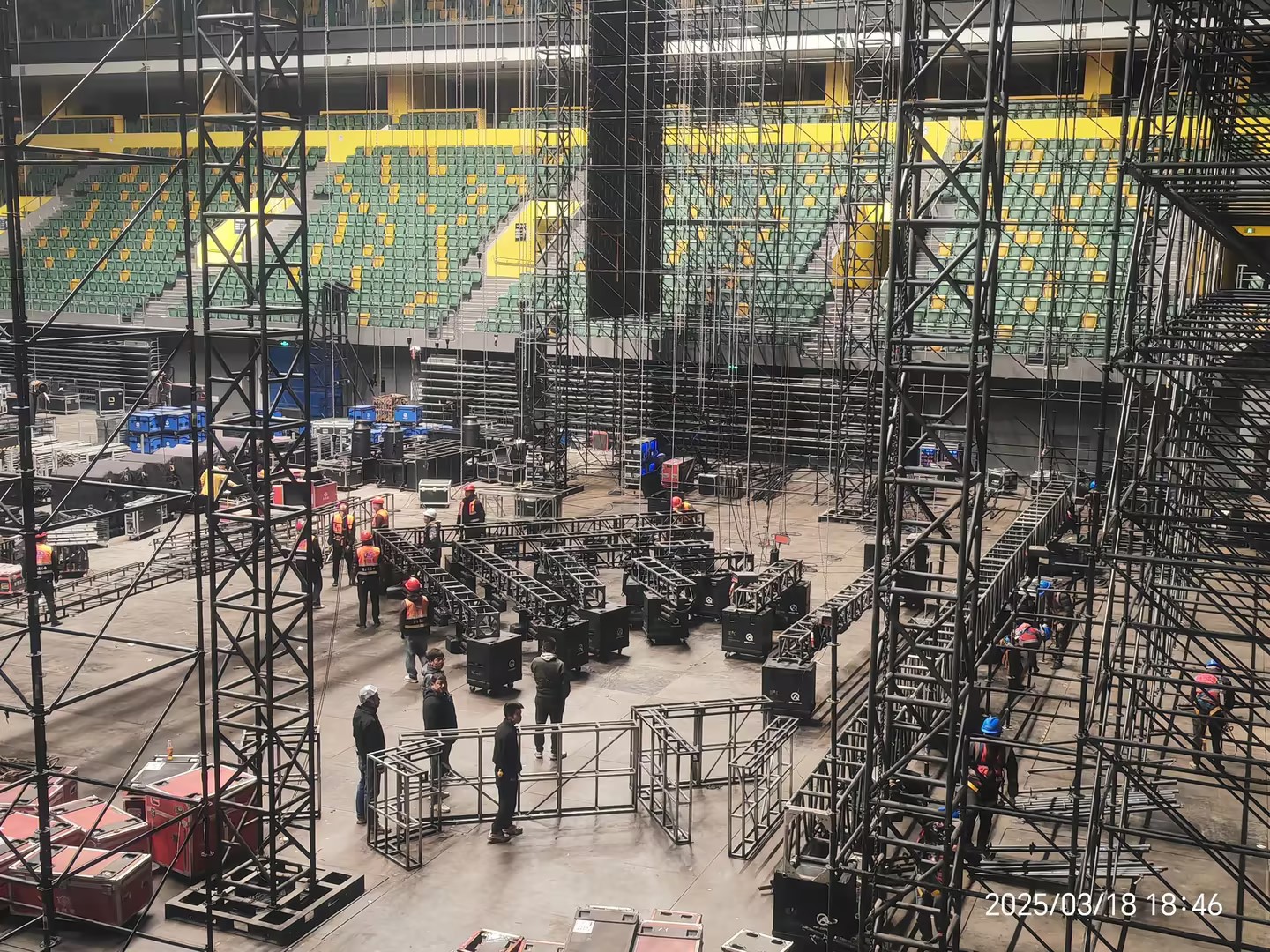
how to secure the prominent truss outside
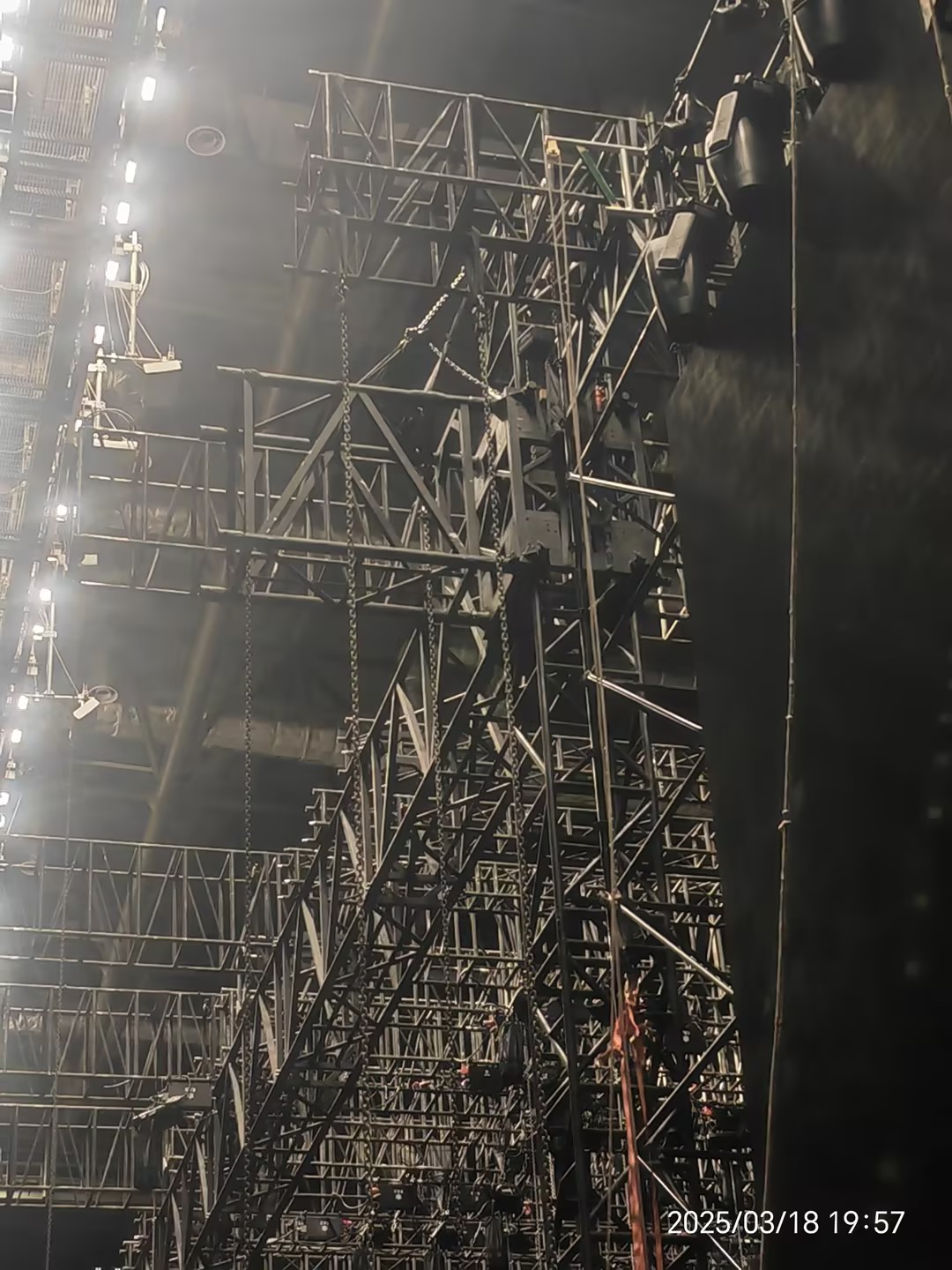
Measures have been taken to prevent chain slippage.
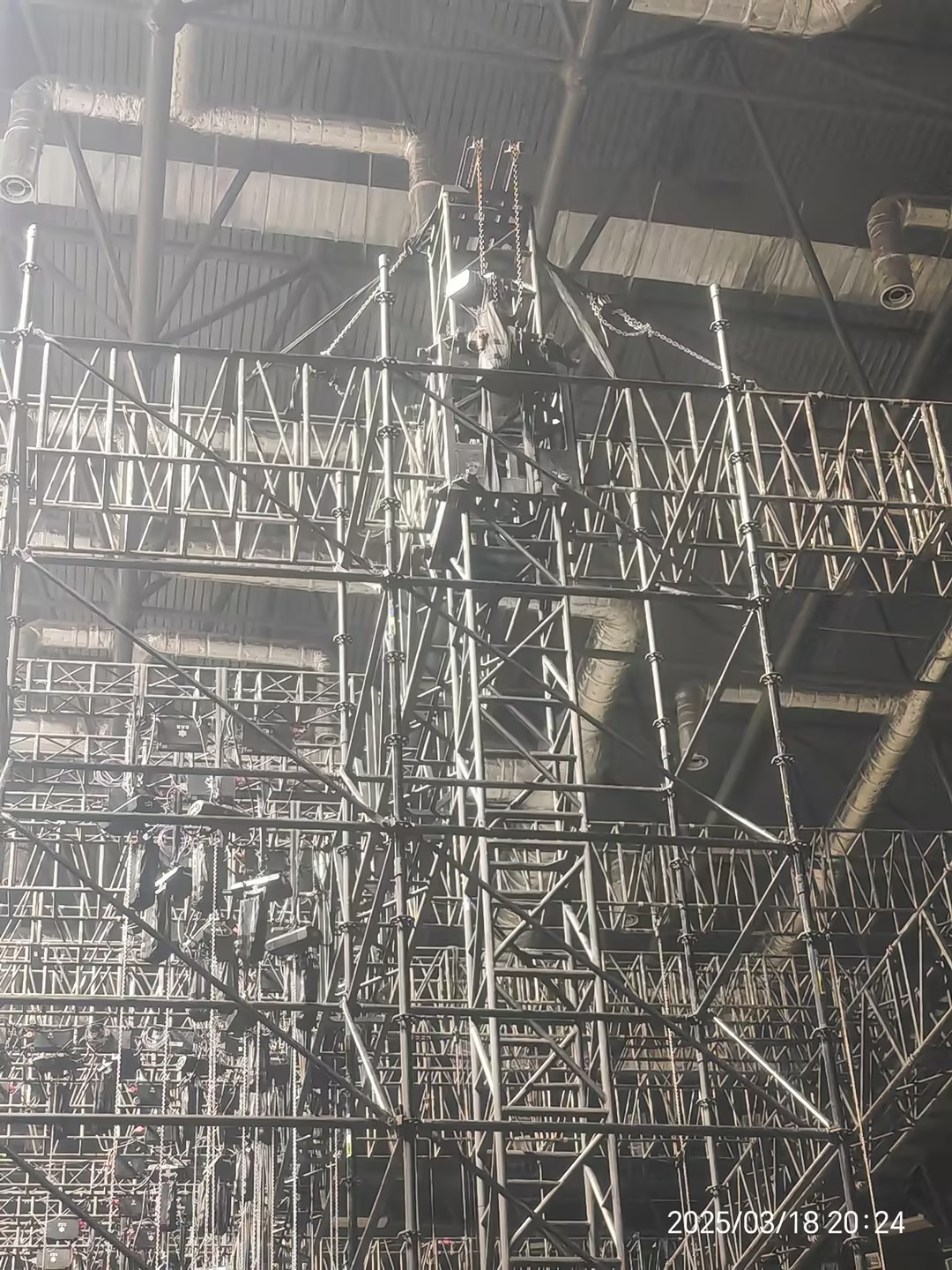
To prevent the sound crossbeam from being pulled down, there is an safety strap at the back that is tightened with a small chain hoist.
Assemble the LED display screen and lock the pillars with wire every meter.
The horizontal bar is not locked.
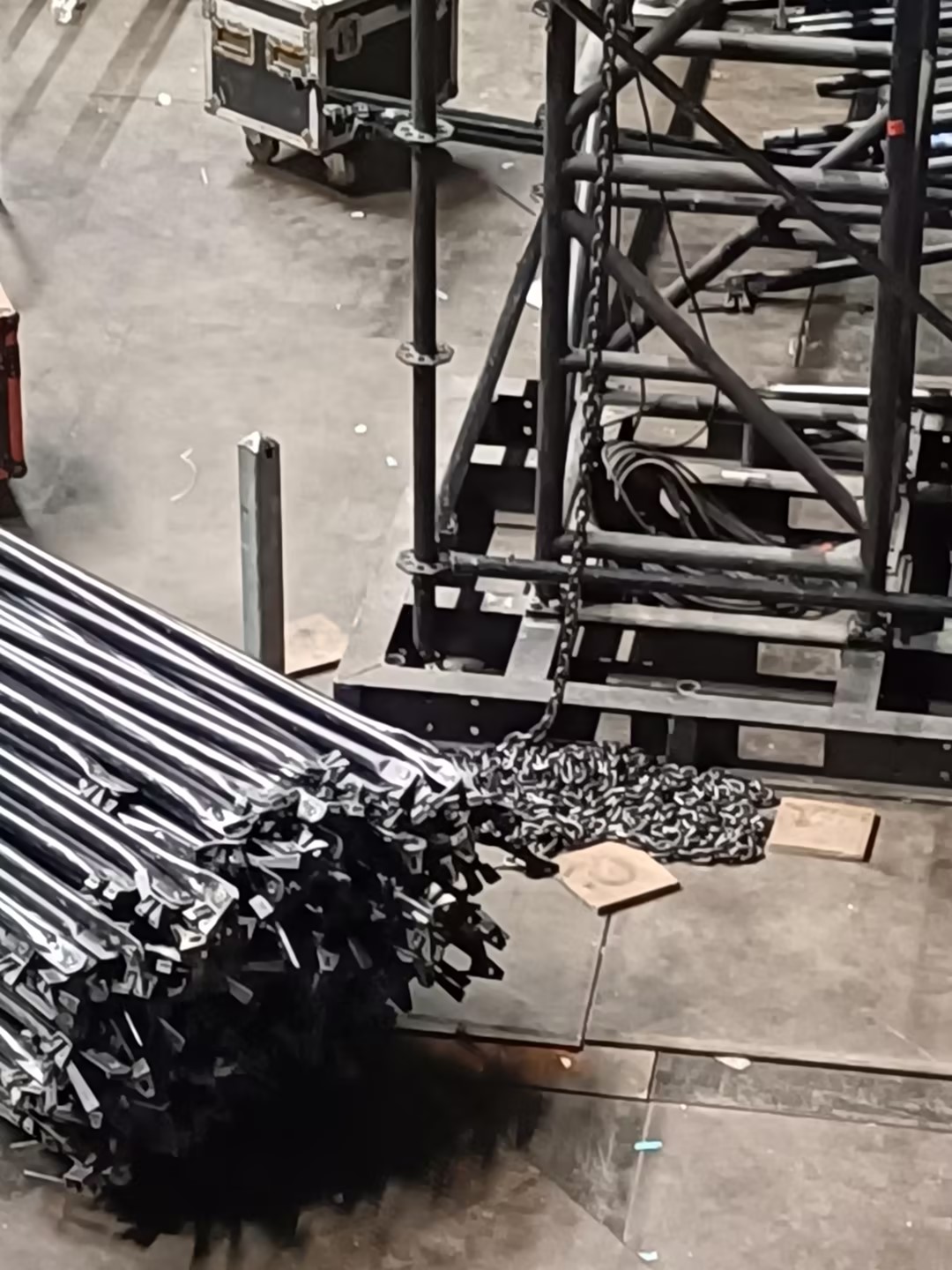
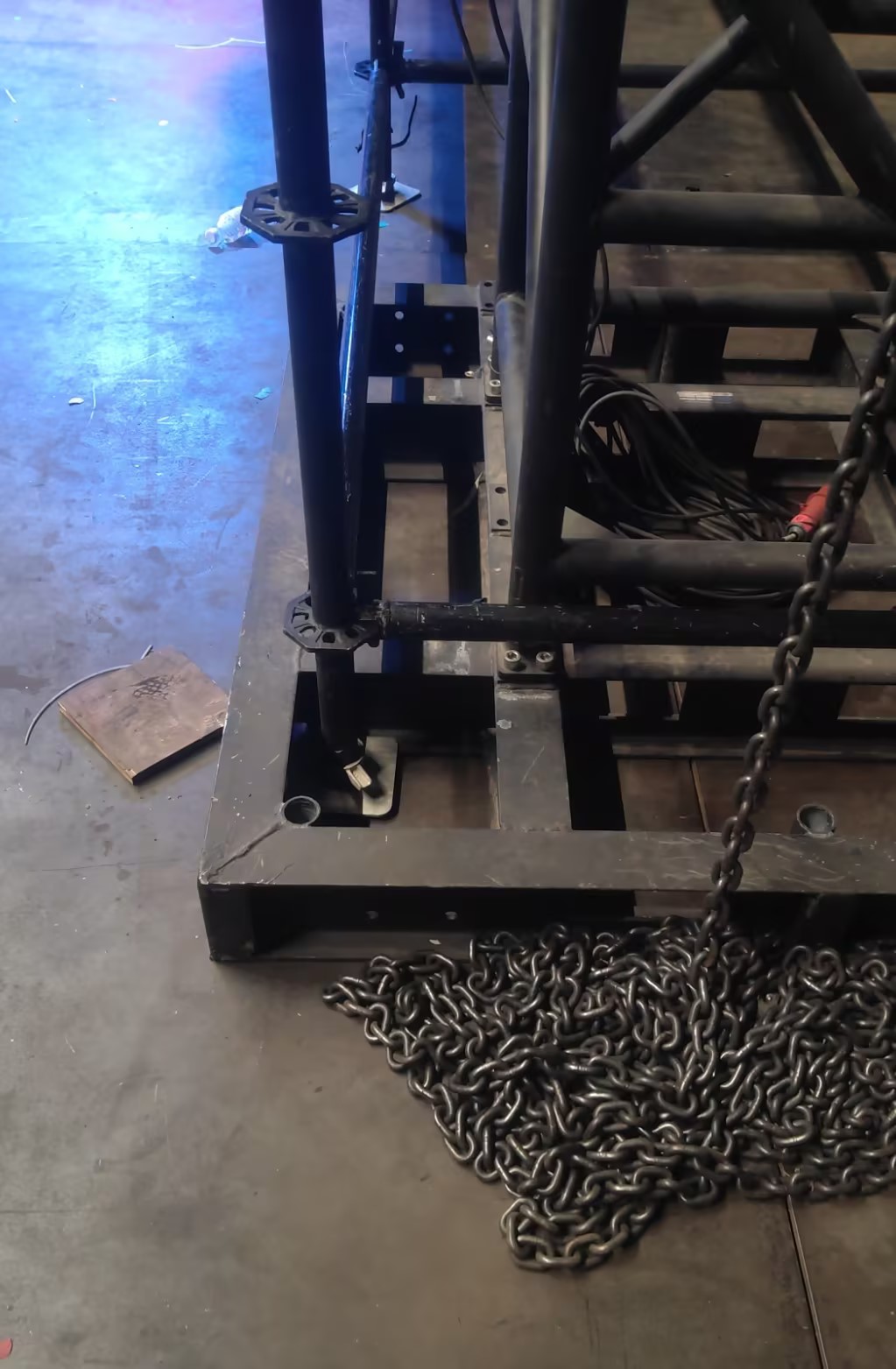
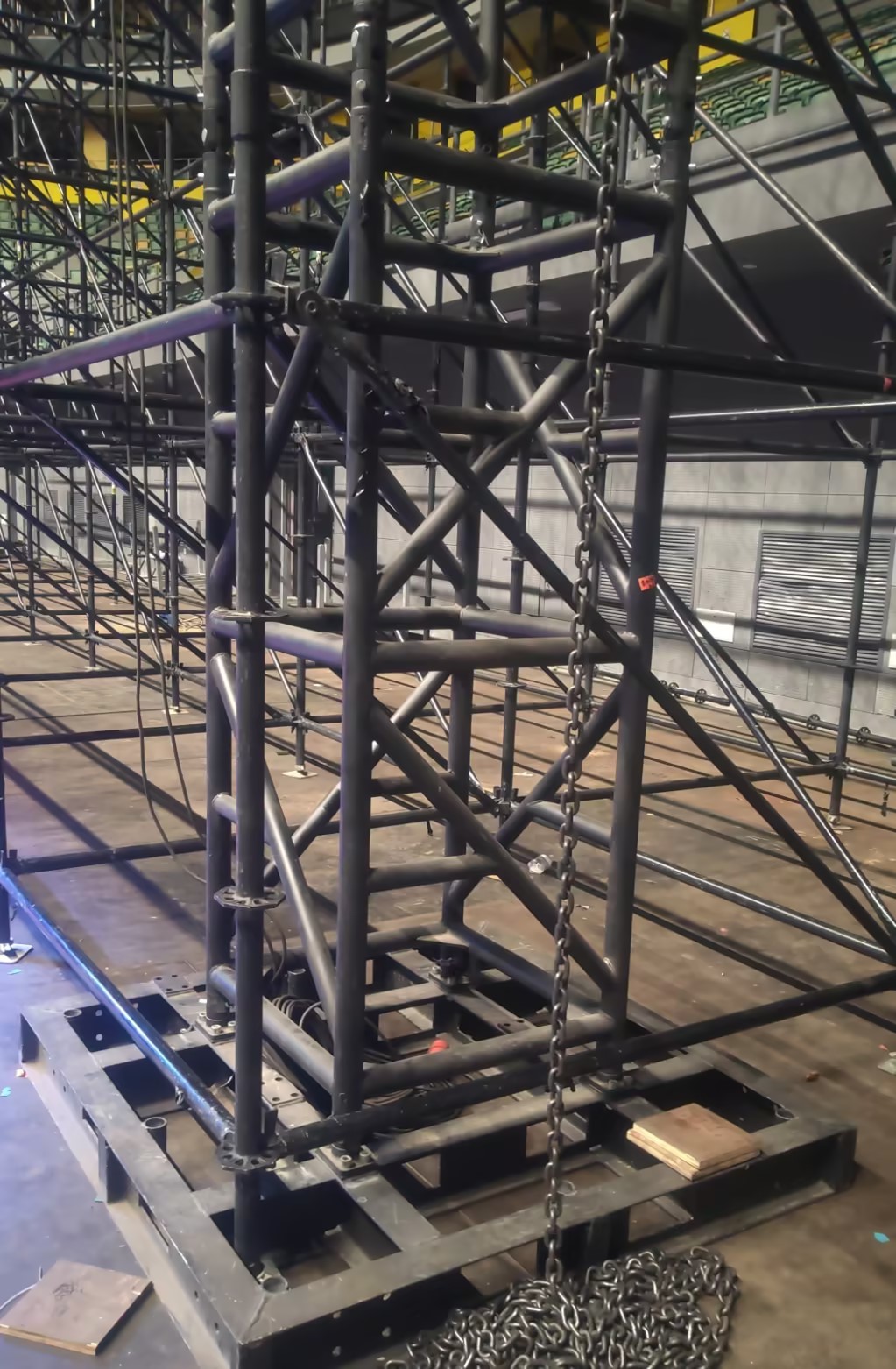
The iron base should have holes left for future construction of the layher frame truss
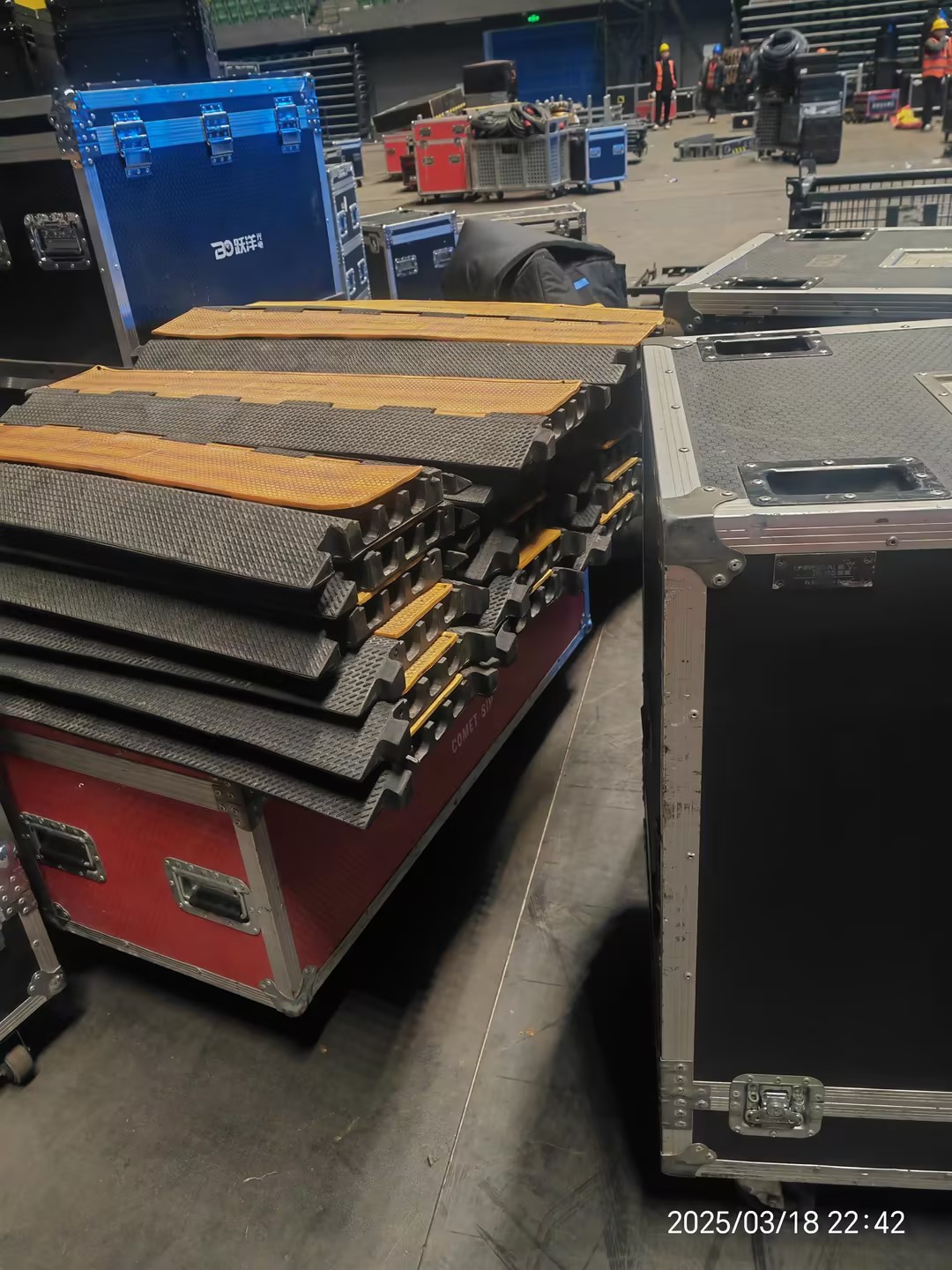
Three wire trunking is the most commonly used
For the best sound effect, the linear array is curved and fixed with safety straps
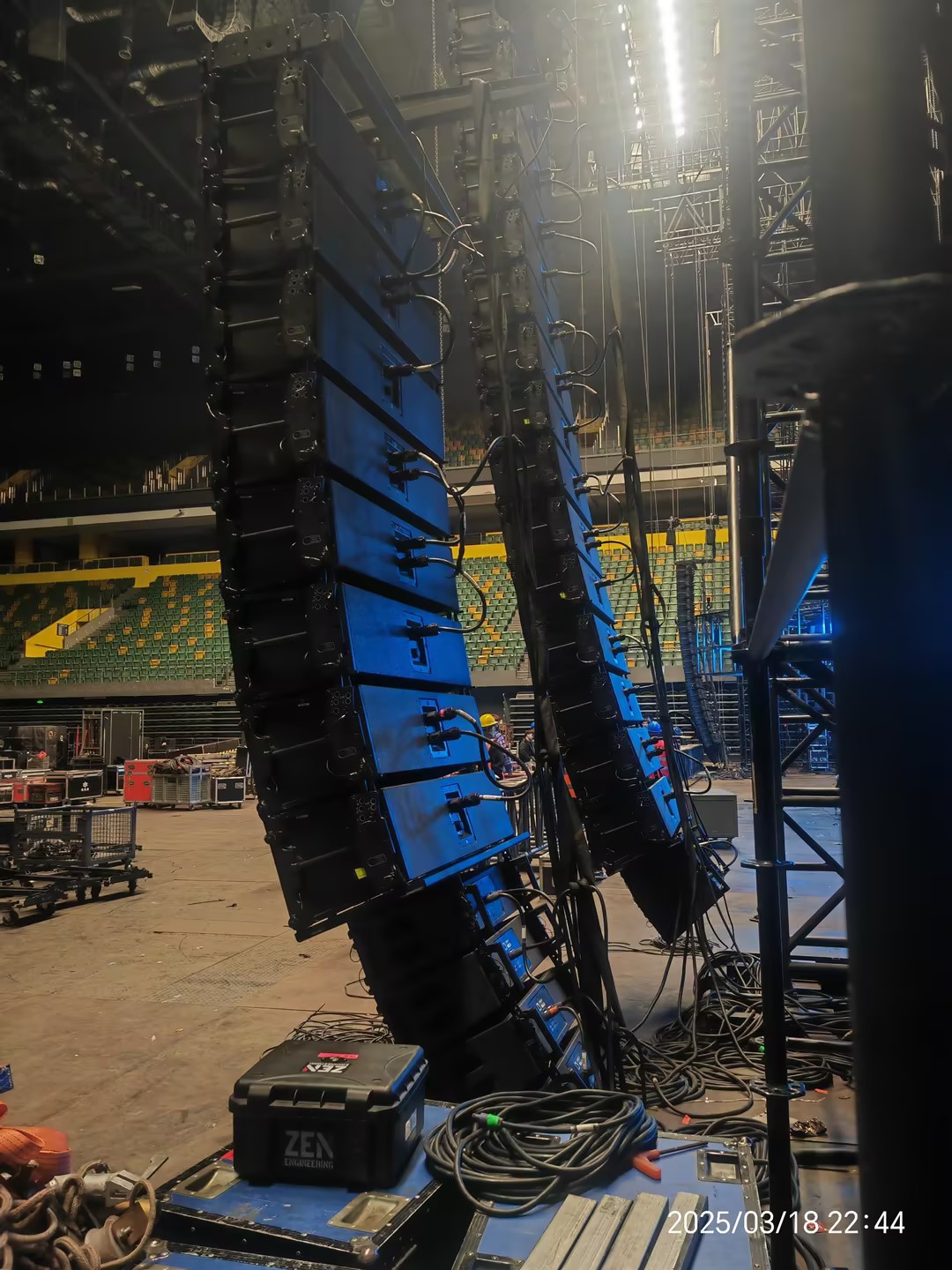
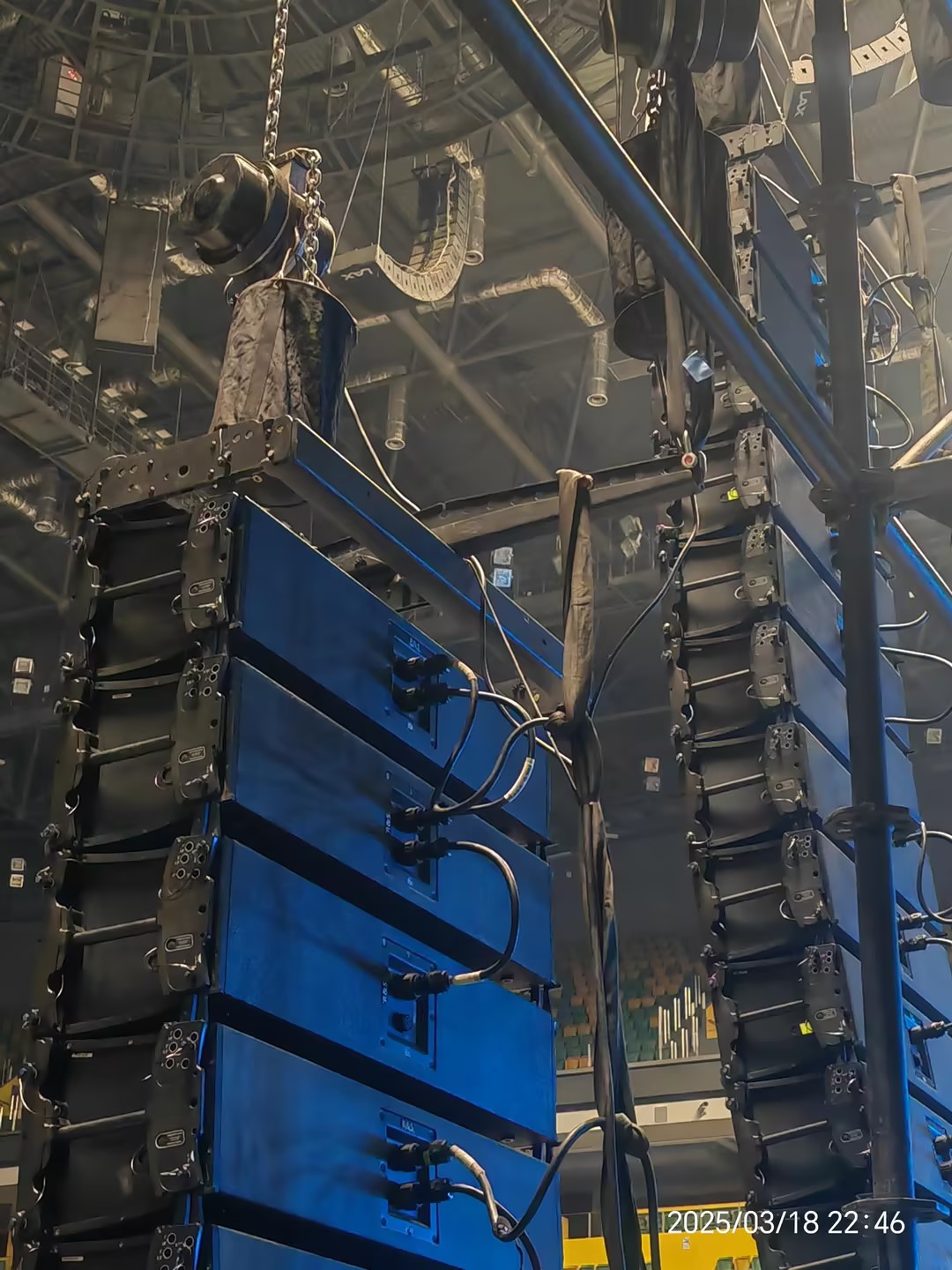
Fixation and method of pull-down
At the forefront of the stage, the light frame should be concealed inside the gourd truss to maintain its aesthetic appeal
Engineering Notes from This Project
Several practical lessons can be taken from this indoor concert stage installation:
Steel base plates are important for both load distribution and floor protection inside stadiums or indoor venues.
Custom trolleys and forklifts can greatly improve the movement and connection of large truss sections.
Auxiliary tower equipment is useful when erecting very tall truss columns, especially when the column height reaches around 20m.
Lighting fixtures, LED frames, cables, and signal wires should be prepared before the final roof or truss lift whenever possible.
LED screen support frames require careful bottom alignment to keep the screen surface straight.
Line array speakers should be supported by suitable truss structures and secured with safety straps.
Chain hoists, motor hoists, safety belts, and anti-slip measures must be checked before lifting.
Cable trunking and wire routing should be planned early to avoid messy installation after the main structure is completed.
Related Articles
If you are studying concert stage setup, truss installation, or indoor event structures, the following articles may also be helpful:
How to Build a Truss Stage: Step-by-Step Assembly Guide explains the basic process of assembling truss bases, columns, sleeve blocks, beam trusses and hoists.
What Should You Pay Attention to When Setting Up a Concert Stage discusses concert stage planning, lighting, sound systems, structural safety and audience experience.
How Do You Design a Concert Stage explains stage size, visibility, lighting and layout considerations for concert events.
What Is Event Staging introduces the role of staging systems in modern concerts, conferences and special events.
How to Design an Event Stage provides general stage planning principles that apply to indoor and outdoor events.
Aluminum Stage Features, Structure and Components Explained explains the basic components of modular aluminum stage systems.
What Is a Mobile Stage and When Should You Use One compares mobile stage systems with traditional modular stage and truss structures.