Exhibitors often search for solutions to these practical problems:
How to build a portable exhibition boothTo build a portable exhibition booth, the focus should be on modular structure, lightweight materials and easy installation.
Instead of designing a fixed booth, use a system that can be quickly assembled, disassembled and reused across different exhibitions.
Core approach:
Modular design
Use detachable components so the booth can be assembled and dismantled quickly.
Standard connection systems such as bolt, spigot (conical coupling), or quick-lock systems help reduce complexity and improve efficiency.
Lightweight but durable materials
Aluminum alloy (e.g., 6061-T6 / 6082-T6) is commonly used for the frame because it is lightweight, strong and corrosion-resistant.
For enclosure or branding, PVC-coated polyester fabric (B1 fire-rated) is widely used due to its durability and safety.
Compact and transport-friendly structure
Design the booth with foldable or compact frames so it can be packed efficiently.
Use adjustable legs or base plates to ensure stability on uneven exhibition floors.
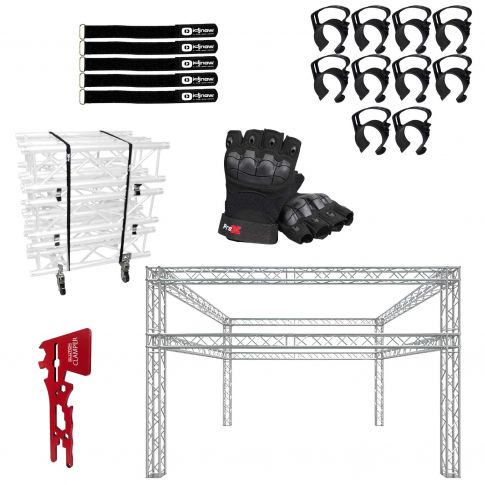
Truss-based framework for flexibility
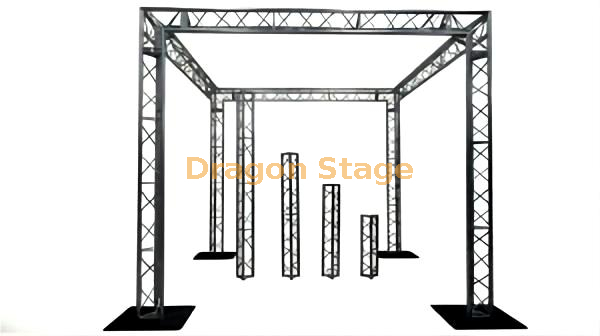
Truss systems are widely used in exhibition booths because they are strong, modular and easy to expand.
You can combine different shapes (square, circular, box truss) to create both structure and visual impact.
For example:
A circular truss can be used as a visual focal point, while a square truss frame supports lighting, banners or display elements.
Surface treatment and protection
Aluminum structures are usually treated with sandblasting or coating to improve durability.
Fabric materials should have UV resistance, water resistance and fire-retardant properties for safe exhibition use.
Practical tip:
A well-designed portable booth should achieve three things:
Easy to transport
Fast to install
Flexible to reuse in different booth sizes
At the same time, always ensure the structure meets basic safety and load requirements, especially when integrating lighting or hanging elements.
How to reduce booth setup time during exhibitions
To reduce booth setup time during exhibitions, the key is to design a system that is modular, simple and fast to assemble.
In real exhibition environments, time is limited, so the goal is to minimize on-site work and rely more on pre-built components.
Core strategies:
Use modular and prefabricated designs
Design the booth using detachable and prefabricated components.
Folding frames, stackable parts and pre-assembled modules allow the structure to be quickly connected on-site instead of built from scratch.
This significantly reduces both installation time and labor requirements.
Adopt quick-connection systems
Use connection methods that require minimal tools, such as:
Slide-and-lock systems
Clip or pin connections
Tool-less or single-tool fastening
These systems simplify assembly steps and reduce adjustment time during setup.
Simplify the structure with fewer components
A simpler structure means faster setup.
Reduce the number of separate parts
Use intuitive layouts
Avoid unnecessary accessories or complex configurations
Where possible, use pre-wired or pre-connected modules (for lighting, displays, or screens) to reduce on-site wiring and installation work.
Use adjustable components for flexibility
In exhibitions, ground conditions are often uneven.
Use adjustable legs or base plates
Avoid custom adjustments during installation
This helps the booth adapt quickly without additional tools or modifications.
Choose lightweight materials for easier handling
Lightweight materials such as aluminum alloy make it easier to:
Carry and position components
Reduce installation manpower
Speed up the overall setup process
Practical tip:
A fast-installation booth system usually relies on three key factors:
Prefabrication (less on-site work)
Quick connection systems (faster assembly)
Simplified structure (fewer steps, fewer parts)
In real projects, a well-optimized booth can significantly reduce setup time and improve exhibition efficiency.
To reuse exhibition structures for multiple events, the key is to design for flexibility, compatibility and long-term durability.
Instead of building a new booth for every event, a well-designed system can be reconfigured, expanded, and reused across different exhibitions.
Core strategies:
Adopt a modular design system
Use detachable and reconfigurable components so the structure can be easily adapted to different booth sizes and layouts.
You can:
Add or remove sections based on booth requirements
Reconfigure the structure for different exhibition spaces
Adjust layouts without rebuilding from scratch
This is the foundation of a reusable exhibition booth system.
Prioritize component compatibility
Choose components that are standardized and compatible across the system.
This allows you to:
Combine existing parts in new configurations
Avoid redesigning the structure each time
Reduce dependency on custom components
A high level of compatibility directly increases reuse efficiency.
Retain and reuse core structural frames
Keep the main framework (such as truss structures) as the core reusable backbone.
In most cases:
The main frame remains unchanged
Only branding elements (graphics, panels, displays) are replaced
Structural extensions can be added when needed
This is the most cost-effective way to reuse exhibition structures.
Use durable and long-lasting materials
Choose materials that can withstand repeated use, such as:
Aluminum alloy (lightweight and corrosion-resistant)
Surface-treated components for wear resistance
Durable materials ensure the structure remains safe and usable over multiple events.
Simplify connection systems for repeated use
Use connection methods that are easy to assemble and disassemble without causing wear:
Quick-lock systems
Slide-and-lock connections
Tool-less or minimal-tool systems
This helps reduce damage to components during repeated setup and teardown.
Maintain and inspect regularly
To ensure safety and longevity:
Check for dents, deformation, or loose connections
Replace damaged or worn components
Perform routine maintenance after each event
Proper maintenance is essential for long-term reuse and safety compliance.
Use digital tools for design management
Use 3D modeling or design software to:
Save booth layouts and configurations
Track available components
Quickly modify designs for different events
This improves efficiency and reduces design time for future projects.
Practical tip:
A reusable exhibition system should achieve:
Flexible reconfiguration
High component compatibility
Long service life with proper maintenance
In real applications, this approach can significantly reduce long-term exhibition costs and improve operational efficiency.
How to create a high-impact booth design in limited space
To create a high-impact booth design in limited space, the key is to maximize visual impact without increasing footprint.
Instead of expanding horizontally, focus on vertical design, clear focal points, and integrated visual elements.
Core strategies:
Create a strong visual focal point
Start with a compact core structure that immediately attracts attention.
For example:
Use a circular or custom-shaped truss as the central feature
Place key products or branding on one side as the main display wall
A clear focal point helps guide visitor attention, even in a small booth.
Use lighting to enhance visual impact
Lighting is one of the most effective ways to make a small booth stand out.
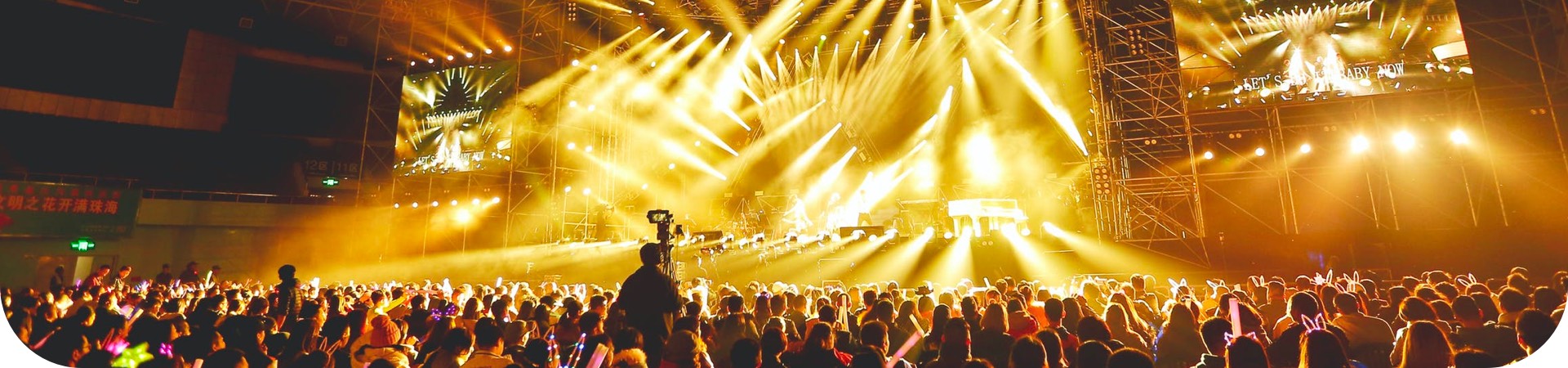
Add programmable or dynamic lighting (e.g., moving lights)
Create visual effects such as patterns, highlights, or motion
Focus lighting on key products or brand areas
This adds depth and attraction without taking up additional space.
Maximize vertical space instead of floor space
When space is limited, build upward.
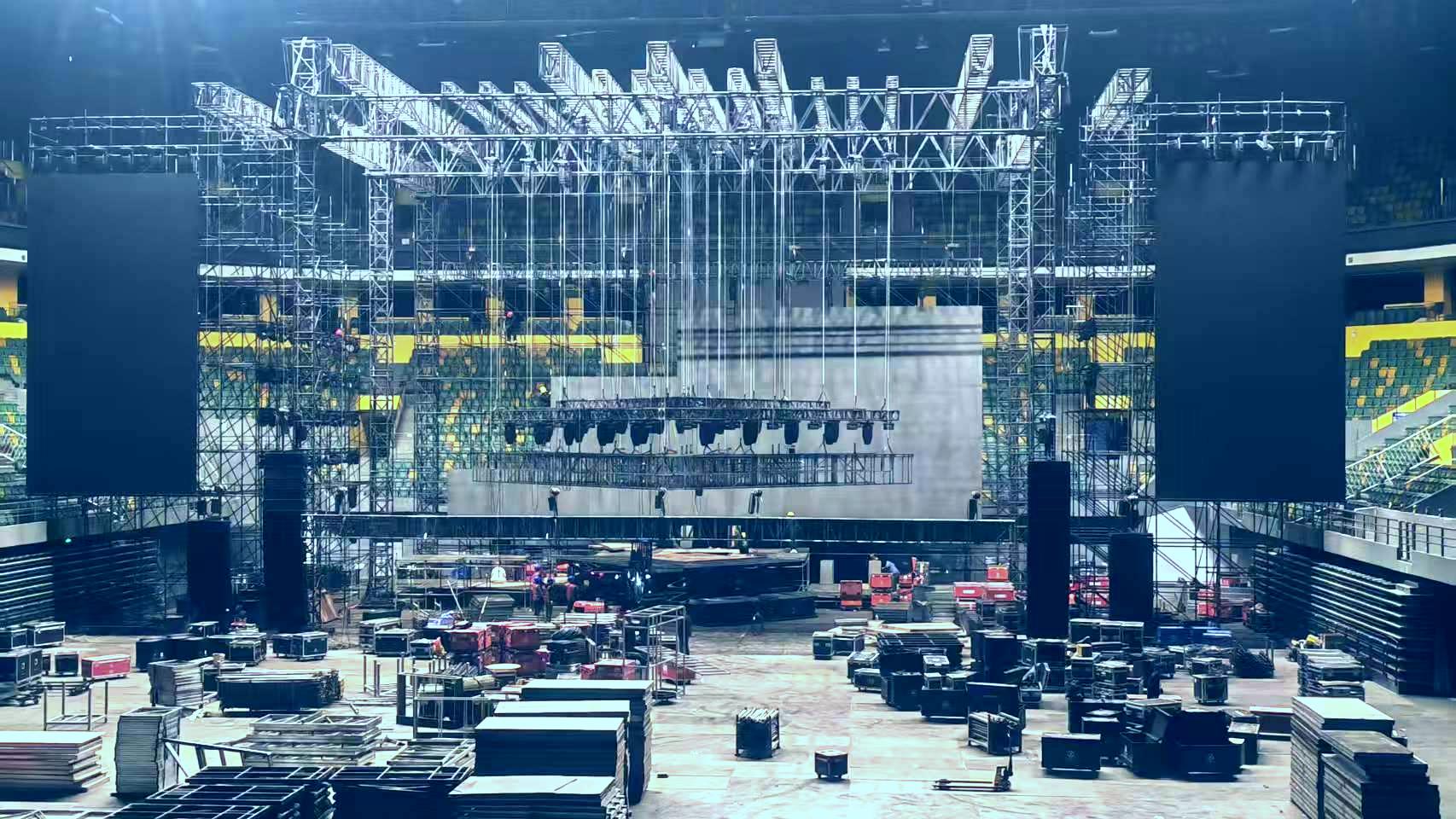
Use truss towers or vertical frames
Add a surrounding structure (e.g., square truss frame)
Hang lighting, signage, or display elements above eye level
Vertical expansion increases visibility and display capacity without enlarging the booth footprint.
Keep the structure simple and modular
Avoid overly complex designs that are difficult to install in tight spaces.
Use modular truss systems
Keep components minimal and easy to assemble
Choose lightweight aluminum structures for flexibility and transport
A simpler system improves both installation efficiency and usability.
Align design with branding and theme
Even a small booth should clearly communicate brand identity.
Use custom colors (powder coating or painting)
Add banners, fabric, or graphic elements
Keep visual consistency across all components
Strong branding increases recognition and makes the booth more memorable.
Ensure structural stability and safety
In compact spaces, stability is even more important.
Use properly engineered truss systems
Ensure load capacity for lighting and displays
Maintain balance and secure base support
A stable structure ensures both safety and professional presentation.
Practical tip:
A high-impact small booth usually follows a simple logic:
One clear focal point
Strong vertical design
Integrated lighting and branding
Even with limited space, this approach can create a booth that is visually strong, functional, and easy to execute.
How to transport and store booth materials efficiently
To transport and store booth materials efficiently, the key is to reduce volume, improve stacking efficiency, and protect components during handling.
A well-designed system should not only save space, but also reduce transport cost and speed up setup and packing processes.
Core strategies:
Use modular and compact designs
Choose booth systems that are designed for efficient packing.
Use standard modular sizes (e.g., 1x1m, 2x1m components)
Apply foldable or collapsible structures (such as folding truss or stage platforms)
Compress frames into compact sizes for transport
In practice, foldable systems can reduce transport volume by 50–80%.
Use stackable and purpose-built storage racks
Storage efficiency depends heavily on how materials are organized.
Use customized racks for different components (frames, panels, glass, etc.)
Ensure materials can be securely stacked without damage
Keep components organized for quick loading and unloading
Proper racks improve both storage density and handling efficiency.
Optimize transport tools and handling methods
Use appropriate equipment to simplify movement and reduce labor.
Dollies or carts with brakes
Load-bearing wheels for heavy components
Ratchet straps to secure materials
Transport bags for smaller or fragile parts
Good handling tools reduce damage risk and speed up on-site operations.
Maximize vertical space and storage efficiency
Instead of spreading materials horizontally, use vertical stacking.
Stack components such as barriers, decks, or risers
Use multi-layer storage carts or caddies
Design systems that allow space underneath structures for storage
Vertical storage significantly reduces warehouse footprint.
Choose lightweight but durable materials
Material choice directly affects transport efficiency.
Use aluminum alloy structures for reduced weight
Apply surface treatments (e.g., powder coating) for durability
Ensure components can withstand repeated transport and handling
Lightweight materials reduce labor cost and improve logistics efficiency.
Optimize packaging and loading efficiency
Efficient packaging reduces shipping cost and handling time.
Use flat-packed designs where possible
Pack multiple components into one transport unit
Standardize packaging sizes for better container loading
This improves both transport efficiency and cost control.
Ensure safe and secure transport
Protect materials during movement to avoid damage and safety risks.
Fix components securely to prevent movement
Use protective padding or bumpers for sensitive parts
Apply safe handling methods for heavy or fragile elements
Proper protection ensures materials remain usable across multiple events.
Practical tip:
An efficient transport and storage system should achieve:
Minimum volume
Maximum stacking efficiency
Safe and organized handling
This not only reduces logistics cost, but also improves overall exhibition efficiency from transport to setup.
How to maintain structural stability and safety compliance
To maintain structural stability and safety compliance, the key is to ensure that the system is properly designed, correctly installed, and regularly inspected.
Even for temporary exhibition structures, safety must follow basic engineering principles and industry standards.
Core strategies:
Work with qualified professionals
Always involve experienced personnel in key stages:
Design and structural planning
Installation and dismantling
On-site inspection and supervision
Make sure the team understands safety procedures and emergency response plans, especially for large or outdoor booths.
Proper planning and skilled execution are the foundation of a safe structure.
Use compliant design and materials
Choose structures that are designed according to accepted engineering standards.
Use aluminum truss systems for temporary and modular setups
Use steel structures for higher load or permanent installations
Select materials with high strength, corrosion resistance, and durability
Avoid using non-standard or unverified components in critical structures.
Follow load limits and structural calculations
Never exceed the structural capacity of the system.
Follow official load tables and span limits
Consider dynamic loads (lighting, movement, lifting equipment)
Account for wind or environmental loads when applicable
Use an engineer for non-standard or complex setups
Overloading is one of the most common causes of structural failure.
Ensure correct assembly and stabilization
Installation quality directly affects stability.
Use correct connectors (pins, bolts, safety clips)
Ensure the structure is level and vertically aligned
Add bracing systems (cross-bracing, guy wires) for lateral stability
Use proper ballast systems (e.g., concrete blocks, water tanks)
A well-stabilized structure prevents movement, tilting, or collapse.
Perform regular inspection and maintenance
Check the structure before and during each event.
Inspect for dents, deformation, or damaged parts
Check all connections for looseness
Replace worn or unsafe components immediately
Maintain materials (cleaning, lubrication, proper storage)
Regular inspection ensures long-term safety and reuse.
Prepare for environmental conditions
Environmental factors can significantly affect stability.
Monitor weather conditions (especially for outdoor events)
Use wind measurement tools if needed
Define clear evacuation or shutdown procedures
Avoid operating structures beyond their design limits
Always prioritize safety over continued operation in extreme conditions.
Follow local regulations and safety standards
Ensure compliance with relevant standards and requirements.
Follow local building and event safety codes
Use fire-retardant materials where required
Ensure proper grounding and electrical safety
Provide safety features such as guardrails when needed
Compliance is essential to avoid both safety risks and legal issues.
Practical tip:
A safe exhibition structure depends on three key factors:
Correct design and material selection
Proper installation and stabilization
Ongoing inspection and maintenance
By controlling these factors, you can ensure both structural safety and regulatory compliance in exhibition environments.
These challenges make modular exhibition systems the preferred solution for most exhibitors.







![Truss Tradeshow Booth [SQ-20x20]](http://iqrorwxhljollr5q.leadongcdn.com/cloud/mlBpmKojRlkSmrkpmrjkk/sq20x20_l1.jpg)