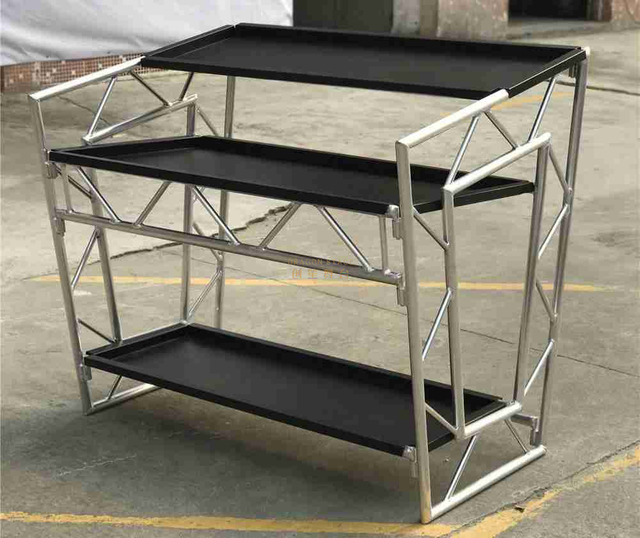
What Is Welding Quality and Why It Matters (Short Answer)
Welding quality determines the structural strength, safety, and lifespan of aluminum systems such as truss, stage, and scaffolding. Poor welding can lead to cracks, deformation, and even structural failure under load.
Why Welding Quality Is Critical in Aluminum Structures
In many projects, people focus on:
material grade
thickness
design
But ignore one key factor:
welding quality
In reality:
A weak weld can destroy a strong material
This is especially important in:
aluminum truss systems
stage platforms
scaffolding structures
Because these systems rely on joint strength, not just material strength.
Welding vs Material Strength (Common Misunderstanding)
Many clients think:
“6061-T6 is strong, so structure is strong”
This is not fully correct.
After welding:
This is why welding process is critical, not just material
For material comparison, see
6061-T6 vs 6082-T6 Aluminum: Mechanical Properties and Structural Differences
Common Welding Methods in Aluminum Systems
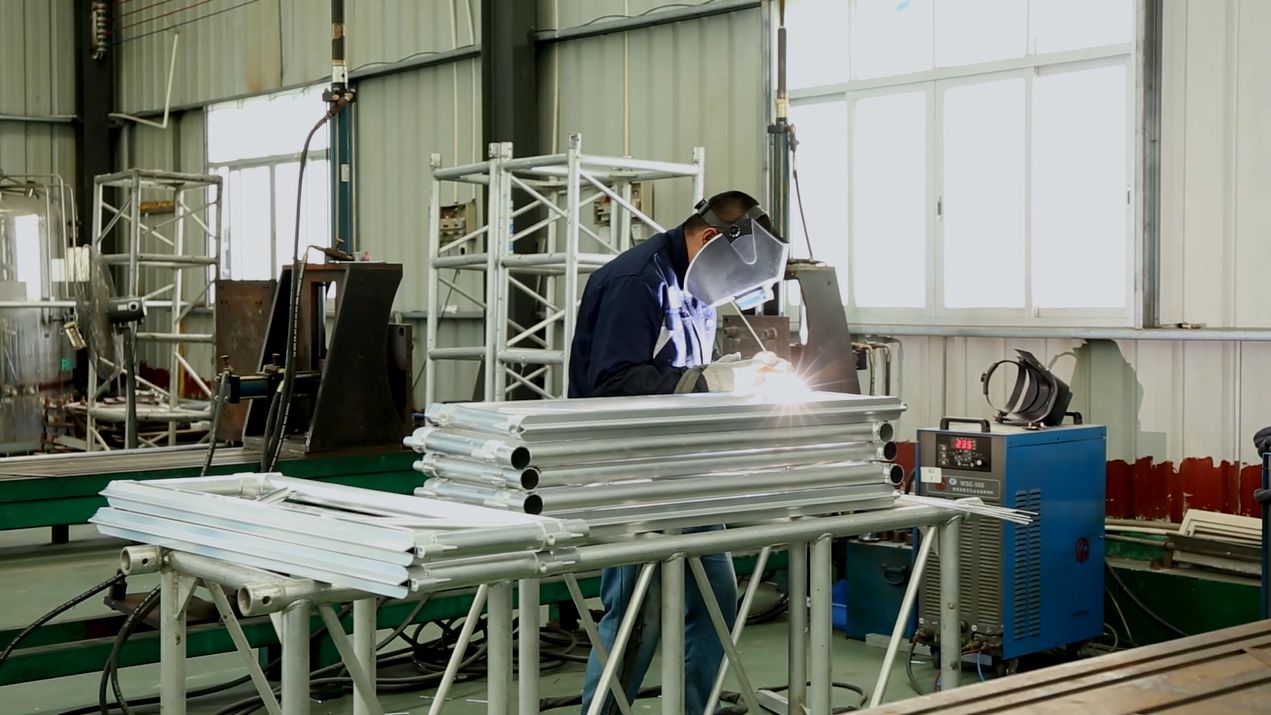
TIG Welding (Most Common)
high precision
clean weld surface
suitable for aluminum
Used in:
truss systems
stage structures
scaffolding frames
MIG Welding
In most high-quality aluminum scaffolding and truss systems, TIG welding is preferred.
Key Factors That Affect Welding Quality
1. Welding Technique
heat control
welding speed
joint preparation
Poor technique leads to:
cracks
weak joints
deformation
2. Weld Penetration
A good weld must:
Weak penetration = structural risk
3. Surface Finish
Good welding:
smooth surface
no porosity
no visible cracks
Bad welding:
bubbles
rough edges
burn marks
4. Alignment and Geometry
Even strong welds fail if:
frame is misaligned
structure is twisted
Welding Quality and Load Capacity
Welding directly affects:
load capacity
Because:
To understand load logic, see
Stage Platform Load Calculation: Methods, Factors and Structural Safety Principles
Welding Inspection Methods
Professional systems require inspection:
Visual Inspection
cracks
surface defects
alignment
Load Testing
real structural testing
verifies performance
Example:
Scaffolding Load Test Report (TÜV Certified)
Certification Standards
These ensure:
welding consistency
structural reliability
Common Welding Problems (And Risks)
Weak weld joints
→ risk of collapse
Overheating
→ material strength reduction
Poor alignment
→ uneven load distribution
Inconsistent welding
→ unpredictable failure
Welding Quality in Real Applications
Scaffolding Systems
Stage Platforms
Truss Systems
Related system understanding:
What is Lighting Truss? (Ultimate Guide for Stage, LED & Event Systems)
How to Evaluate Welding Quality When Buying
Instead of asking:
❌ “What material is used?”
You should ask:
✔ What welding process is used?
✔ Is there load testing?
✔ Are there certifications?
✔ Can you see weld details?
FAQ
Is welding important in aluminum scaffolding?
Yes. Welding quality directly affects structural safety and load capacity.
Does welding reduce aluminum strength?
Yes, especially in the heat-affected zone. That is why process control is critical.
How to identify good welding?
Look for smooth surface, no cracks, consistent joints, and proper alignment.
Is certification important?
Yes. Certified products ensure tested welding quality and structural safety.
Final Conclusion
Welding quality is not a detail.
It is a core factor of structural safety.
In aluminum systems, strength is not only about material.
It is about how the structure is connected.