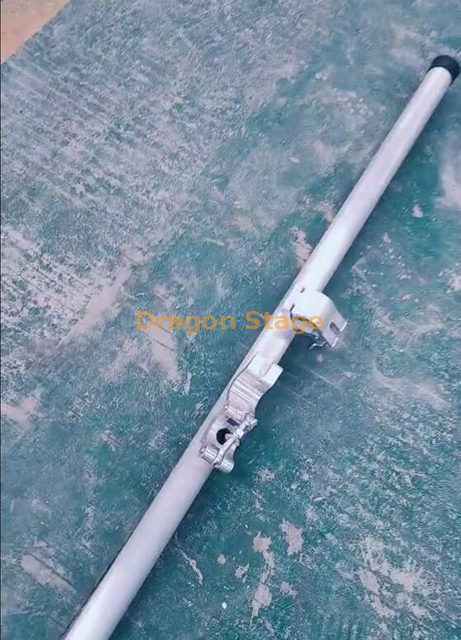
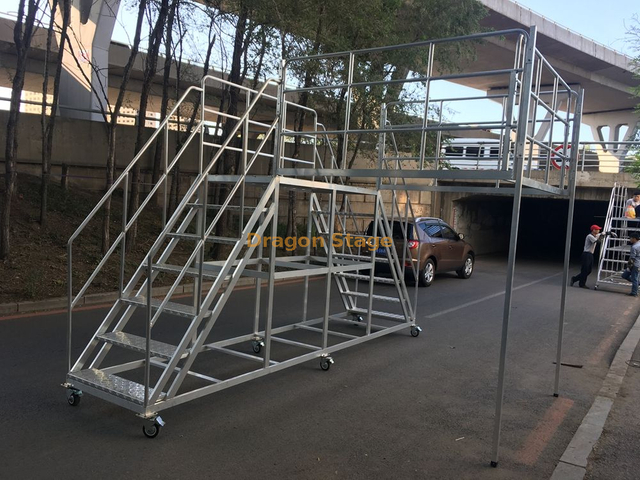
Our system uses welded frames + bolted connections for optimal performance
Welding vs Bolted Connection
Welding provides a stronger and more integrated structure, while bolted connections offer flexibility, easy assembly, and replaceability. The best choice depends on whether the system requires permanent strength or modular adaptability.
Why This Comparison Matters
In aluminum systems like:
scaffolding
truss
stage platforms
connections are not a detail.
They define the structure itself.
Two systems using the same material can perform completely differently depending on:
welding quality
connection method
structural design
What Is a Welded Connection?
A welded connection joins metal parts permanently using heat.
Characteristics:
no movable joints
continuous structure
high rigidity
Used in:
aluminum truss systems
stage frames
scaffolding frames
Welding quality explanation:
Welding Quality Guide for Aluminum Structures
What Is a Bolted Connection?
A bolted connection uses mechanical fasteners to join parts.
Characteristics:
removable joints
adjustable structure
modular assembly
Used in:
scaffold assembly
truss connection systems
modular stage platforms
Key Differences Between Welding and Bolted Connection
Factor | Welding | Bolted Connection |
|---|
Strength | High (continuous structure) | Medium–High (depends on design) |
Flexibility | Low | High |
Assembly | Permanent | Removable |
Maintenance | Difficult | Easy |
Transport | Fixed shape | Easy to disassemble |
Application | Structural frame | Modular systems |
Structural Strength Comparison
Welding creates a continuous load path.
This means:
However:
See material effect:
6061-T6 vs 6082-T6 Aluminum
Flexibility and Modularity
Bolted systems are designed for:
repeated assembly
transportation
adjustable configuration
This is critical in systems like:
aluminum scaffolding
modular stage platforms
Selection reference:
How to Choose Aluminum Scaffolding
Installation and Efficiency
Welding
Bolted Connection
easy to assemble
requires basic tools
faster for on-site work
Installation logic:
Installation Methodology for Modular Systems
Safety Considerations
Both systems can be safe if designed correctly.
But risks differ:
Welding risks:
poor weld quality
hidden cracks
heat-affected weakness
Bolted connection risks:
loose bolts
incorrect installation
wear over time
Safety reference:
Safety Standards and Engineering Constraints
Welding vs Bolted Connection in Real Applications
Scaffolding Systems
frames → welded
connections → bolted
This combination provides:
structural strength
modular flexibility
Truss Systems
Related system:
What is Lighting Truss?
Stage Platforms
Load logic:
Stage Platform Load Calculation
When to Use Welding
Use welding when:
When to Use Bolted Connection
Use bolted connection when:
Best Practice: Hybrid System (Most Common)
In real engineering:
The best solution is not choosing one
It is combining both
Typical structure:
This is the standard in:
scaffolding
truss systems
stage platforms
FAQ
Is welding stronger than bolting?
Yes, in terms of structural continuity, but only if welding quality is high.
Are bolted connections safe?
Yes, when properly installed and maintained.
Why use both welding and bolting?
To balance strength and flexibility in modular systems.
Which is better for scaffolding?
A combination of welded frames and bolted connections.
Final Conclusion
Welding and bolted connections are not competitors.
They serve different purposes.
Welding provides strength
Bolting provides flexibility
The best systems combine both to achieve:
safety
efficiency
adaptability