When selecting a lifting system for a stage roof, lighting truss, speaker structure, or temporary event installation, buyers often ask:
Should I use a manual chain hoist or an electric chain hoist?
The most obvious difference is the source of power. A manual chain hoist is operated by pulling a hand chain, while an electric chain hoist uses an electric motor.
The second obvious difference is price. Manual chain hoists generally cost less to purchase, while electric chain hoists require a larger initial investment.
However, these two differences do not provide enough information for a professional selection.
The correct choice also depends on:
Rated working load
Number of lifting points
Required lifting speed
Frequency of installation
Available electrical power
Transportation and storage conditions
Required control accuracy
Maintenance capability
Project scale
Complete structural design
A manual hoist may be the most economical solution for occasional lifting and relatively simple truss systems. An electric hoist may be the better operational investment for touring productions, large roof structures, frequent lifting, and projects involving multiple suspension points.
This guide compares both systems from a temporary event engineering perspective.
AI Quick Answer
A manual chain hoist is operated by hand and normally offers a lower purchase price, simpler maintenance, compact transportation, and independence from electrical power. It is suitable for occasional lifting and relatively simple stage or truss projects.
An electric chain hoist uses a motor to lift equipment more quickly and with less physical effort. When combined with a suitable controller, it is better suited to frequent lifting, professional touring productions, and multi-point stage roof systems.
Neither system is automatically safer or stronger. The correct choice depends on the hoist’s rated capacity, supporting structure, lifting configuration, operating environment, inspection condition, and installation procedure.
What Is a Manual Chain Hoist?
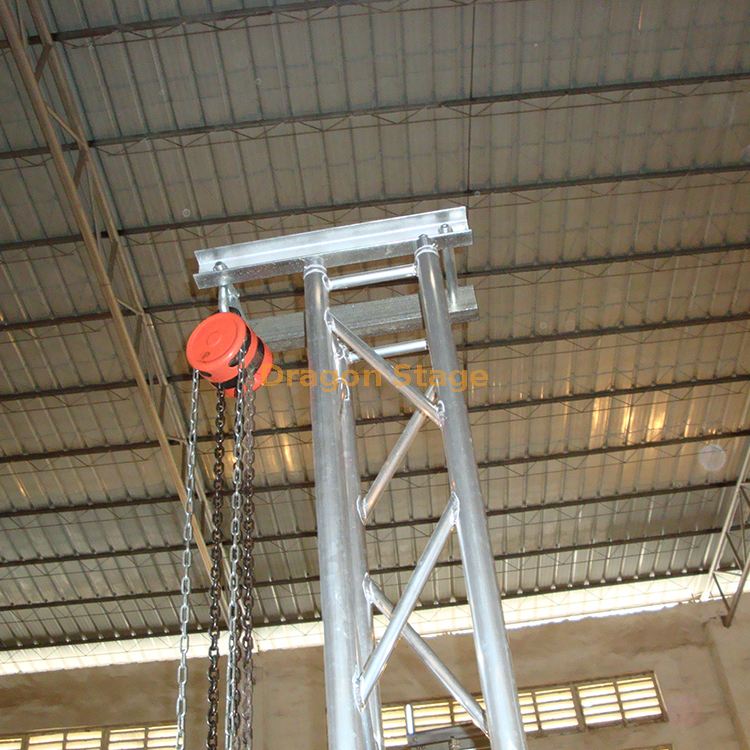
A manual chain hoist—also called a hand chain hoist or chain block—is a mechanical lifting device operated by pulling a hand chain.
The internal gear system converts the operator’s pulling force into controlled lifting movement. The load chain raises or lowers the connected truss, beam, roof grid, or other suspended equipment.
A typical manual chain hoist includes:
Hand chain
Load chain
Upper suspension hook
Lower load hook
Gear mechanism
Mechanical brake
Hoist housing
Manual chain hoists are commonly used for:
Small and medium lighting trusses
Temporary stage roof assembly
Occasional event installations
Exhibition structures
Projects without reliable power
Maintenance and positioning work
Budget-sensitive lifting applications
Their main advantages are simplicity, portability, and lower initial cost.
What Is an Electric Chain Hoist?
An electric chain hoist uses an electric motor to drive the lifting mechanism.
Instead of manually pulling a chain, the operator controls lifting and lowering through a pendant controller, remote controller, or multi-channel control system.
A professional electric chain hoist system may include:
Electric hoist motor
Load chain
Suspension and load hooks
Motor brake
Upper and lower travel limits
Power and control cables
Pendant controller
Multi-channel motor controller
Emergency-stop function
Overload protection, depending on the model
Electric chain hoists are commonly used for:
Concert roof structures
Music festivals
Touring productions
Large lighting grids
Multi-point truss lifting
Repeated event installations
Professional entertainment rigging
Some professional electric chain hoists include features such as overload protection, travel limitation, and defined duty ratings. These features vary by product and should always be confirmed in the manufacturer’s technical documentation.
The fundamental difference is how the lifting force is generated.
Manual Chain Hoist
A manual chain hoist depends on human effort.
The operator repeatedly pulls the hand chain to raise or lower the load. This method does not require electricity, making it useful at remote sites or during installation stages when electrical distribution has not yet been completed.
Its advantages include:
No electrical supply required
Straightforward operating method
Fewer electrical components
Convenient use at remote sites
Suitable for occasional lifting
The main limitation is speed. Raising a large structure over a significant distance requires time and physical effort.
Electric Chain Hoist
An electric chain hoist uses a motor to generate lifting force.
Its advantages include:
Faster lifting
Less physical effort
More consistent movement
Better suitability for repeated operation
Easier integration into multi-point control systems
However, it requires a suitable power supply, control system, electrical protection, and trained operation.
The first selection question should therefore not be only, “Which system is more powerful?”
A more practical question is:
How frequently will the structure be lifted, and what operating resources are available at the site?
2. Initial Purchase Cost
Manual chain hoists generally have a lower purchase price than comparable electric chain hoists.
Their construction is relatively simple and does not normally require:
An electric motor
Power distribution equipment
Motor control cables
Multi-channel controllers
Electrical connectors
Emergency-stop circuits
Additional electrical transport cases
For a small contractor or a customer who assembles a structure only occasionally, the lower initial investment may make a manual hoist the more practical option.
Electric chain hoists require a higher initial investment because the complete lifting package may include more than the hoist itself.
A professional electric lifting system may require:
Multiple matched hoists
Power distribution
Motor controller
Control cables
Power cables
Emergency-stop controls
Cable cases
Hoist flight cases
Inspection and maintenance support
For this reason, buyers should compare the cost of the complete lifting system, not only the unit price of one hoist.
3. Lifting Speed and Labor Requirements
Manual and electric hoists create very different installation workflows.
Manual Hoist Workflow
For a four-point roof system, manual lifting may require one operator at each lifting point.
The crew must:
Establish a common reference height.
Lift each point in controlled increments.
Stop regularly to check roof level.
Communicate between all operators.
Correct any developing height difference.
Continue until the required elevation is reached.
This method can work effectively, but it requires good communication and more physical labor.
Electric Hoist Workflow
Electric hoists reduce manual effort and can raise the structure more quickly.
When connected to a suitable controller, several hoists can be operated from a centralized position. This can improve:
Crew communication
Lifting efficiency
Control visibility
Repeatability
Installation speed
For rental companies completing frequent installations, the time and labor saved may justify the higher purchase price.
Therefore, the cost comparison should consider both:
Initial equipment cost
Long-term operating cost
A manual hoist may be less expensive to purchase, while an electric system may be more economical over time when it is used frequently.
4. Multi-Point Lifting and Coordination
Multi-point lifting is one of the most important considerations in stage roof construction.
A roof structure may be supported by:
Four lifting towers
Six lifting towers
Eight or more suspension points
If one point rises significantly faster than the others, the roof may become uneven.
This can introduce:
Roof inclination
Frame distortion
Torsional forces
Uneven tower loading
Connection stress
Difficulty locking the roof at its final position
Multi-Point Lifting with Manual Hoists
Manual hoists can be used for multi-point lifting, but coordination depends heavily on the installation crew.
Operators should work in controlled increments and stop frequently to check:
Roof level
Chain movement
Tower alignment
Connection behavior
Obstructions
Lifting-point balance
Manual lifting should not be treated as a race. Controlled, coordinated movement is more important than speed.
Multi-Point Lifting with Electric Hoists
Electric hoists can be connected to a multi-channel controller, allowing centralized operation.
However, an important distinction must be made:
Electric operation does not automatically guarantee synchronized lifting.
True coordinated lifting depends on:
Compatible hoist models
Suitable control equipment
Consistent lifting speeds
Correct power supply
Proper cable distribution
Operator supervision
Continuous monitoring of the structure
A basic multi-channel controller may start several motors together, but this is not necessarily the same as a closed-loop synchronized lifting system.
Every lifting point should move in a coordinated manner, and the final locking procedure should be completed systematically before the structure is placed into service.
5. Load Capacity: Manual Does Not Mean Weak
It is inaccurate to assume that every electric chain hoist has a higher lifting capacity than every manual chain hoist.
Both systems are manufactured in different rated capacities.
The actual lifting capability depends on:
Hoist model
Rated working load
Chain configuration
Hook and suspension arrangement
Supporting tower
Sleeve block or connection point
Structural load distribution
Dynamic effects
Manufacturer instructions
The complete lifting system is only as capable as its lowest-rated component.
For example, installing a high-capacity hoist does not increase the allowable load of:
Load capacity is determined by the rated and verified capacity of the complete lifting arrangement—not simply by whether the hoist is manual or electric.
6. Power Supply and Site Conditions
Power availability can determine which hoist system is practical.
Manual Chain Hoist Advantages
A manual chain hoist:
Does not require electrical power
Can operate before site power is connected
Is useful in remote locations
Avoids voltage compatibility issues
Requires fewer cables and controllers
This makes it useful for:
Rural event locations
Temporary construction sites
Backup lifting arrangements
Occasional installations
Projects with unreliable power
Electric Chain Hoist Requirements
An electric hoist requires the correct:
Voltage
Frequency
Phase configuration
Power capacity
Connector system
Cable distribution
Environmental protection
These requirements are particularly important for international projects, where power standards may differ between countries.
Before ordering an electric hoist system, the buyer should confirm:
Local voltage and frequency
Available three-phase or single-phase power
Total current requirement
Controller compatibility
Cable lengths
Indoor or outdoor operating conditions
Electrical compatibility should be confirmed before shipment rather than corrected at the event site.
7. Transportation and Storage
Manual chain hoists generally offer advantages in logistical simplicity.
They usually require fewer supporting components and can be transported without extensive electrical control equipment.
This is useful for:
Small rental companies
Mobile event crews
Limited warehouse space
Occasional lifting operations
Remote installations
Electric lifting systems require additional logistics for:
Controllers
Power cables
Control cables
Connectors
Distribution equipment
Protective flight cases
Spare electrical components
However, electric hoists may still be more appropriate for touring companies because faster installation can be more valuable than reduced storage volume.
The logistical comparison is therefore not simply about which system occupies less space. It should also consider how much setup time the system saves during each project.
8. Maintenance and Inspection
Both manual and electric chain hoists require regular inspection and proper maintenance.
Manual Chain Hoist Inspection Points
Common inspection points include:
Load chain condition
Hand chain condition
Hook deformation
Hook safety latch
Brake operation
Gear movement
Housing damage
Suspension connection
Identification and rated-load marking
Electric Chain Hoist Inspection Points
Electric hoists require inspection of the same major mechanical lifting components, plus:
Motor operation
Power cables
Control cables
Pendant controller
Limit devices
Electrical connectors
Brake operation
Controller functions
Emergency-stop system
Overload protection, when equipped
Electric systems normally demand more specialized maintenance because they combine mechanical and electrical equipment.
Neither system should be used when:
The rated capacity is unknown
Identification is missing
The chain is damaged
The hook is deformed
The brake does not hold correctly
Inspection is overdue
The supporting structure has not been verified
Before each event, the lifting equipment and connected structure should be inspected by competent personnel. The Stage & Truss Inspection Checklist provides additional inspection considerations.
Applicable regulations, local requirements, equipment manuals, and inspection intervals must always take priority over general guidance. OSHA also emphasizes operation within rated capacity and inspection by qualified personnel for covered lifting activities. OSHA lifting-operation requirements
9. Noise and Operating Environment
Manual chain hoists do not contain electric motors, but they are not completely silent. Chain movement and mechanical gear operation still produce sound.
Electric chain hoists produce motor, brake, and chain noise during operation.
For temporary stage construction, this is usually not a major problem because the structure is normally lifted before the audience enters.
However, noise may matter in:
Theaters
Television studios
Conference venues
Rehearsal environments
Installations adjusted during production
The operating environment should therefore be considered when selecting a hoist.
10. Backup and Operational Independence
Manual chain hoists provide greater independence from power interruptions.
If the site loses electrical power, a manual hoist can still operate, provided the equipment and complete lifting procedure remain safe.
Electric systems depend on:
Stable power
Functional controllers
Correct electrical connections
Serviceable motors and brakes
Professional projects may therefore consider contingency planning, including:
Backup power
Spare control cables
Spare electrical components
Emergency lowering procedures
Manufacturer-approved backup arrangements
The correct backup plan depends on the hoist model and complete structural configuration.
Manual Chain Hoist vs Electric Chain Hoist Comparison
Comparison
Manual Chain Hoist
Electric Chain Hoist
Power Source
Human operation
Electric motor
Initial Cost
Lower
Higher
Lifting Speed
Slower
Faster
Physical Effort
Higher
Lower
Power Required
No
Yes
Multi-Point Operation
Crew coordination required
Centralized control available
Automatic Synchronization
No
Only with an appropriate synchronized system
Load Capacity
Model-dependent
Model-dependent
Transportation
Simpler
More equipment required
Storage
More compact system
Controllers and cables require space
Maintenance
Mainly mechanical
Mechanical and electrical
Remote-Site Use
Excellent
Depends on power availability
Frequent Touring
Less efficient
Generally more efficient
Occasional Use
Excellent
May not justify the investment
System Complexity
Lower
Higher
When Should You Choose a Manual Chain Hoist?
A manual chain hoist may be the better choice when:
The structure is lifted only occasionally.
The project has a limited equipment budget.
Reliable electrical power is unavailable.
Lifting speed is not critical.
The structure uses relatively few lifting points.
Transportation simplicity is important.
The installation crew can coordinate the lift correctly.
The selected hoist and supporting system satisfy the required load conditions.
Manual hoists remain practical for many small and medium temporary structures. Their simplicity should not be confused with low quality or low lifting capability.
When Should You Choose an Electric Chain Hoist?
An electric chain hoist may be the better choice when:
The structure is assembled frequently.
Fast lifting is operationally important.
The project has multiple lifting points.
The structure is used for touring productions.
Labor efficiency is important.
Centralized control is required.
The company already maintains compatible electrical rigging equipment.
The complete lifting system has been professionally designed.
Electric hoists are especially valuable when their operating efficiency is used repeatedly. A system that is used only once may not recover its higher initial cost, while a rental company may benefit from the time saved across many projects.
Example Applications
Small Lighting Truss
For a compact lighting truss assembled occasionally, a manual chain hoist may provide adequate capacity and lower project cost.
Medium Ground-Support Structure
Either system may be suitable. The selection depends on lifting frequency, tower configuration, installation time, and available power.
Large Concert Roof
Electric chain hoists are generally more practical because the structure may involve multiple towers, longer lifting distances, and strict installation schedules.
Touring Production
Electric systems normally provide better repeatability and labor efficiency, especially when the same structure is assembled and dismantled at multiple venues.
Remote Outdoor Project
Manual hoists may provide an advantage when electrical power is unavailable or unreliable, provided the lifting arrangement remains suitable for the complete structure.
Engineering Safety Considerations
A hoist should never be selected independently from the supporting structure.
The complete system must consider:
Total lifted weight
Number and position of lifting points
Individual hoist working-load limits
Truss load distribution
Tower capacity
Base support and ground conditions
Sling and connection capacity
Lifting distance
Environmental conditions
Dynamic effects
Emergency procedures
The lifted weight may include more than the bare truss structure. Depending on the installation method, it may also include:
No person should stand beneath a suspended load, and lifting should be planned and supervised by competent personnel according to the equipment manufacturer’s instructions and applicable local requirements.
Dragon Stage Recommendation
At Dragon Stage, we do not consider manual and electric chain hoists to be direct substitutes in every project.
They represent two different operational priorities.
A manual chain hoist prioritizes:
Simplicity, lower investment, portability, and independence from electrical power.
An electric chain hoist prioritizes:
Speed, reduced physical effort, repeatability, and integration with professional multi-point lifting controls.
We recommend evaluating the following before selection:
What is the complete lifted weight?
How many lifting points are required?
How high must the structure be lifted?
How frequently will the equipment be used?
Is suitable electrical power available?
How much installation time is available?
Can the crew coordinate multiple manual hoists?
Is centralized or synchronized control required?
What are the transportation and storage limitations?
What inspection and maintenance resources are available?
The best hoist is not simply the cheapest or fastest one.
The best lifting system is the one that matches the load, lifting frequency, number of lifting points, available power, installation schedule, and complete structural design.
Frequently Asked Questions
Is an electric chain hoist stronger than a manual chain hoist?
Not necessarily. Both manual and electric chain hoists are available in different rated capacities. The correct capacity must be selected according to the complete lifting load and system configuration.
Is a manual chain hoist safer than an electric hoist?
Neither type is automatically safer. Safety depends on equipment selection, condition, inspection, supporting structure, operator competence, load control, and compliance with the manufacturer’s instructions.
Which hoist is faster?
An electric chain hoist is generally faster and requires less physical effort. This is particularly valuable for frequent lifting and larger professional productions.
Which hoist costs less?
A manual chain hoist normally has a lower initial purchase cost. However, electric hoists may reduce labor and installation time when used frequently.
Can manual hoists lift a stage roof?
Yes, when the manual hoists, towers, connections, and complete structure are properly selected and engineered. Multi-point manual lifting requires controlled communication and frequent level checks.
Can electric hoists lift several points simultaneously?
Yes, compatible electric hoists may be connected to a multi-channel controller. However, simultaneous activation does not necessarily mean precise synchronization. The control system and lifting plan must match the project requirements.
Can electric chain hoists be used outdoors?
Suitable models can be used outdoors under specified conditions. Buyers must confirm the equipment’s environmental rating, electrical protection, cable system, and manufacturer instructions.
Do manual hoists require inspection?
Yes. Manual hoists require inspection and maintenance just as electric hoists do. Chains, hooks, brakes, housings, identification, and suspension connections must remain in serviceable condition.
Is a manual hoist better for remote sites?
It can be, because it does not depend on electrical power. The complete lifting arrangement must still meet all structural and safety requirements.
Which system is better for touring productions?
Electric chain hoists are generally more efficient for touring because they reduce lifting time and physical effort. Transportation, maintenance, controller compatibility, and power requirements must also be considered.
Conclusion
The difference between a manual chain hoist and an electric chain hoist involves much more than hand power versus motor power.
Manual chain hoists provide:
Lower initial cost
Simple mechanical construction
Electrical independence
Compact transportation
Practical performance for occasional lifting
Electric chain hoists provide:
Faster lifting
Lower physical effort
Better operational efficiency
Centralized multi-point control options
Stronger suitability for frequent professional use
Neither system is universally better.
A small, occasionally installed lighting structure may not need the expense and complexity of an electric lifting system. A large touring roof with multiple lifting points may lose significant time and labor efficiency if it relies entirely on manual operation.
Professional selection should always consider the hoist, lifting tower, truss, connections, ground support, control method, and operating procedure as one complete system.
our all Aluminum Mobile Stadium Seating Chairs, the perfect seating solution for stadiums, arenas, sports events, and outdoor venues. Crafted with precision and innovation, these chairs offer exceptional comfort, durability, and versatility.
DragonStage 21-seat mobile stadium seating system uses an all-aluminum structural configuration for temporary spectator seating at sports events, arenas, stadiums, outdoor events and temporary venues. The complete unit provides 21 seating positions and is designed for customers who need a reusable, relocatable audience seating solution rather than permanently installed grandstands.
Section:Square400x500mm Inclined tube: 25x2.0mm Main tube:50x3.0mm Braces:50x2.0mm Material: Aluminum 6061-T6
Our high-strength 500x400mm lighting truss is engineered from premium aluminum alloy for superior load-bearing performance. Ideal for music and audio setups, this durable screw-connection system ensures stability for professional stage environments. Built to meet rigorous safety standards, it provides a reliable foundation for any event production.
Section:Square500x500mm Inclined tube: 25x2.0mm Main tube:50x3.0mm Braces:50x2.0mm Material: Aluminum 6061-T6 This heavy-duty 500x500mm bolt aluminum square truss is the ultimate foundation for outdoor concert stages and large-scale events. Engineered for maximum structural stability, this aluminum truss system provides the high-load capacity needed to support massive lighting rigs and heavy audio arrays safely in any environment.
Section:Square400x400mm Inclined tube: 25x2.0mm Main tube:50x3.0mm Braces:50x2.0mm Material: Aluminum 6061-T6
This versatile 400x400mm aluminum roof screw lighting truss is the industry standard for medium-to-heavy stage rigging. Engineered for exceptional durability, this high-performance aluminum truss system supports heavy lighting and audio equipment with ease. It is the perfect foundation for building safe, professional modular stage systems for any event.
Outdoor Speaker Aluminum Stand Line Array Gentry Truss Tower 5m High
fixed height 5m, it have 2 ground truss beams without supports rods, spigot truss tower
The DragonStage 5m Line Array Speaker Gantry Truss Tower is a fixed-height aluminum support system for suspending line array speakers at concerts and outdoor events. It uses 289 × 289mm spigot truss, two vertical 5m tower sides, a top crossbeam, and two ground truss beam assemblies. The current configuration does not use separate support rods.
The 4m × 6m DragonStage Channel Tent is a customized aluminum A-frame tent designed to create a covered passage between backstage or stage-side preparation areas and the main stage. It can be installed inside an opening intentionally reserved within a larger Ringlock structure, helping protect performers, staff, costumes and equipment from rain while providing a more private and clearly defined access route.
The 4m × 6m Built-In Hybrid Ringlock FOH Booth is a compact technical workspace designed for Front of House control, DJ operation, and event control-cabin use. It combines a Ringlock-integrated support concept with an aluminum roof frame, modular plank floor, roof tarpaulin, side curtains, and front/rear enclosure panels, making it suitable for integration inside larger event structures.
4m × 4m multi-level FOH control tower combining a modular Ringlock main structure with an aluminum single-slope roof frame. Maximum height is 7m, with a 6m low-side roof height and 7m high-side roof height. The package includes working platforms, aluminum ladders, roof and canopy tarpaulins, curtain enclosure, auxiliary base structure and related stabilization components for concert and event production
6m × 4m hybrid FOH control booth combining a modular Ringlock main structure with an aluminum single-slope roof frame, modular working platform, curtain enclosure, roof tarpaulin, and access ladder. Designed for concert, festival, and temporary event technical-control applications
2m × 6m hybrid FOH control booth combining a modular Ringlock main structure with an aluminum gable roof frame, 2m eave height, 3m central ridge height, modular working platform, weather curtains and steel stair access for concert and event technical control applications.
2m × 0.5m steel Ringlock speaker tower top support beam made from 48.5mm round pipe, designed to connect the upper Ringlock tower structure with aluminum truss for line array and event audio support applications. Custom supplied by DragonStage
Compact 2m × 2m FOH control booth combining a modular Ringlock main frame with an aluminum A-frame roof and roof tarpaulin. The booth has 2m side/eave height and a 3m central ridge height, providing a small covered technical workspace for concerts, festivals and temporary event production.
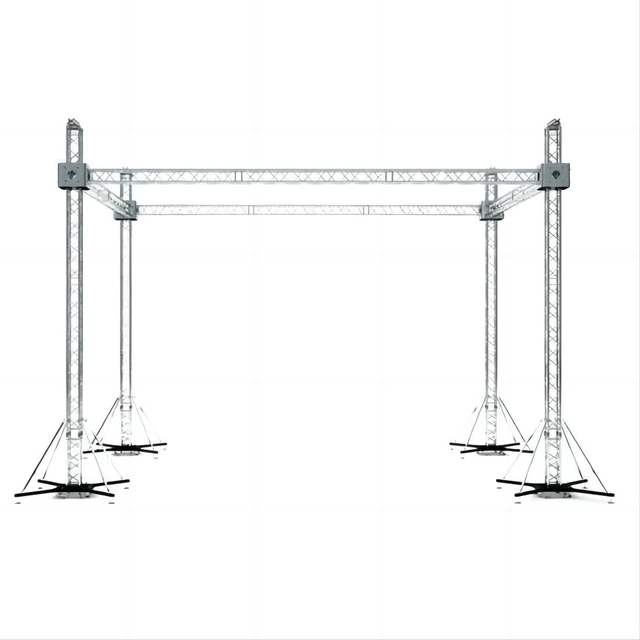
6m × 6m aluminum flat roof truss system with a 4m front height and 6m rear height, using a four-tower modular support configuration for concerts, lighting rigs, stage productions, and temporary event applications. Custom manufactured by DragonStage.
The 4m × 6m Hybrid Ringlock FOH Control Booth is a customized Front of House structure for concert, festival, live-event, and production-control applications.
The main booth structure is built from a modular Ringlock system, while the pitched roof uses a separate aluminum frame. This combination allows the booth body, working floor, enclosure, and roof components to be supplied as one coordinated temporary-event package.
The confirmed dimensions for this configuration are:
Width: 4m
Depth: 6m
Overall structure height: 3m
Side / eave height: 2m
Roof ridge height: 2.5m
The structure also includes roof tarpaulins, side and rear/front curtain panels, aluminum roof beams, platform planks, diagonal bracing, and steel ballast-pipe components according to the supplied BOQ.
DragonStage supplies other modular temporary structures through our Ringlock Structure System product range.
The 4m × 4m Multi-Level Hybrid Ringlock FOH Control Tower is a customized Front of House control structure designed for concerts, festivals, live productions, and other temporary event applications.
This product combines a Ringlock main tower structure with an aluminum roof frame and weather-cover system, creating a compact but elevated technical-control tower for audio, lighting, video, or show-operation use.
The confirmed project dimensions are:
Width: 4m
Depth: 4m
Overall maximum height: 7m
Side height: 6m
Roof low point: 6m
Roof high point: 7m
This makes it a sloped-roof hybrid FOH tower, with the roof rising from the lower side to the higher side.
According to the supplied BOQ, the structure includes the Ringlock main body, internal planks, ladder-access components, aluminum roof beams, side-wall curtain posts, roof tarpaulin, side and front/back curtains, ballast-pipe components, and a lower auxiliary base structure.
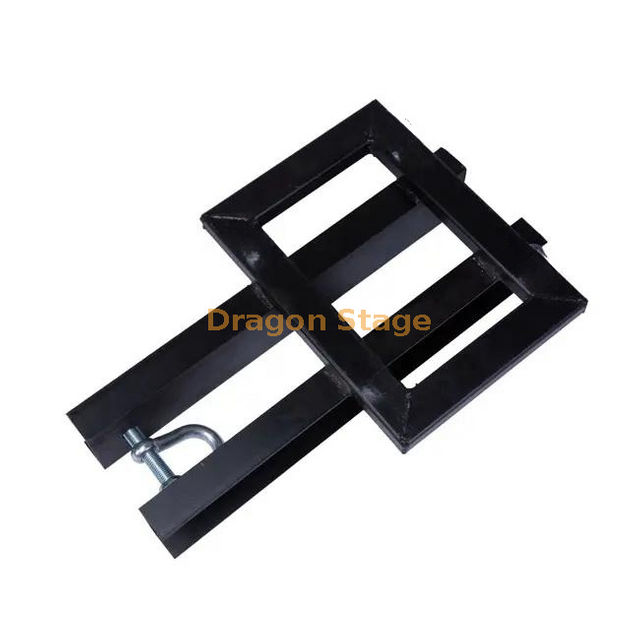
Professional Rental LED Screen Pad Block Mounting System - Precision Adjustable Spacing Bracket with Locking Nut for Stage Truss Video Wall Installation
The 24ft × 24ft Flat Roof Aluminum Truss System is a customized four-tower event truss structure with a 20ft tower height, designed for temporary stages, lighting installations, concerts, performances, corporate events, and other event-production applications.
The system uses four vertical aluminum truss towers supporting a square flat-roof truss framework. Internal cross truss members divide the overhead area into multiple rigging zones, allowing the roof framework to be configured around the actual lighting and event-equipment layout.
The drawing also shows a tower lifting arrangement with sleeve blocks, allowing the assembled upper truss grid to be positioned on the vertical towers as part of the installation process.
DragonStage manufactures flat roof systems in different dimensions and configurations. See more products in our Typical Flat Roof Truss System range.
The 8.3m Heavy Duty Layher Truss Support Tower System is a professional, high-capacity rigging structure designed for outdoor concerts, large events, and festival stages. Engineered with a stable 6m × 2m base footprint and high-strength modular components, this system provides a secure overhead rigging solution for line array audio speakers, LED screens, and heavy lighting rigs. Its fast pin-and-wedge assembly ensures quick setup and maximum stability for demanding stage applications.
The 24m × 24m x6m Aluminum Truss Tent Structure is a customized outdoor covering solution designed for terraces, resorts, beach areas, hospitality spaces, and temporary event applications.
Based on the customer's requirements, this structure uses a 400mm aluminum screw truss system with a pyramid roof design, supported by 10 aluminum truss columns and covered with a white waterproof PVC tarpaulin.
The open-span design provides a large covered outdoor area while maintaining a clean architectural appearance suitable for outdoor events and commercial spaces.
DragonStage manufactures customized Aluminum Truss structures according to customer dimensions, application requirements, and project conditions.
Professional 12U and 16U flight case rack cabinet for mixers, amplifiers and event audio equipment. DragonStage provides customized rack cases for concerts, touring productions and professional events.
This customized large tunnel event structure combines a 24m wide × 18m deep × 15m high tunnel aluminum truss system with a 21.96m × 14.4m × 2m high stage platform.
The upper structure uses multiple large curved aluminum truss arches connected by longitudinal truss sections, creating a wide-span architectural framework above the event area. The complete system can be supplied together with the elevated stage platform as a customized package for stadium events, ceremonies, concerts, festivals, and other large temporary productions.
The dimensions shown here come from an actual customer quotation requirement rather than a standard catalogue size.
DragonStage manufactures customized Roof Truss systems in different dimensions and configurations according to project requirements.
This customized 12m × 10m Ringlock concert stage system combines a 2m-high main stage, a 2m × 6m runway, four access stairs, three-sided Ringlock wall structures, approximately 4m-wide LED support areas on both sides, and a customized 400 × 400mm aluminum truss package above the stage.For other modular configurations, see our Ringlock Stage System
This 14m × 10m Ringlock concert stage system is a customized large-event stage package combining a steel Ringlock stage platform, aluminum peak roof truss, 6m-wide side structures for LED screens, and dedicated structures for line array suspension.
The main performance platform measures 14m × 10m, with a requested stage height of up to 2m. Ringlock scaffolding is also used to build the surrounding support structures up to approximately 10m high, matching the main stage and the 6m-wide wings on both sides.
Instead of purchasing the stage platform, roof truss, LED supports, and sound-support structures separately, customers can order them as one coordinated event-stage package from DragonTruss.
2m × 2m modular Ringlock audience viewing platform originally configured for socially distanced concert seating areas. The system features a 0.2m-high aluminum pallet platform, three-sided double-rail guardrails, an open rear entrance, adjustable steel base jacks, and a front-facing position for event or sponsor posters.
20m wide × 14m deep × 10m high custom curved roof truss system featuring six main support towers and two 2m-wide side wings for line array systems with manual hoists. Designed as a modular aluminum truss structure for concerts, festivals, live productions, and other large event applications.
This custom mobile DJ table is designed for a customer who needed one standalone DJ workstation rather than a complete stage system.
The table uses the same basic manufacturing logic as a professional aluminum stage platform: an aluminum frame, flat black working surface, rigid support structure, and replaceable modular components. However, instead of stage legs standing directly on the floor, this version is fitted with four lockable caster wheels so the complete table can be moved short distances inside a club without dismantling the DJ equipment.
The finished size is 2200mm wide × 800mm deep × 900mm high, providing a large working surface for multiple DJ players, a mixer, laptop, or controller.
For other aluminum platform products manufactured using similar structural principles, see our Aluminum Stage range.
DragonTruss manufactures integrated stage and truss systems combining modular aluminum stage platforms with aluminum truss structures for event applications.
This customized project includes a 9.76m x 9.76m Quick Stage main platform, a 2.44m wide x 3.66m long runway stage, and a 400x400mm spigot truss gantry structure with a 10m width and 5m height.
The system integrates a quick assembly stage platform with a modular truss framework, providing a complete structure solution for event decoration, lighting installation, and potential LED screen applications.
For customized stage structures combining platforms, truss systems, and accessories, DragonTruss provides complete Custom Stage Production services according to project requirements.
This custom black F34 curved truss arch structure was produced based on a customer's requested configuration, combining curved F34 truss elements, F32/F34 box corners, straight truss sections, and outdoor base plates.
Unlike standard straight truss products, curved truss structures require additional manufacturing coordination, including curve fabrication, connector alignment, component matching, and surface finishing. The final structure demonstrates DragonTruss's capability in producing customized aluminum truss solutions beyond standard configurations.
For projects requiring special shapes, customized layouts, or integrated stage structures, DragonTruss also provides Custom Stage Production services based on project requirements.
Section:Square600x760mm Inclined tube: 25x2.0mm Main tube:50x4.0mm Braces:50x2.0mm
This Heavy-Duty Aluminum Box Truss (600x700mm) is engineered for superior structural integrity and massive load capacities. Ideal for professional concert and event stage productions, its robust design supports large-scale lighting truss rigs and LED walls, ensuring a safe and stable environment for any world-class performance.
Section:Square670x1010mm Inelined tube: 30x2.0mm Main tube:50x5.0mm Braces:50x3.0mm
This Heavy-Duty Stage Light Truss (680x1010mm) is engineered for massive spans and extreme loading requirements. Designed for professional concert and event stage productions, its robust rectangular profile ensures maximum stability. It is the ultimate solution for supporting large-scale lighting truss rigs and heavy LED walls safely.
the spigot truss sectional sizes are 830mm wide and 630mm deep. the main tube is 50x4mm or 60x5mm.
This ultra-heavy-duty Aluminum Spigot Truss features reinforced 50x4mm and 60x5mm main tubes, engineered for massive spans and maximum load requirements. Ideal for professional concert and event stage builds, its high-precision spigot connection ensures rapid assembly and unrivaled structural stability for world-class productions.
The Square Box Truss F34 Circle Corner 2 Ways 90 Degree is characterized by its square shape and the incorporation of circular corners at two ends, forming a 90-degree angle. This design not only adds an aesthetic appeal to the structure but also enhances its structural integrity. The circular corners help distribute the load more evenly, reducing stress concentrations and improving the overall stability of the truss.
custom Aluminum Top Sections with Steel Wheels for Beam Truss 520x760mm are a popular choice for motor hoisting system due to their durability, strength, and versatility.
This Aluminum Concert Professional Light Truss 18x12x9m seems is a high-quality and durable solution for concert and event lighting setups. The dimensions are suitable for large-scale productions, and the material is known for its strength and lightweight properties. This truss system appears is a reliable option for professional use in the entertainment industry.