How to Properly Install and Maintain Aluminum Crowd Control Barricades
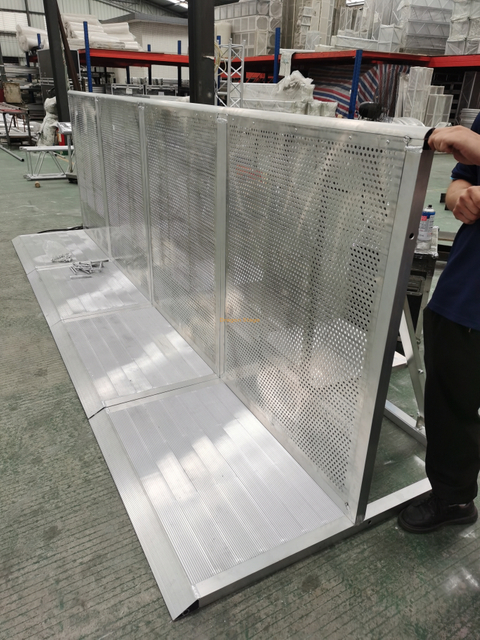
Aluminum crowd control barricades are widely used at concerts, festivals, sporting events, political gatherings, parades, and other large public events. Proper installation and routine maintenance are essential for ensuring audience safety, protecting event staff, and extending the service life of the barricades.
This guide explains the recommended installation procedures, daily inspections, and maintenance practices for aluminum barricades.
Why Proper Installation Matters
Crowd control barricades are designed to manage pedestrian movement, create secure working areas, and protect performers, security personnel, and spectators.
Incorrect installation may result in:
Unstable barricades
Gaps between sections
Reduced crowd control effectiveness
Increased safety risks during high-density events
For this reason, every installation should be completed according to the event layout and expected crowd capacity.
Step 1. Plan the Barricade Layout
Before installation, determine:
Audience entrance and exit routes
Emergency escape paths
Performer access
Security working areas
Vehicle access lanes
Crowd density
A proper layout improves both safety and event management efficiency.
Step 2. Position the Barricades
Place the barricades on a stable and level surface.
They are commonly used to:
Separate audience areas
Protect stage front security zones
Control waiting lines
Create VIP areas
Guide pedestrian traffic
Ensure sufficient space is reserved for emergency evacuation.
Step 3. Connect the Barricades
Individual barricades should be securely connected using the supplied locking system or connection hardware.
Proper connections prevent movement between sections and improve overall structural stability.
For large events, verify that every connection has been completely locked before opening the venue.
Step 4. Install Corner Barricades
Corners are often subjected to higher crowd pressure than straight sections.
Using dedicated corner barricades helps:
Prevent separation at turning points
Improve structural rigidity
Maintain continuous crowd control lines
This is especially important for concerts and high-density standing audiences.
Daily Inspection Before the Event
Before every event, inspect the barricades for:
Loose locking mechanisms
Bent frames
Damaged welds
Missing hardware
Uneven footing
Any damaged components should be repaired or replaced before use.
Routine Maintenance
Regular maintenance helps extend the service life of aluminum barricades.
Recommended maintenance includes:
Clean the Barricades
Remove dust, mud, tape residue, and other debris after each event.
A clean surface improves appearance and allows damage to be detected more easily.
Inspect Structural Components
Check for:
Cracks
Bent tubes
Deformed frames
Loose welds
Any structural damage should be repaired before the next event.
Check the Hardware
Inspect:
Bolts
Nuts
Pins
Locking devices
Tighten loose hardware and replace any worn or damaged components.
Prevent Corrosion
Although aluminum naturally resists corrosion, steel hardware should be kept clean and dry.
If necessary:
Apply anti-rust spray to steel components
Replace severely corroded hardware
Store barricades in a dry environment
Proper Storage
When not in use:
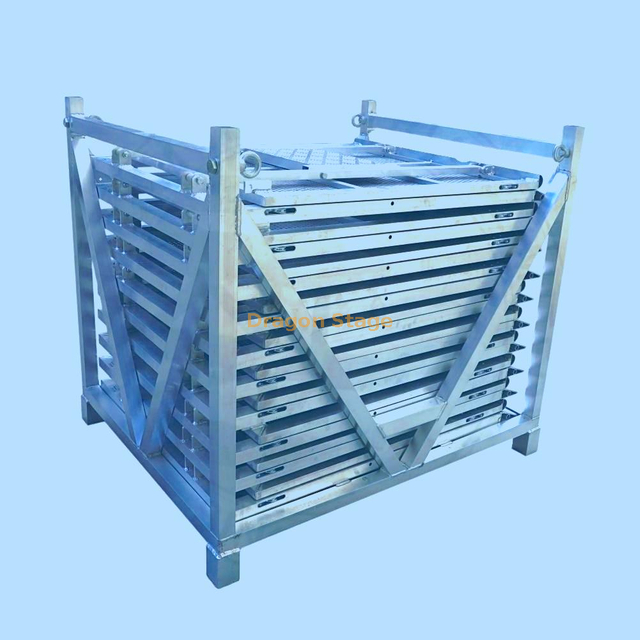
Stack barricades correctly
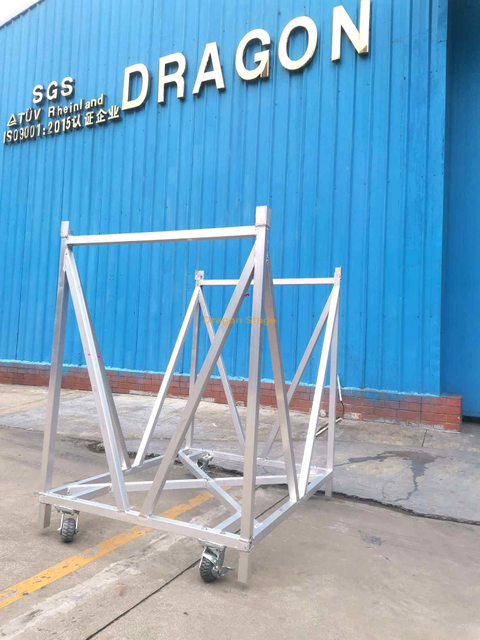
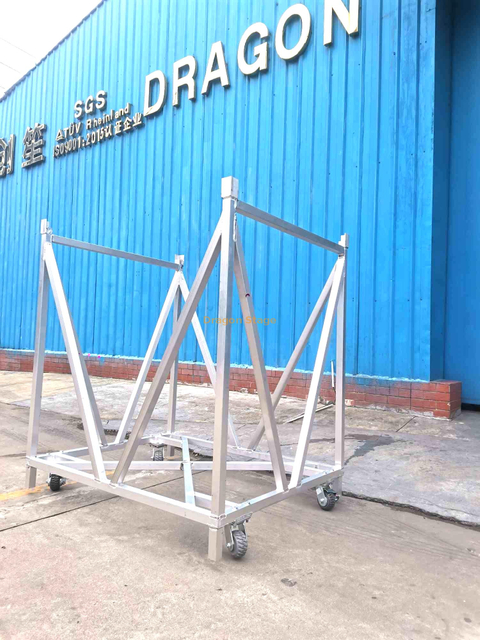
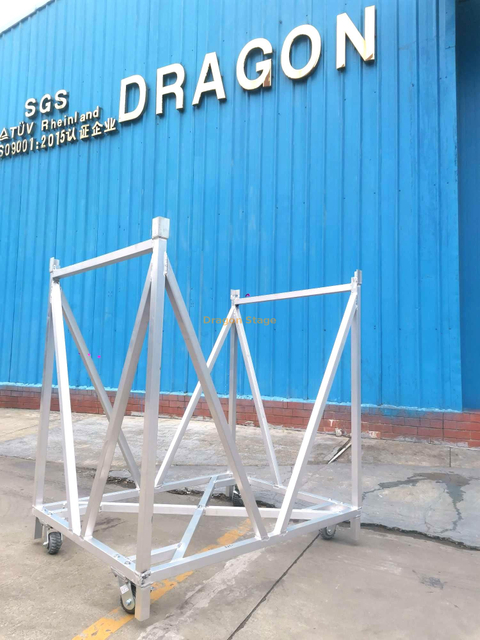
Avoid excessive impact during transportation
Store indoors whenever possible
Protect locking mechanisms from dirt and moisture
Proper storage reduces maintenance costs and extends product life.
Conclusion
Proper installation and regular maintenance are essential for maximizing the safety and service life of aluminum crowd control barricades. By following correct installation procedures, inspecting hardware before every event, and performing routine cleaning and maintenance, event organizers can ensure reliable crowd management and long-term product performance.
Frequently Asked Questions
Can aluminum barricades be used outdoors?
Yes. Aluminum barricades are suitable for both indoor and outdoor events.
Do barricades need to be fixed to the ground?
Most professional crowd control barricades are self-supporting and connected together rather than permanently fixed to the ground.
How often should barricades be inspected?
A visual inspection should be performed before every event, with more detailed inspections carried out regularly depending on usage frequency.
Can damaged barricades be repaired?
Minor hardware can usually be replaced. Structural damage such as cracked welds or severely bent frames should be repaired by qualified personnel or replaced.
How should barricades be stored?
They should be stacked properly, kept dry, and protected from unnecessary impacts during transportation and storage.
Related Articles
If you are planning a crowd management system for your event, the following articles may also be helpful:
The DragonStage 32x24x18m Large Ringlock Scaffold Roof Truss Structure combines a large modular Ringlock support system with a heavy-duty aluminum pitched-roof truss framework.
Designed for stadium-scale ceremonies, festivals, cultural performances and large outdoor event productions, the system integrates extensive scaffold support zones, heavy aluminum roof trusses, custom roof connectors, tensioning components and a large roof canopy.
The drawing identifies a nominal 32m × 24m × 18m configuration, with the overall height shown at approximately 18.21m.
A complete professional event sound package combining 16 dual-12-inch passive line array speakers, 10 dual-18-inch subwoofers, 6 stage monitors, dedicated Class-D power amplifiers, dual 4-in/8-out DSP processors, power management, wireless microphones, rigging frames, flight cases, amplifier racks and cabling.
This system is designed for concerts, live performances, festivals, touring productions and other professional event sound applications where the customer needs a coordinated PA package rather than individual speakers.
For other professional audio systems, see Stage Sound.
The DragonStage 15×10×8m Aluminum Curved Roof Truss System is a modular concert-stage roofing structure featuring a curved overhead truss framework, four main support towers, and two additional side-wing towers.
The system uses CS389×389mm and CS289×289mm aluminum spigot truss, sleeve block assemblies, BA05 manual hoists, tower bases, outriggers, and a PVC roof canopy. The side wings extend the configuration for additional event-production arrangements, subject to the final equipment layout and verified loading requirements.
Designed for concerts, music festivals, touring productions, and temporary entertainment stages, this system can be supplied with matching modular stage platforms and accessories.
Custom Star Shape Truss Aluminum for Wedding Decoration Art Design
Pentagram,five-pointed star
The DragonStage Custom Five-Point Star Aluminum Truss is a decorative event structure designed for wedding backdrops, stage displays, photo areas, exhibition decoration, and artistic event installations.
Featuring a distinctive pentagram-style star shape, the product is available in 2.5×2.63m, 3×3.15m, and 4×3.8m configurations, with selected 200mm and 300mm truss section options.
The customized star geometry provides an alternative to conventional square, rectangular, or circular event truss structures.
The DragonStage 9x6m Bolt Truss Gantry System is a modular event-support structure featuring two vertical truss towers, a horizontal bolt-connected truss beam, tower-head assemblies, base plates, and diagonal outrigger bracing.
With a nominal horizontal dimension of 9m (29.5ft) and a height of 6m (19.7ft), this open-frame structure is intended for event lighting, stage production, backdrop framing, and temporary gantry applications. Final truss specifications, support arrangements, and equipment loads are confirmed according to the project requirements.
The DragonStage 36x18x12m Large Concert Stage Roof Truss System is a large-format modular event structure featuring a multi-tower truss support system, an elevated overhead truss framework, and a modular stage platform with guardrails and stair access.
With nominal dimensions of 36m wide × 18m deep × 12m high (120ft × 60ft × 40ft), this configuration is intended for large concerts, music festivals, live performances, and temporary entertainment productions requiring an extensive stage area and overhead structural framework.
The DragonStage 6.72x4.89m modular event stage combines a 0.6m-high red stage platform with a 7.7m-wide, 4.4m-high rear box truss gantry. The open-top configuration provides a raised performance area and a separate overhead truss frame for event backdrop and production applications. Suitable for concerts, school performances, ceremonies, and indoor events, with final accessories and rigging requirements confirmed according to the project.
The DragonStage 25x10m Ringlock Grandstand is a large modular spectator-seating system designed for temporary sports events, school competitions, festivals, public performances, and other audience gatherings. Measuring 25m wide × 10m deep, the illustrated configuration features tiered seating, two access aisles, and three-sided guardrails. The specified main height is 2.5m, with an overall height of 3.5m. The modular Ringlock system can be configured according to the required seating layout, access arrangement, and project conditions.
A heavy duty iron adjustable clamp specifically designed for use in clear span marquees using grooved aluminium kader style beams. It has M10, M12 and M14 tapped mounting points.
Our professional Aluminum Alloy Spigot Square Truss is the industry standard for high-performance rigging. Designed with a robust modular system logic, this versatile solution is perfect for concert and event stages. It offers exceptional load-bearing stability and a sleek finish for supporting professional lighting and LED screens.
Section:Square200x200mm inclined tube: 12x2.0mm Main tube: 30x2.0mm Length:0.5/1/2/2.5m Braces: 20x2.0mm
This premium 200x200mm Aluminum Spigot Box Truss offers a compact yet incredibly strong structural solution. Ideal for exhibitions and trade shows, its high-precision conical connection system ensures rapid assembly. It is the perfect professional choice for creating sophisticated lighting truss grids in any concert and event stage environment.
Our 290mm Aluminum Square Spigot Truss with 50x3mm main tubing is a heavy-duty solution for professional rigging. Utilizing a modular system logic, this versatile series is ideal for concert and event stages, offering exceptional load-bearing stability and rapid assembly for any production environment.
The Dragonstage Aluminum Spigot 520x520mm Square Box 6 Ways Corner Truss Cube Connector is a device for constructing large, sturdy structures that are sturdy and lightweight. This device is made of aluminum, which is durable and lightweight. The product has a size of 520x520mm and can be used for building structures in 6 different ways. It also comes with two pieces of aluminum screws for assembling the structure. The device is able to withstand high pressure, so it is perfect for heavy objects.
This box can be used to create a stable structure for your display or party. You can use this box to create a corner truss cube. It can be used for exhibitions, retail, and party displays. The box has a 400x400mm or 389x389mm square opening. The box has six ways to connect.
Dragonstage Aluminum Spigot 300x300mm / 289x289mm Square Box 6 Ways Corner Truss Cube Connector is an aluminum spigot with a 300x300mm square box with 6 ways corner truss cube connector. This aluminum spigot is perfect for hanging lights, air conditioning, and other things. The dimensions of the spigot are 300x300mm square box with 6 ways corner truss cube connector.
Aluminum Spigot Truss Aluminum Base Plate with Handles 300mm 400mm 500mm 600mm 800mm with half conical and pins clips.
The DragonStage Aluminum Spigot Truss Base Plate with Handles is available in five square sizes from 300×300mm to 800×800mm, all using an 8mm-thick aluminum plate. Each configuration can be supplied with compatible half conical connectors, connector pins and R-clips for spigot truss installation. Integrated handles make the plates more practical to carry and position during repeated event setup and teardown.
this is 100x100x3mm base plate for f14 truss mini, with 4 half connectors and pins clips.
The DragonStage F14 Mini Truss Square Base Plate is a compact 100 × 100 × 3mm base plate supplied with 4 half conical connectors, connector pins and R-clips for compatible F14 mini truss systems. It is designed as a small mounting and connection accessory for exhibition, display, DJ, decorative and lightweight mini-truss applications.
Section:Square400x500mm Inclined tube: 25x2.0mm Main tube:50x3.0mm Braces:50x2.0mm Material: Aluminum 6061-T6
Our high-strength 500x400mm lighting truss is engineered from premium aluminum alloy for superior load-bearing performance. Ideal for music and audio setups, this durable screw-connection system ensures stability for professional stage environments. Built to meet rigorous safety standards, it provides a reliable foundation for any event production.
Section:Square500x500mm Inclined tube: 25x2.0mm Main tube:50x3.0mm Braces:50x2.0mm Material: Aluminum 6061-T6 This heavy-duty 500x500mm bolt aluminum square truss is the ultimate foundation for outdoor concert stages and large-scale events. Engineered for maximum structural stability, this aluminum truss system provides the high-load capacity needed to support massive lighting rigs and heavy audio arrays safely in any environment.
Section:Square400x400mm Inclined tube: 25x2.0mm Main tube:50x3.0mm Braces:50x2.0mm Material: Aluminum 6061-T6
This versatile 400x400mm aluminum roof screw lighting truss is the industry standard for medium-to-heavy stage rigging. Engineered for exceptional durability, this high-performance aluminum truss system supports heavy lighting and audio equipment with ease. It is the perfect foundation for building safe, professional modular stage systems for any event.
The DragonStage 4.88x2.44m Adjustable Outdoor Event Stage is a compact 16x8ft temporary platform with two access stairs and an adjustable height of 0.6–1.0m. It is designed for community events, ceremonies, school performances, church activities, DJ shows, presentations, and other temporary indoor or outdoor applications where a medium-size stage with flexible access is required.
Park Aluminum Portable Square Stage 8.54x6.1m 28x20ft Height: 0.8-1m
The DragonStage 8.54x6.1m Aluminum Park & Community Event Stage is a 28x20ft brace-supported modular platform built from 35 standard 4x4ft stage decks. The complete configuration includes 18mm anti-slip plywood decking, adjustable support stands, three-side guardrails, a 4-step stair, and black stage skirting, making it suitable for community concerts, park events, ceremonies, public performances, school activities, and temporary outdoor stages.
The Concert Custom Adjustable Portable Stage is the perfect addition to any concert venue. The Concert Custom Adjustable Cheap Portable Stage is a portable stage that is lightweight and easy to set up. It can be adjusted to the height of the performer and is available in two different colors. The Concert Custom Adjustable Cheap Portable Stage is made of durable, lightweight aluminum that will last for years to come. It has a black aluminum top with four black steel legs. The Concert Custom Adjustable Cheap Portable Stage is very easy to set up and is very stable.
Aluminum Mini Modular Stage Panel Flooring Systems 2.44x2.44m 8x8ft Height 0.6-1m with 1 stair.
The DragonStage 2.44x2.44m Adjustable Aluminum Modular Stage is a compact 8x8ft brace-supported event platform built from two standard 4x8ft / 1.22x2.44m wooden-topped stage panels. With an adjustable finished height of 0.6-1.0m, extendable support stands, stage braces, adjustable bases, and stair access components, it is suitable for small performances, DJ events, ceremonies, church activities, presentations, and temporary event staging.
Assemble Portable Stage Movable Aluminum Stage for Outdoor Concert Event 2.44x1.22m 8x4ft with 1 stair.
The DragonStage 2.44x1.22m Portable Aluminum Stage Kit is a compact 8x4ft temporary event platform supplied with one access stair. Designed for small outdoor concerts, DJ performances, speeches, ceremonies, promotions, and temporary event use, the modular stage can also be combined with additional compatible 4x8ft units when a larger platform is required.
The DragonStage 3.8x3.4m Aluminum Arch Truss Gateway is a compact curved entrance structure built from 290×290mm spigot truss with 300×500mm base plates. With overall external dimensions of approximately 3800mm wide × 3400mm high, it is designed for wedding entrances, exhibition gateways, red-carpet areas, event decoration, photo zones, and other temporary event displays.
Base plate only for the U-Frame 50. LED cans and moving heads can be installed freeriding in the room. In combination with the optional wheels the U-Frame Dolly will be an indispensable element on stages and show acts.
U-frame Truss And Dolly, it is custom U torm trusses (660 × 500 × 50mm) for 4 (4 utorm trusses+ top bar+ dolly) and 5 (4 utorm trusses+ top bar+ dolly) Robots in black color.
the dolly is made of 1.2x0.6m aluminum plate, thickness 8mm and 4 casters.
The DragonStage 5.49x1.22m Straight Aluminum Event Stage Ramp provides a direct access route for wedding stages, corporate events, ceremonies, hotel functions, and other temporary platforms. The ramp measures approximately 18ft long × 4ft wide (5.49 × 1.22m) and uses modular 4 × 4ft / 1.22 × 1.22m deck sections with 1m / 3.28ft high guardrails along both sides.
The DragonStage 3.0x1.22m Compact Aluminum Stage Transition Ramp provides a short, direct access route between ground level and temporary event stages. With an overall length of approximately 3.0m / 9.84ftand a width of approximately 1.22m / 4ft, the ramp uses modular aluminum stage components and includes 1m / 3.28ft high guardrailson both sides.
The DragonStage 7.84x1.23m Narrow Straight Aluminum Stage Access Ramp provides a direct route between ground level and an elevated temporary stage for performers, speakers, technicians, event staff, and production crew. Its slim footprint measures approximately 308⅝ × 48⅜ in (7.84 × 1.23m)and uses modular 4 × 4 ft / 1.22 × 1.22mramp deck sections with 1m / 3.28ft high guardrailsalong both sides.
The DragonStage 10.30x1.63m Straight Aluminum Stage Production Loading Ramp provides a direct access route between ground level and temporary event stages. With an overall external size of approximately 405½ × 64⅛ in (10.30 × 1.63m), the system uses standard 4 × 4 ft / 1.22 × 1.22m modular deck sections and 1m / 3.28ft high guardrails along both sides. It is suitable for road cases, AV equipment, production carts, technicians, and general backstage stage access.
The DragonStage 7.32x3.05m Compact Switchback Aluminum Stage Service Ramp provides a continuous access route for AV carts, production trolleys, touring equipment, technicians, and stage crew. Its compact U-shaped footprint measures approximately 24 × 10 ft (7.32 × 3.05m)and uses standard 4 × 4 ft / 1.22 × 1.22mmodular ramp decks with 1m / 3.28ft high guardrailsalong both sides.
The DragonStage 7.40x8.26m L-Shaped Aluminum Backstage Loading Ramp is designed for moving flight cases, lighting cases, audio equipment carts, cable boxes, production trolleys, and event equipment between ground level and temporary stages. The 90-degree layout has an overall footprint of approximately 291⅜ in × 325¼ in (7.40m × 8.26m) and uses standard 4 × 4 ft / 1.22 × 1.22m modular deck sections with 1m / 3.28ft high guardrails along both sides.
The DragonStage 9.82x3.23m Switchback Modular Aluminum Event Stage Ramp is designed for temporary stages requiring a continuous access route for wheelchairs, performers, event staff, carts, and wheeled concert equipment. The compact U-shaped layout measures approximately 386⅝ in × 127¼ in (9.82m × 3.23m) and uses standard 4 × 4 ft / 1.22 × 1.22m modular ramp deck sections with 1m / 3.28ft high guardrails along both sides.
The DragonStage 9.82x8.26m 90-Degree Modular Aluminum Event Stage Ramp is designed for temporary stages that need a continuous access route for wheelchairs, performers, event staff, carts, and wheeled concert equipment. The L-shaped layout measures approximately 386⅝ in × 325¼ in (9.82m × 8.26m)and uses standard 4 × 4 ft / 1.22 × 1.22mmodular deck sections with 1m / 3.28ft high guardrailsalong both sides.
The DragonStage 10.27x3.24m Switchback Modular Aluminum Stage Ramp is a compact U-shaped access system for temporary stages and elevated event platforms. The overall footprint is approximately 404⅜ in × 127½ in (10.27m × 3.24m). It uses standard 4 × 4 ft / 1.22 × 1.22m modular ramp deck sections, with two parallel ramp runs connected by a turning landing and 1m / 3.28ft high guardrails along both sides.