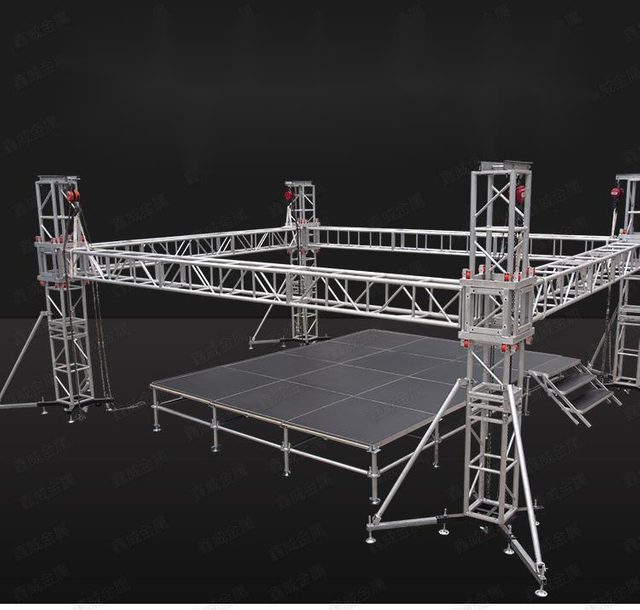
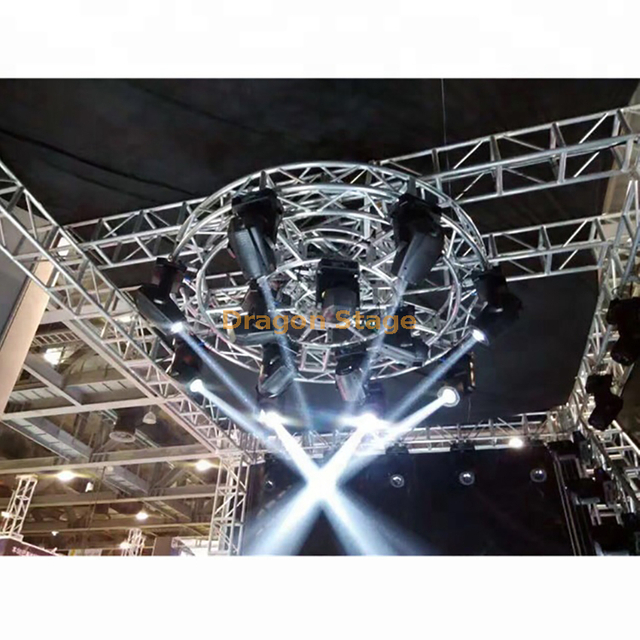
Truss bracing is a structural support system used to improve stability, transfer lateral loads, and prevent structural deformation in truss systems. Common bracing types include diagonal bracing, cross bracing, lateral bracing, sway bracing, and K-bracing.
In aluminum truss systems, bracing does much more than simply “support” the structure. Its real engineering function is to create stable triangular systems, redistribute loads, prevent buckling, and transfer horizontal forces safely into the foundation.
Without proper bracing, even a strong truss system may become unstable under wind, dynamic loads, or uneven loading conditions.
Related structural references:
What Is Truss Bracing?
Truss bracing refers to the additional structural members used to stabilize a truss system and transfer forces between structural components.
Common bracing systems include:
Diagonal bracing
Cross bracing
Lateral bracing
Sway bracing
K-bracing
Portal bracing
These members help transform unstable rectangular frames into stable triangular systems.
Why Truss Bracing Is Important
The primary purpose of bracing is to control:
lateral movement
structural instability
buckling
torsion
dynamic deformation
Without bracing, a truss may deform into a parallelogram shape under horizontal forces.
Bracing provides an alternative load path that redistributes these forces safely throughout the structure.
How Truss Bracing Transfers Structural Loads
The main engineering principle of truss bracing is:
Load Path Transfer
Bracing converts unstable lateral forces into axial tension or compression forces within structural members.
Typical load transfer path:
Wind Load / Seismic Force
→ Roof or Wall System
→ Bracing Members
→ Main Truss Nodes
→ Columns or Supports
→ Foundation
This is one of the most important structural behaviors in truss engineering.
1. Transferring Horizontal Loads
Main truss chords are primarily designed for vertical loads.
Bracing systems resist:
wind loads
seismic forces
uneven live loads
lateral sway
Example
In roof truss systems:
Wind force
→ transferred into cross bracing
→ transferred into truss joints
→ transferred into columns
→ transferred into base supports
Without bracing, the entire structure may twist or collapse sideways.
Outdoor engineering reference:
2. Creating Stable Triangular Structures
One of the most important functions of bracing is creating geometric stability.
A rectangle is not inherently stable.
A triangle is stable.
By adding diagonal braces, the structure becomes rigid.
Without Bracing
A four-member rectangular frame may deform under load.
With Bracing
The diagonal brace transfers force across the frame and prevents deformation.
This is why triangular geometry is fundamental in truss systems.
3. Preventing Buckling of Compression Members
Bracing also stabilizes compression members such as top chords.
Compression members naturally tend to buckle sideways.
Bracing provides lateral restraint.
This forces the chord to remain aligned and carry load axially.
Engineering Effect
Compression force
→ restrained by brace
→ redistributed into neighboring members
→ transferred safely into supports
This dramatically increases structural stability.
Why Bracing Is Critical in Large Roof Truss Systems
Large-span roof trusses experience:
wind uplift
torsional forces
dynamic movement
uneven loading
As span increases, bracing becomes increasingly important.
Large systems often use:
cross bracing
portal bracing
roof lateral bracing
tower sway bracing
Common applications:
concert roof systems
speaker towers
LED support structures
outdoor stage roofs
Related system references:
Common Types of Truss Bracing
Bracing Type | Main Function |
|---|
Cross Bracing | Resists lateral movement |
Diagonal Bracing | Creates triangular stability |
Lateral Bracing | Stabilizes compression members |
K-Bracing | Supports deep structures |
Portal Bracing | Stabilizes end frames |
Sway Bracing | Controls dynamic side movement |
Common Structural Failures Without Proper Bracing
Lateral Buckling
Compression members bend sideways.
Torsional Instability
The structure twists under load.
Uneven Load Redistribution
Forces concentrate at weak points.
Dynamic Sway
Movement increases under wind or vibration.
Relationship Between Bracing, Chords and Web Members
A truss system works as an integrated load-transfer network.
Main Chords
Carry primary tension and compression forces.
Web Members
Transfer shear forces internally.
Bracing Members
Stabilize the system and redistribute lateral forces.
Together, they create a complete structural system.
Related articles:
Why Load Path Matters in Structural Engineering
In real engineering, loads must always have a continuous path.
If one structural component fails to transfer load properly:
Bracing systems ensure that forces continue moving safely through the structure.
This is one of the most important principles in structural engineering.
FAQ
What is the main purpose of truss bracing?
To improve stability and transfer lateral forces safely through the structure.
Does bracing increase load capacity?
Indirectly, yes.
Bracing improves stability and prevents buckling, allowing compression members to perform effectively.
Why are diagonal braces important?
Diagonal braces create triangular geometry, which prevents structural deformation.
Are bracing systems required for outdoor truss structures?
Yes. Outdoor systems experience significant wind and lateral forces.
Conclusion
Truss bracing is one of the most important structural systems in modern truss engineering. It transforms unstable lateral forces into controlled axial forces, stabilizes compression members, and creates safe load paths throughout the structure.
Without proper bracing, even high-strength truss systems may fail under dynamic or lateral loading conditions.
In professional stage and roof truss systems, bracing is not an optional accessory—it is a core part of structural safety and engineering performance.
Explore more engineering knowledge: