How Do I Measure My Equipment to Ensure the Right Flight Case Size?
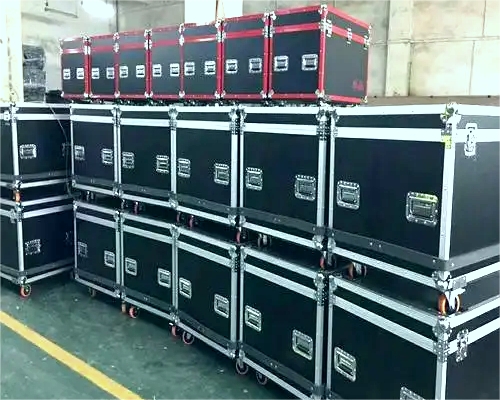
Selecting the correct flight case size is one of the most important steps in protecting your equipment during transportation and storage. Even the strongest flight case cannot provide adequate protection if the equipment does not fit properly inside.
A flight case that is too small may place pressure on sensitive components, while a case that is too large allows excessive movement that can lead to impact damage. Taking accurate measurements before ordering helps ensure a perfect fit and maximizes the protection of your valuable equipment.
If you're still deciding which type of flight case is suitable for your application, you may first read How Do I Choose the Right Flight Case for My Needs?.
Why Accurate Measurements Matter
The purpose of a flight case is not simply to hold equipment—it is to protect it from vibration, impact, dust, moisture, and handling during transportation.
Proper sizing provides several benefits:
Prevents equipment movement
Improves shock absorption
Extends equipment lifespan
Reduces transportation damage
Makes loading and unloading easier
Even a few centimeters of incorrect clearance can reduce the effectiveness of the protective foam.
To better understand how flight cases protect equipment, see What Are the Benefits of Using a Flight Case?.
Step 1 – Measure the Height
Place your equipment on a flat surface and measure from the bottom to the highest point.
Include any components that cannot be removed, such as:
Handles
Connectors
Antennas
Rubber feet
Cooling fans
Mounted accessories
Never measure only the main body if external parts remain attached during transportation.
Step 2 – Measure the Width
Measure the widest point from left to right.
Remember to include:
Protective handles
Side brackets
Mounting hardware
External controls
The widest measurement should always be used when determining the internal dimensions of the flight case.
Step 3 – Measure the Depth
Measure from the front surface to the furthest point on the back.
Pay attention to:
Cable connectors
Power sockets
Rear handles
Cooling systems
Protective bumpers
Many buyers accidentally ignore rear connectors, resulting in insufficient internal space.
Step 4 – Add Clearance for Protective Foam
After measuring the equipment itself, allow additional space for the interior cushioning.
Typical recommendations are:
| Equipment Type | Recommended Foam Clearance |
|---|
| Cameras | 20–30 mm per side |
| Audio equipment | 20–40 mm per side |
| Lighting fixtures | 30–50 mm per side |
| Industrial instruments | 30–50 mm per side |
| Heavy equipment | 40–60 mm per side |
The exact clearance depends on the foam material and the level of protection required.
If you're choosing interior padding, you may also find Choose Grid Foam Or Pearl Foam for ABS Flight Case helpful.
Step 5 – Compare with the Internal Dimensions
One of the most common mistakes is comparing equipment measurements with the external dimensions of a flight case.
Instead, always compare your equipment with the internal dimensions provided by the manufacturer.
Remember that wall thickness, aluminum profiles, hardware, and foam all reduce the usable interior space.
Step 6 – Consider Equipment Weight
Weight is just as important as size.
A properly sized case should also have:
Large equipment may require reinforced plywood construction instead of lightweight plastic cases.
For more information about materials, see What Type of Material Is Used in the Construction of Flight Cases?.
Step 7 – Think About Transportation Requirements
Consider how the equipment will be transported.
Ask yourself:
Will it travel by truck?
Will it be shipped internationally?
Will it be checked as airline luggage?
Will it be used for touring?
Will multiple cases be stacked?
These factors influence the ideal case dimensions, wheel configuration, and structural strength.
For transportation tips, read How Do I Transport My Flight Case Safely?.
When Should You Choose a Custom Flight Case?
Standard flight cases are suitable for many common products, but custom flight cases are recommended when:
Equipment has an irregular shape
Equipment is especially expensive
Multiple accessories need to be stored together
Foam inserts must match precise dimensions
Frequent transportation is expected
A custom-designed interior minimizes movement and provides the highest level of protection.
Learn more in How To Custom Produce A Flightcase.
Common Measurement Mistakes
Many first-time buyers make simple mistakes when measuring equipment.
Avoid these common errors:
Measuring only the equipment body
Forgetting cables or connectors
Ignoring handles or mounting brackets
Comparing with external case dimensions
Leaving no room for protective foam
Choosing the smallest possible case to save cost
A properly fitted flight case is always safer than an overly tight or excessively loose one.
Frequently Asked Questions
Should I measure with accessories installed?
Yes. Measure the equipment exactly as it will be transported. Any permanently attached accessories should be included.
How much extra space should I leave?
Most professional flight cases allow 20–50 mm of protective foam around the equipment, depending on its weight and fragility.
Can the equipment fit tightly inside the case?
No. There should always be sufficient clearance for shock-absorbing foam. Equipment should never be in direct contact with the case walls.
What if my equipment has an unusual shape?
A custom flight case with CNC-cut foam inserts usually provides the safest solution.
Conclusion
Accurately measuring your equipment is the foundation of selecting the right flight case. By measuring the height, width, and depth correctly, allowing sufficient clearance for protective foam, comparing internal dimensions, and considering transportation requirements, you can ensure your equipment remains safe throughout storage and transportation.
If you are still comparing different flight case options, you may also find these guides useful: