6061-T6 vs 6082-T6 Aluminum Explained (Strength, Welding & Truss Applications)
6061-T6 and 6082-T6 are two of the most commonly used aluminum alloys in stage truss, lighting truss, roof systems, and modular structural engineering. Although both belong to the 6xxx aluminum alloy family (Al-Mg-Si), they have important differences in strength, extrusion performance, welding behavior, and structural applications.
For aluminum truss systems, 6082-T6 is generally preferred for heavy-duty spigot truss systems, while 6061-T6 is widely used in bolt truss systems and applications requiring more complex extruded profiles.
Related engineering references:
What Are 6061-T6 and 6082-T6 Aluminum?
Both 6061 and 6082 belong to the 6xxx series aluminum alloys.
They are strengthened through:
This provides an excellent balance between:
strength
corrosion resistance
weldability
machinability
structural performance
Chemical Difference
6061-T6
Chemical designation:
Main strengthening element:
Copper improves:
machinability
extrusion performance
general versatility
6082-T6
Chemical designation:
Main strengthening element:
Manganese improves:
structural strength
load resistance
heavy-duty performance
This is why 6082-T6 is widely used in professional truss systems.
Mechanical Property Comparison
Property | 6061-T6 | 6082-T6 |
|---|
Yield Strength | ~240 MPa | ~250–260 MPa |
Tensile Strength | ~260 MPa | ~290–310 MPa |
Elongation | ~8–10% | ~6–10% |
Hardness | ~95 HB | ~100 HB |
Elastic Modulus | 70,000 MPa | 70,000 MPa |
Density | 2.7 g/cm³ | 2.7 g/cm³ |
Key Conclusion
6082-T6 is structurally stronger than 6061-T6.
This becomes especially important for:
large-span truss systems
tower systems
roof truss structures
heavy lighting loads
speaker towers
Why 6082-T6 Is Preferred for Spigot Truss Systems
Professional spigot truss systems require:
higher bending resistance
higher axial load capacity
greater stiffness
better fatigue performance
Because of this, most heavy-duty truss manufacturers use 6082-T6 for:
Examples include:
Related structural system guide:
Why 6061-T6 Is Common in Bolt Truss Systems
6061-T6 has better extrusion and forming characteristics.
Advantages include:
Because of this, 6061-T6 is widely used in:
Connection reference:
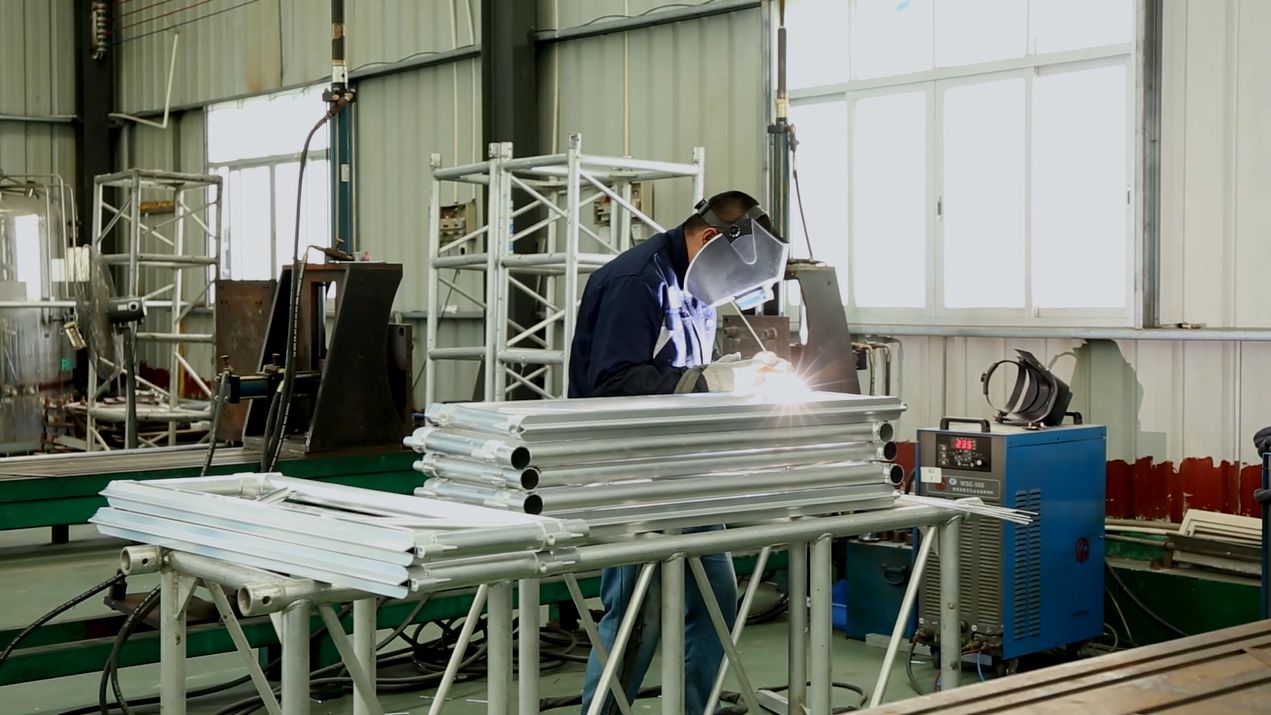
Both alloys lose strength in the Heat Affected Zone (HAZ) after welding.
Typical HAZ Strength Reduction
Property | 6061-T6 | 6082-T6 |
|---|
Strength Reduction | ~40% | ~35–40% |
Typical HAZ Tensile Strength | ~175 MPa | ~185 MPa |
Both alloys are commonly welded using:
However, welding quality becomes extremely important in structural truss manufacturing.
Quality system reference:
This is one of the biggest practical differences between the two alloys.
6061-T6
Better for:
complex shapes
hollow profiles
thin-wall sections
decorative profiles
More suitable for:
machining
custom processing
multi-chamber extrusion
6082-T6
Better for:
structural strength
thick-wall components
heavy-duty applications
Less suitable for:
ultra-thin sections
highly complex profiles
This is why heavy-duty truss tubes are often made from 6082-T6.
Corrosion Resistance Comparison
Both alloys have very good corrosion resistance.
6061-T6
6082-T6
Slightly better in marine environments
Better for harsh outdoor conditions
Common in offshore and heavy-duty structures
Real Applications in Truss Systems
Application | Common Alloy | Reason |
|---|
Spigot Truss | 6082-T6 | Higher structural strength |
Bolt Truss | 6061-T6 | Better extrusion capability |
Roof Truss | 6082-T6 | Heavy load resistance |
Speaker Towers | 6082-T6 | Higher stiffness |
Exhibition Truss | 6061-T6 | Easier manufacturing |
Decorative Structures | 6061-T6 | Complex profile support |
Tube Thickness and Alloy Selection
Material strength must always be evaluated together with:
tube wall thickness
truss dimensions
connection type
bracing layout
For example:
50×2mm 6061-T6
50×3mm 6082-T6
may have dramatically different performance levels.
Thickness guide:
Common Misunderstandings
“6082-T6 Is Always Better”
Not necessarily.
6082-T6 provides higher strength, but:
For many medium-duty systems, 6061-T6 is completely sufficient.
“All Aluminum Truss Uses the Same Material”
This is incorrect.
Two trusses with identical appearance may use:
which creates major structural differences.
How to Choose Between 6061-T6 and 6082-T6
Choose 6082-T6 When
large span is required
load is heavy
spigot connection is used
structural rigidity is critical
outdoor or marine conditions exist
Choose 6061-T6 When
FAQ
Is 6082-T6 stronger than 6061-T6?
Yes. 6082-T6 generally has higher yield and tensile strength.
Why do heavy-duty trusses use 6082-T6?
Because it provides:
for large-span systems.
Is 6061-T6 easier to manufacture?
Yes. 6061-T6 has better extrusion and forming performance.
Can both alloys be welded?
Yes. Both are commonly welded using MIG and TIG processes.
Conclusion
6061-T6 and 6082-T6 are both excellent structural aluminum alloys, but they serve different engineering purposes.
In professional stage and truss engineering, selecting the correct alloy requires balancing:
load capacity
span
welding requirements
profile complexity
structural safety
project budget
A well-designed truss system is never determined by alloy alone. Real engineering performance always depends on the combination of:
alloy material
tube thickness
connection system
bracing layout
load calculation
manufacturing quality
Further reading: