During the construction or usage process, it was discovered that the Layher rod had exhibited a bending phenomenon. As an important supporting and connecting component, the bent Ringlock rod affected the stability and safety of the overall structure. For this maintenance, a hydraulic jack was selected as the main tool, leveraging its powerful lifting force to apply a reverse force to the bent rod. The jack was stably placed beneath the bent part of the rod, ensuring that the center of the jack was aligned with the bent area. Then, the hydraulic device of the jack was operated slowly. During the lifting process, the deformation of the Layher rod was closely observed. Meanwhile, a measuring tool, the spirit level, was used to monitor the straightness of the rod in real-time. After the operation with the jack, the bending issue of the Ringlock rod was effectively resolved.
In the realm of construction and usage, unforeseen challenges often arise that demand prompt and effective solutions. One such challenge that we recently encountered was the bending of the Ringlock rod, a component that holds significant importance in providing support and connection within a structure.
The Ringlock rod is not just any ordinary part; it is a crucial element that contributes to the overall stability and integrity of the entire framework. When we noticed the bending in the Ringlock rod during the construction or utilization phase, it raised immediate concerns regarding the safety and functionality of the structure. A bent Ringlock rod can have far-reaching implications, potentially compromising the entire system's equilibrium and posing a threat to the safety of those who rely on the structure.
Recognizing the severity of the situation, we embarked on a mission to rectify this problem. The chosen approach involved the utilization of a powerful tool - the hydraulic jack. The decision to employ the hydraulic jack was based on its remarkable lifting capacity, which we believed would be instrumental in applying the necessary counterforce to straighten the bent Ringlock rod.
Before initiating the repair process, careful planning and preparation were essential. The first step was to accurately identify the precise location and extent of the bending. This required meticulous inspection and measurement to determine the most effective point of application for the corrective force. Once the area of bending was identified, the next critical task was to position the hydraulic jack precisely beneath it. Ensuring that the center of the jack was perfectly aligned with the bent section was of utmost importance to achieve uniform and effective force distribution.
With the hydraulic jack in place, the operation began. The process of operating the hydraulic device was carried out with caution and precision. It was a gradual and controlled movement, as any hasty or excessive force could potentially cause further damage or complications. As the jack was slowly activated, the lifting force was gradually exerted on the bent Ringlock rod.
Throughout this delicate operation, close and continuous observation was maintained. Our eyes were fixed on the rod, looking for any signs of abnormal deformation or stress. Simultaneously, a spirit level was employed to monitor the straightness of the Ringlock rod in real-time. This allowed us to make immediate adjustments and fine-tune the application of force to ensure that the rod was being straightened accurately and evenly.
Each incremental increase in the jack's pressure brought us closer to the desired outcome. The bending gradually started to diminish, and the rod began to regain its original shape and alignment. It was a nerve-wracking yet thrilling moment as we witnessed the transformation taking place before our eyes.
The entire process was not without its challenges. Maintaining the stability of the jack itself was crucial to prevent any slippage or misalignment that could derail the repair efforts. Additionally, the coordination between the operation of the jack and the real-time monitoring using the spirit level required seamless teamwork and communication.
After what seemed like a meticulous and intense effort, the moment of success arrived. The Ringlock rod, once bent and causing concerns, now stood straight and true. The once compromised stability and safety of the structure were restored, thanks to the strategic use of the hydraulic jack and the meticulous execution of the repair process.
This experience serves as a powerful reminder of the importance of regular inspections and prompt action in construction and usage scenarios. Even the slightest anomaly, such as the bending of a key component like the Ringlock rod, can have significant implications if left unaddressed. It also highlights the significance of having the right tools and expertise at hand to handle such challenges effectively.
In conclusion, the successful resolution of the Ringlock rod bending issue was a testament to the power of careful planning, precise execution, and the utilization of appropriate tools. It reinforces the belief that with the right approach and determination, any obstacle can be overcome, ensuring the safety and functionality of the structures we build and rely on.
Looking forward, this incident will undoubtedly serve as a valuable learning experience, guiding us to be even more vigilant and prepared in the face of similar challenges in the future. After all, in the world of construction and engineering, ensuring the integrity and safety of structures is not just a responsibility; it is a commitment that we uphold with the highest level of dedication and expertise.
Note: Severe bending may compromise the structural integrity of the steel; replacement is recommended if the deformation exceeds safety standards.
The Professional Auditorium Sound System is designed for large indoor venues accommodating approximately 2,000–2,500 people. The system combines high-performance line array loudspeakers, cardioid subwoofers, stage monitors, digital mixing consoles, network audio transmission, and power distribution equipment to provide excellent speech intelligibility and powerful music reproduction. Suitable for churches, theaters, conference centers, convention halls, and multipurpose auditoriums, this solution supports live events, worship services, conferences, and broadcasting applications.
6x5m for led 5x3m, 7x6m for led 6x4m , 9x8m for led 8x6m, 11x9m for led 10x7m Heavy-duty modular aluminum truss system engineered for securely supporting large LED video walls, stage lighting, and sound systems. Features reinforced towers and flexible design for indoor and outdoor event production and exhibition use.
3×3m Aluminum 290mm Truss Exhibition Booth System (Square Trade Show Display Frame)
A square trade show booth is a versatile and efficient option for businesses looking to make a strong impression at trade shows and exhibitions. With its symmetrical shape and clean lines, a square booth offers a professional and polished appearance that can attract potential customers and clients.
The concert assembly of a steel ringlock stage measuring 10x6m is an essential component in creating a memorable and successful musical event. This stage, constructed with durable steel materials, provides a sturdy platform for performers to showcase their talent and entertain the audience.
The ringlock truss is designed to withstand heavy loads and provide stability, ensuring the safety of the line array speakers. With a hoist of 12m, it allows for the speakers to be elevated to a considerable height, maximizing their reach and impact.
A steel ringlock ring lock event stage is a type of modular staging system commonly used for events, concerts, performances, and exhibitions. It is designed to provide a sturdy and versatile platform for performers, speakers, and equipment.
total sizes are 56'x 28'ft (17.08x8.54m) with 2 stairs, Height 24“-48“(0.8-1.2m)
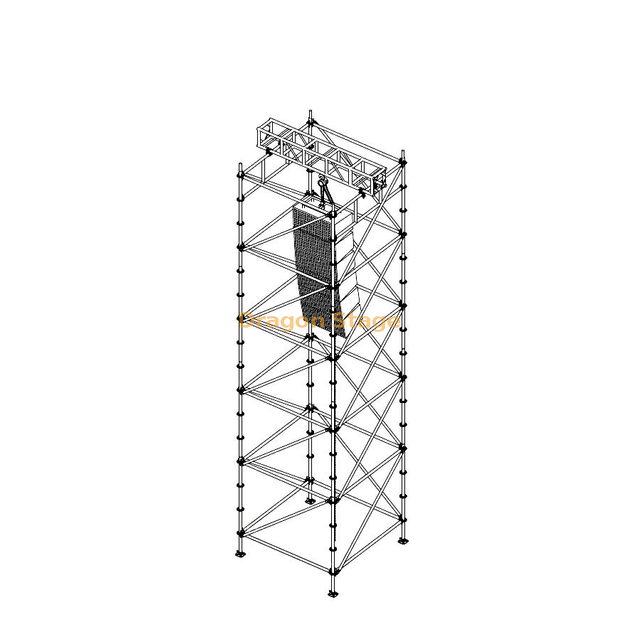
Secure your audio production with our 4m x 2m customized speaker hanging ringlock truss. Standing 8m high, this heavy-duty steel scaffolding tower features a reinforced ring-lock design for massive line array suspension. Engineered for maximum stability and high-load capacity at outdoor concerts, festivals, and stadium event productions.
High Strength Capacity Steel Ringlock Stage for Large Event 10x8m 0.6-1m with 2 adjustable aluminum stage stair
it is a Heavy Duty Loading Capacity steel stage, it is Waterproof and anti-slip for outdoor and indoor concert events.
Elevate your production with our 10x8m High-Strength Steel Ringlock Stage, a heavy-duty solution for high-capacity concert & event stage solutions. Featuring waterproof, anti-slip wooden topping and a reinforced galvanized steel frame, this 80sqm platform is engineered for maximum stability at heights of 0.6-1m, making it ideal for rigorous indoor and outdoor use.
Heavy Duty Big Concert Wooden Adjustable Cheap Portable Steel Ringlock Stage 12x20m height 1-1.4m
Maximize your event’s structural integrity with our 12x20m Heavy Duty Steel Ringlock Stage. Engineered for large-scale productions, this modular stage system features a robust galvanized steel frame and high-density wooden topping. With an adjustable height of 1-1.4m, it is the premier choice for high-capacity concert & event stage solutions.
Boost your event's structural integrity with our 10m x 2m x 6m Steel Ringlock Truss Wall. Engineered for maximum stability and easy assembly, this professional-grade modular system is perfect for outdoor concerts, LED screen mounting, and heavy-duty stage backdrops. Durable, safe, and versatile.
The Ringlock Scaffolding Diagonal Brace by DragonStage is engineered specifically for integration into Ringlock truss grid systems, providing the essential triangulation required for massive stage roofs and LED towers. Built from aerospace-grade 6061-T8 aluminum alloy, these braces offer a superior strength-to-weight ratio compared to traditional steel, ensuring that your modular grid remains perfectly rigid under extreme technical loads while significantly reducing transportation costs.
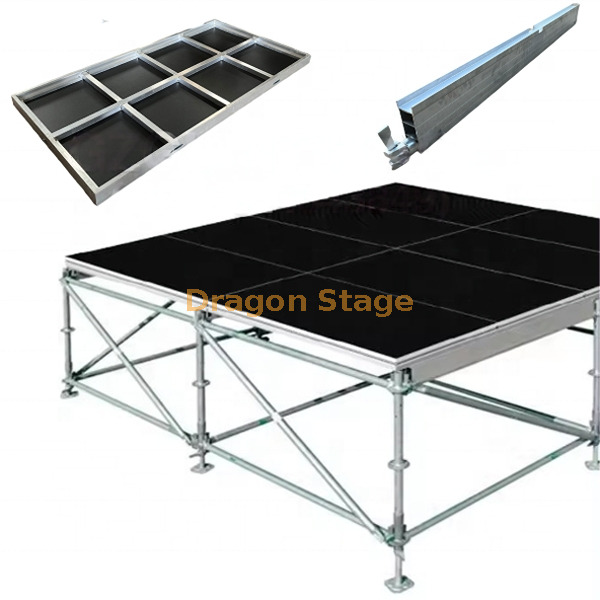
Massive 20m x 18m professional outdoor concert stage featuring a high-stability steel Ringlock truss support system. Built with modular 2x1m aluminum frame plywood decks and including two sets of stairs, this heavy-duty platform is engineered for stadium-scale festivals and touring productions.