Introduction
For many years, people tended to classify truss systems into two categories:
However, modern structural engineering is gradually moving toward a different philosophy:
Use the right material in the right place.
Instead of relying on a single material, engineers are increasingly combining aluminum alloys, steel components, and high-strength fastening systems to optimize strength, stiffness, weight, manufacturing efficiency, and cost.
This approach is known as Hybrid Lightweight Structural Design, and it is becoming an important trend in modern modular structures.
Why Lightweight Structural Design Matters
Traditional engineering often focused on maximizing strength by increasing material usage.
Modern engineering, however, focuses on maximizing structural efficiency.
The goal is to:
Reduce unnecessary weight;
Maintain or improve overall strength;
Optimize stiffness and load transfer;
Improve transportation efficiency;
Simplify fabrication and assembly;
Increase reusability and maintainability.
This design philosophy has already become common in:
Aircraft structures;
Automotive engineering;
Bridges;
Architectural structures;
Composite steel-concrete systems;
Modular event structures.
The objective is no longer:
"Use the strongest material everywhere."
Instead, modern engineers ask:
"Which material performs best at each location?"
From Single-Material Structures to Hybrid Structures
Traditional Aluminum Trusses
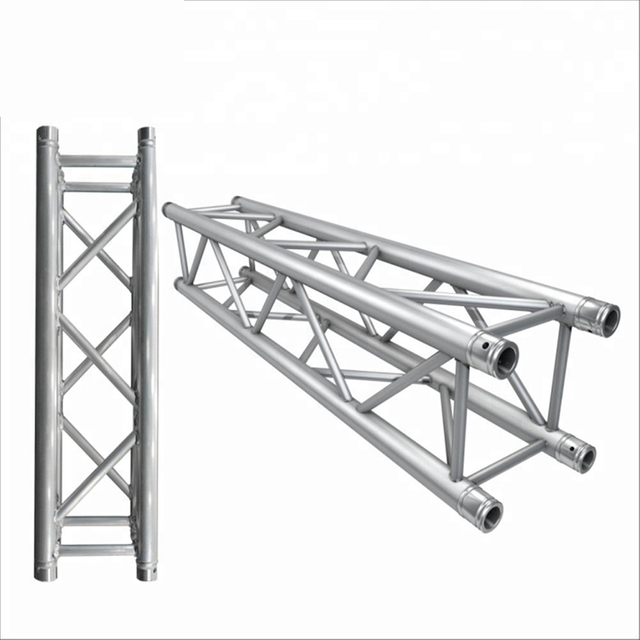
Aluminum trusses have become the industry standard for concerts, exhibitions, touring productions, churches, and temporary structures because they offer:
Most professional trusses are manufactured using 6061-T6 or 6082-T6 aluminum alloys.
For more information about aluminum materials, see:
Aluminum Truss Tube Thickness Explained: Load Capacity, Span & Structural Safety
https://www.dragontruss.com/Aluminum-Truss-Tube-Thickness-Explained-Load-Capacity-Span-Structural-Safety-id09216055.html
Traditional Steel Structures
Steel structures provide excellent stiffness and durability and are widely used in:
However, steel structures are generally heavier and less convenient to transport and assemble.
Why Pure Aluminum Is Not Always the Best Solution
Many people assume:
More aluminum means higher quality.
In reality, structural engineering does not work that way.
Different parts of a structure experience different stresses and perform different functions.
For example:
Main tubes require high strength with low weight.
Connectors require wear resistance and reliable load transfer.
Bolted joints require high clamping force.
Anchoring systems require stiffness and stability.
Using a single material everywhere may not always provide the best balance between:
Strength;
Stiffness;
Weight;
Manufacturing cost;
Ease of assembly;
Long-term reliability.
Hybrid Aluminum-Steel Structures
Modern truss systems increasingly combine different materials to utilize the advantages of each.
Typical examples include:
Aluminum Alloy Main Frames
Used to:
Steel Connection Components
Used to:
High-Strength Steel Bolts and Anchors
Used to:
Precision-Machined Aluminum Plates
Used to:
Through proper engineering design, hybrid structures can achieve:
Lower weight;
Higher stiffness;
Better manufacturing efficiency;
Improved transportation efficiency;
Reliable structural performance.
Similar Appearance Does Not Mean Identical Structures
Two trusses may appear almost identical from the outside, yet differ significantly in:
Many of these differences remain hidden after installation.
This is one reason why products with similar appearances often have very different prices.
For more information about connection systems, see:
Understanding Spigot, Bolt and Plate-End Connections in Truss Systems
https://www.dragontruss.com/Understanding-Spigot-Bolt-and-Plate-End-Connections-in-Truss-Systems-id09926055.html
Hybrid Structures Are Already Common in Engineering
The concept of combining different materials is not unique to truss systems.
Similar principles are widely used in:
Aircraft Structures
Aluminum, steel, titanium, and composite materials work together to maximize strength while minimizing weight.
Automotive Engineering
Modern vehicles combine aluminum, high-strength steel, and composite materials to improve safety and fuel efficiency.
Construction Industry
Steel-concrete composite structures have become standard practice in many buildings and bridges.
Modular Event Structures
Modern event structures increasingly utilize hybrid systems to optimize:
The Future of Truss Design
Modern structural engineering is moving away from the traditional belief that:
"The most expensive material must be the best."
Instead, engineers pursue:
Maximum performance with minimum weight.
The best structure is not necessarily the one made from the most expensive material.
It is the structure that uses each material where it performs best.
This philosophy represents the future direction of:
Related Articles
Understanding Spigot, Bolt and Plate-End Connections in Truss Systems
https://www.dragontruss.com/Understanding-Spigot-Bolt-and-Plate-End-Connections-in-Truss-Systems-id09926055.html
Aluminum Truss Tube Thickness Explained: Load Capacity, Span & Structural Safety
https://www.dragontruss.com/Aluminum-Truss-Tube-Thickness-Explained-Load-Capacity-Span-Structural-Safety-id09216055.html
What Is Lighting Truss? Types, Applications and Structural Basics
Ground Support vs Hanging Truss Systems
How Much Weight Can Aluminum Truss Support?
Conclusion
Hybrid lightweight structures represent an important trend in modern structural engineering.
By intelligently combining aluminum alloys, steel components, and high-strength fastening systems, engineers can create structures that are lighter, stronger, and more efficient.
As applications become increasingly demanding, hybrid structural design will continue to play an important role in the evolution of truss systems and modular event structures.
About the Author
Dragon Stage specializes in modular stage systems, lighting trusses, scaffolding, and custom event structures. Through years of engineering practice and project experience, we continuously explore practical solutions that balance safety, efficiency, and structural performance.
For more technical resources and engineering articles, visit:
Dragon Stage Official Website
https://www.dragontruss.com
DragonTruss China Site
https://www.dragontruss.com.cn