Why Welded Snap Hooks Are Better Than Punched Connections in Aluminum Scaffolding
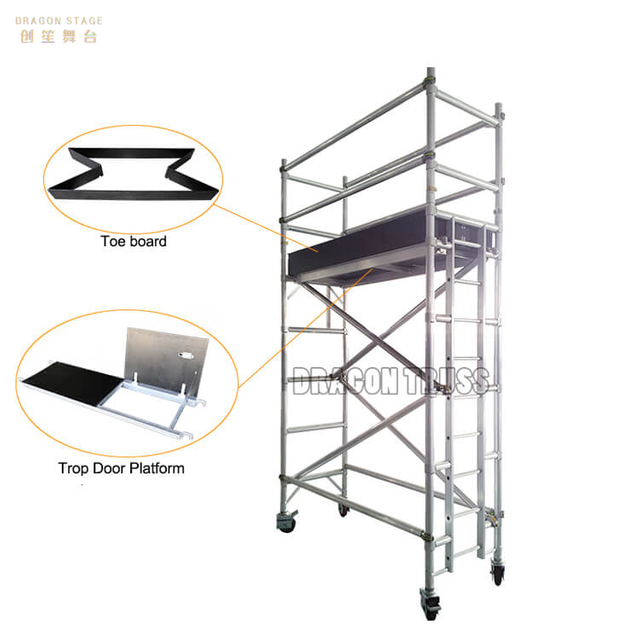
The strength and safety of an aluminum scaffolding tower depend not only on the frames themselves, but also on the connections between the components.
Among these components, the snap hooks used on horizontal braces and diagonal braces play a critical role in maintaining the stability of the entire scaffold tower.
For a complete overview of scaffold systems, please visit:
Although hook connections are relatively small components, they have a major impact on the safety and durability of aluminum scaffold towers.
Compared with punched connections, welded snap hooks provide:
Higher strength;
Better reliability;
Improved fatigue resistance;
Longer service life.
For professional applications and long-term use, welded hook connections are generally considered the preferred solution for aluminum scaffolding systems.
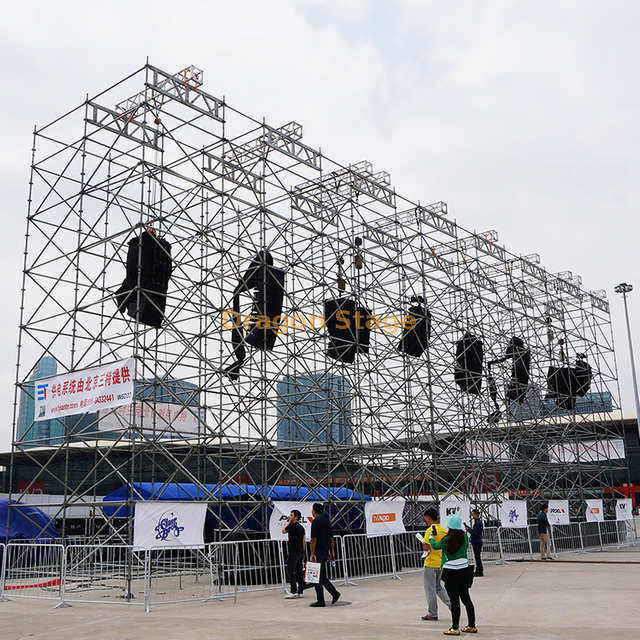
The DragonStage 2x4x8m Ringlock Line Array Hanging Tower System is a temporary event sound support structure made from two connected ringlock towers. The main tower is 8m high and the auxiliary tower is 4m high. The main tower includes a working platform at the bottom, while the auxiliary tower supports a ballast area. A steel top beam is installed above the main tower for hanging the line array speaker system.
The DragonStage 4x2x8m Ringlock Line Array Support System is a hybrid ringlock + aluminum truss structure for temporary concert and event audio support. It combines a top aluminum truss beam for line array hanging, pallet working platforms, a water-ballast support platform, a side speaker bracket with aluminum truss, and front positions for LED matrix lights. The main structure is 4m wide × 2m deep × 8m high, with an overall width of approximately 4.5m including the projecting side bracket.
The DragonStage 6m wide × 4m deep × 6m high Ringlock System for LED Screen is a temporary ground-supported structure designed for concert, event, and outdoor visual display use. It is configured for a 6m × 4m LED screen, with 4 pieces of 2.8m top sections for the upper hanging points and 3 water ballast units arranged at the bottom as counterweight support. This system combines a modular ringlock structure with a practical LED hanging layout for temporary stage and event applications.
Maximize your event production with our 10m x 7m x 8m Aluminum Alloy Mobile Stage. This high-capacity roof truss assembly features four lifting towers for professional lighting and audio rigging, offering a durable, modular solution for concerts, festivals, and outdoor exhibitions.
Elevate your production with our professional 9m x 9m x 5m Aluminum Alloy Mobile Stage Truss. This comprehensive system includes a durable 81sqm stage platform and a robust lighting truss rig. Engineered for quick assembly and high load capacity, it's the perfect modular solution for concerts, exhibitions, and outdoor festivals.
Professional 14m x 8m outdoor event lighting truss system. Features a 6m height clearance, heavy-duty aluminum construction, and integrated stage platform. Perfect for concerts, festivals, and large-scale corporate productions. Shop durable global truss solutions today.
The Stage Lighting Audioaluminum Alloy 400*400mm Performance Screw Truss 9x6x9m represents a versatile and robust infrastructure solution for a variety of performance spaces. Its aluminum alloy construction, with a 400mm by 400mm square profile, offers both strength and lightweight portability, making it ideal for both permanent and temporary installations.
Aluminum Spigot Truss Aluminum Base Plate with Handles 300mm 400mm 500mm 600mm 800mm with half conical and pins clips.
The DragonStage Aluminum Spigot Truss Base Plate with Handles is available in five square sizes from 300×300mm to 800×800mm, all using an 8mm-thick aluminum plate. Each configuration can be supplied with compatible half conical connectors, connector pins and R-clips for spigot truss installation. Integrated handles make the plates more practical to carry and position during repeated event setup and teardown.
This premium 350mm Aluminum Spigot Truss is engineered for superior stability and rapid assembly. Ideal for professional concert and event stage productions, its high-precision conical connection system ensures a seamless fit. It is the perfect choice for creating sophisticated lighting truss grids for any high-end exhibition or trade show.
Section:Square670x1010mm Inelined tube: 30x2.0mm Main tube:50x5.0mm Braces:50x3.0mm
This Heavy-Duty Stage Light Truss (680x1010mm) is engineered for massive spans and extreme loading requirements. Designed for professional concert and event stage productions, its robust rectangular profile ensures maximum stability. It is the ultimate solution for supporting large-scale lighting truss rigs and heavy LED walls safely.
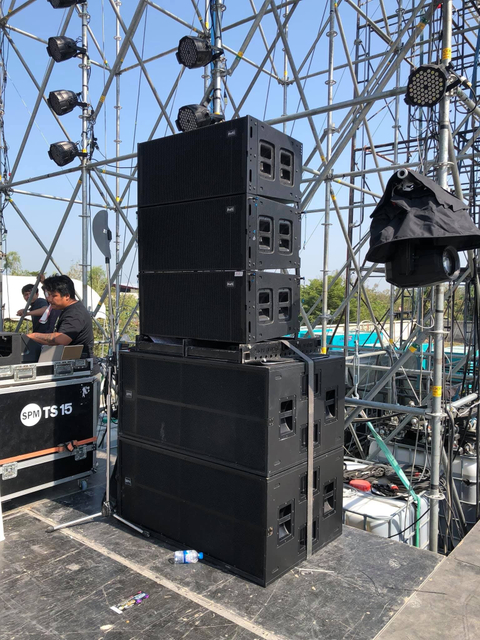
This is a Ringlock Line Array Speaker Hanging Tower designed for temporary concert, festival, outdoor event, and live performance applications. The modular ringlock structure provides a compact and practical solution for suspending line array speaker systems where a dedicated speaker support tower is required.
The overall structure is 4m wide, 2m deep, and 8m high, providing a high vertical support frame while maintaining a relatively compact footprint. The tower is constructed from modular ringlock components, including horizontal pipes, diagonal pipes, vertical pillars, adjustable bases, steel braces, and dedicated speaker-support components.
The DragonStage 14m × 6m × 6m Portable LED Screen Truss System is a ground-supported aluminum truss structure for temporary concert and event LED screen installations. This configuration uses two 14m front/rear CS389×389 beam trusses, two 6m side beams, and five CS289×289 tower assemblies, including one additional support pillar positioned behind the beam truss. Five 2-ton manual chain hoists, sleeve blocks, steel bases, top sections, 1m hinge sections, fibre slings, and long outriggers are included in the current configuration.
the width is 3m, middle height 2.5m, half circle diameter is 3m.
the box truss is 300x300mm bolt truss
we suggest to have 500x500mm base to consolidate
The DragonStage 3m Aluminum Box Truss Archway is a freestanding decorative entrance structure made from 300×300mm aluminum bolt truss. The arch uses a 3m-diameter semicircular curved truss, two 1m straight vertical truss sections, and two 500×500mm base plates, creating an overall opening approximately 3m wide with a 2.5m center height. It is suitable for wedding entrances, ceremony backdrops, event decoration, photo areas, and temporary display structures.
The DragonStage SCREEN-TOWER-10x6x10m is a temporary LED screen support structure designed for concert and live-event applications. The overall structure measures 10m wide and 6m deep, with a stepped height arrangement of 10m front height, 4m middle height, and 2m rear height. The system uses modular pillars, horizontal pipes, diagonal braces, adjustable bases, steel braces, and section beams to form a large freestanding LED support tower for temporary event use.
The DragonStage 8m × 1m × 6m Modular LED Screen Support Wall is a temporary event structure designed for concert LED screen installations. The system uses modular vertical pillars, horizontal pipes, diagonal braces and adjustable bases to form an 8m-wide, 1m-deep and 6m-high support structure, together with 4 LED pallets and 5 bracket pallet supports as part of the lower screen-support and working arrangement.
The DragonStage 8m × 4m modular LED screen support structure is a temporary concert-use support system built for large LED wall installation. The overall structure is 8m wide, 4m deep, with a 6m-high front row and a 4m-high rear row. The system uses modular ringlock-style pillars, horizontal pipes, diagonal braces, adjustable bases, and dedicated LED pallets with pallet bracket supports to create a temporary LED screen support solution for concerts, festivals, and live events.
this is a indoor use mini stage platforms, its sizes are 3m long 2m wide and 40cm high.
The DragonStage 3m × 2m Mobile Modular Mini Stage Platform is a compact indoor event stage with a confirmed platform height of approximately 0.4m. The 6m² platform is assembled from three 1m × 2m wooden-topped aluminum stage decks, supported by modular 1m and 2m braces, eight support stands, and eight adjustable bases. Its compact size makes it suitable for presentations, small performances, ceremonies, exhibition areas, and other indoor applications.
it is Concert Modular Truss Portable Stage Platform, total sizes are 4m wide and 2m deep with 2 Stairs
The DragonStage 4m × 2m Modular Aluminum Brace Portable Stage is a compact concert and event platform assembled from four 1m × 2m wooden-topped stage decks, aluminum stage braces, nine extendable support stands, nine adjustable bases, and two access stairs. Three height ranges are available: 0.4–0.8m, 0.8–1.2m, and 1.2–2.0m, allowing the same 8m² stage footprint to be configured for different event requirements.
this is 2x1m Aluminum Stage Platform, 2x2m is most welcome used for Concert Event Production, especially for Dj performance on a large stage, here we provide with Different Heights.
The DragonStage Ringlock LED Background Wall with Aluminum Brace Stage combines a 20m wide × 2m deep × 12m high Ringlock background structure with a 20m × 10m × 2m aluminum brace stage and two aluminum access stairs. Designed for concerts, festivals, ceremonies and large temporary productions where a tall stage-background structure is required for LED screen, visual backdrop or event presentation applications.
The DragonStage 14m × 6m × 8m Ringlock Truss Wall with 8m × 4m Aluminum Quick Stage combines a large modular Ringlock wall structure with a compact 0.8m-high aluminum quick stage and two access stairs. Designed for concerts, performances, ceremonies and temporary event installations, this configuration provides a large structural background around a practical modular performance platform.
The DragonStage 36m Ringlock Truss Wall with 21x20m Aluminum Roofing Stage is a large concert-style event structure combining a full Ringlock wall framework, a central aluminum roofed stage, two front LED wing structures, and two aluminum access stairs. The overall Ringlock structure measures approximately 36m wide × 20m deep × 10m high. The central aluminum roofing stage uses a 21m × 20m × 10m truss roof frame, with a 20m × 18m stage platform and two 2m-high aluminum stairs.
The DragonStage 24m Ringlock Truss Wall with 12x12m Aluminum Roofing Stage and Two Front LED Wings is a large concert-style event structure that combines a full Ringlock wall framework, a central aluminum roofed stage, two front LED wing structures, and two aluminum access stairs. The overall Ringlock structure measures approximately 24m wide × 14m deep × 8m high, while the central roofed stage uses a 12m × 12m × 8m aluminum truss roof frame with a 12m × 10m stage platform and two 2m-high aluminum stairs.
the main stage truss is 10m long, the wings width is 2.5m, the stage depth is 7m and full height 6m.
the stage platform is 1.22x1.22m with 3 sides stage guards and 2 stairs
The DragonStage 10m × 7m × 6m Outdoor Flat Roof Stage Truss System is a modular event-stage package featuring a 10m main truss span, 7m stage depth, 6m overall truss height, and 2.5m-wide side wings. The stage platform uses 1.22m × 1.22m modular deck units and is supplied with guardrails on three sides and two access stairs for concert, festival and temporary outdoor event applications.
The DragonStage 14m x 6m x 6m Portable LED Screen Truss System is a ground-supported aluminum truss structure designed for hanging a large outdoor or temporary event LED screen. Based on the customer’s request, the system provides an overall size of 14 meters wide, 6 meters high, and 6 meters deep, and is intended for a 12m x 4m LED screen with an estimated screen weight of about 1700kg as provided by the customer. The package is planned as a portable solution and can be supplied with manual chain hoists and related accessories similar to the reference picture.
this is 100x100x3mm base plate for f14 truss mini, with 4 half connectors and pins clips.
The DragonStage F14 Mini Truss Square Base Plate is a compact 100 × 100 × 3mm base plate supplied with 4 half conical connectors, connector pins and R-clips for compatible F14 mini truss systems. It is designed as a small mounting and connection accessory for exhibition, display, DJ, decorative and lightweight mini-truss applications.
our all Aluminum Mobile Stadium Seating Chairs, the perfect seating solution for stadiums, arenas, sports events, and outdoor venues. Crafted with precision and innovation, these chairs offer exceptional comfort, durability, and versatility.
DragonStage 21-seat mobile stadium seating system uses an all-aluminum structural configuration for temporary spectator seating at sports events, arenas, stadiums, outdoor events and temporary venues. The complete unit provides 21 seating positions and is designed for customers who need a reusable, relocatable audience seating solution rather than permanently installed grandstands.
Section:Square400x500mm Inclined tube: 25x2.0mm Main tube:50x3.0mm Braces:50x2.0mm Material: Aluminum 6061-T6
Our high-strength 500x400mm lighting truss is engineered from premium aluminum alloy for superior load-bearing performance. Ideal for music and audio setups, this durable screw-connection system ensures stability for professional stage environments. Built to meet rigorous safety standards, it provides a reliable foundation for any event production.
Section:Square500x500mm Inclined tube: 25x2.0mm Main tube:50x3.0mm Braces:50x2.0mm Material: Aluminum 6061-T6 This heavy-duty 500x500mm bolt aluminum square truss is the ultimate foundation for outdoor concert stages and large-scale events. Engineered for maximum structural stability, this aluminum truss system provides the high-load capacity needed to support massive lighting rigs and heavy audio arrays safely in any environment.
Section:Square400x400mm Inclined tube: 25x2.0mm Main tube:50x3.0mm Braces:50x2.0mm Material: Aluminum 6061-T6
This versatile 400x400mm aluminum roof screw lighting truss is the industry standard for medium-to-heavy stage rigging. Engineered for exceptional durability, this high-performance aluminum truss system supports heavy lighting and audio equipment with ease. It is the perfect foundation for building safe, professional modular stage systems for any event.
Outdoor Speaker Aluminum Stand Line Array Gentry Truss Tower 5m High
fixed height 5m, it have 2 ground truss beams without supports rods, spigot truss tower
The DragonStage 5m Line Array Speaker Gantry Truss Tower is a fixed-height aluminum support system for suspending line array speakers at concerts and outdoor events. It uses 289 × 289mm spigot truss, two vertical 5m tower sides, a top crossbeam, and two ground truss beam assemblies. The current configuration does not use separate support rods.
The 4m × 6m DragonStage Channel Tent is a customized aluminum A-frame tent designed to create a covered passage between backstage or stage-side preparation areas and the main stage. It can be installed inside an opening intentionally reserved within a larger Ringlock structure, helping protect performers, staff, costumes and equipment from rain while providing a more private and clearly defined access route.
The 4m × 6m Built-In Hybrid Ringlock FOH Booth is a compact technical workspace designed for Front of House control, DJ operation, and event control-cabin use. It combines a Ringlock-integrated support concept with an aluminum roof frame, modular plank floor, roof tarpaulin, side curtains, and front/rear enclosure panels, making it suitable for integration inside larger event structures.
4m × 4m multi-level FOH control tower combining a modular Ringlock main structure with an aluminum single-slope roof frame. Maximum height is 7m, with a 6m low-side roof height and 7m high-side roof height. The package includes working platforms, aluminum ladders, roof and canopy tarpaulins, curtain enclosure, auxiliary base structure and related stabilization components for concert and event production
6m × 4m hybrid FOH control booth combining a modular Ringlock main structure with an aluminum single-slope roof frame, modular working platform, curtain enclosure, roof tarpaulin, and access ladder. Designed for concert, festival, and temporary event technical-control applications
2m × 6m hybrid FOH control booth combining a modular Ringlock main structure with an aluminum gable roof frame, 2m eave height, 3m central ridge height, modular working platform, weather curtains and steel stair access for concert and event technical control applications.
2m × 0.5m steel Ringlock speaker tower top support beam made from 48.5mm round pipe, designed to connect the upper Ringlock tower structure with aluminum truss for line array and event audio support applications. Custom supplied by DragonStage
Compact 2m × 2m FOH control booth combining a modular Ringlock main frame with an aluminum A-frame roof and roof tarpaulin. The booth has 2m side/eave height and a 3m central ridge height, providing a small covered technical workspace for concerts, festivals and temporary event production.
6m × 6m aluminum flat roof truss system with a 4m front height and 6m rear height, using a four-tower modular support configuration for concerts, lighting rigs, stage productions, and temporary event applications. Custom manufactured by DragonStage.