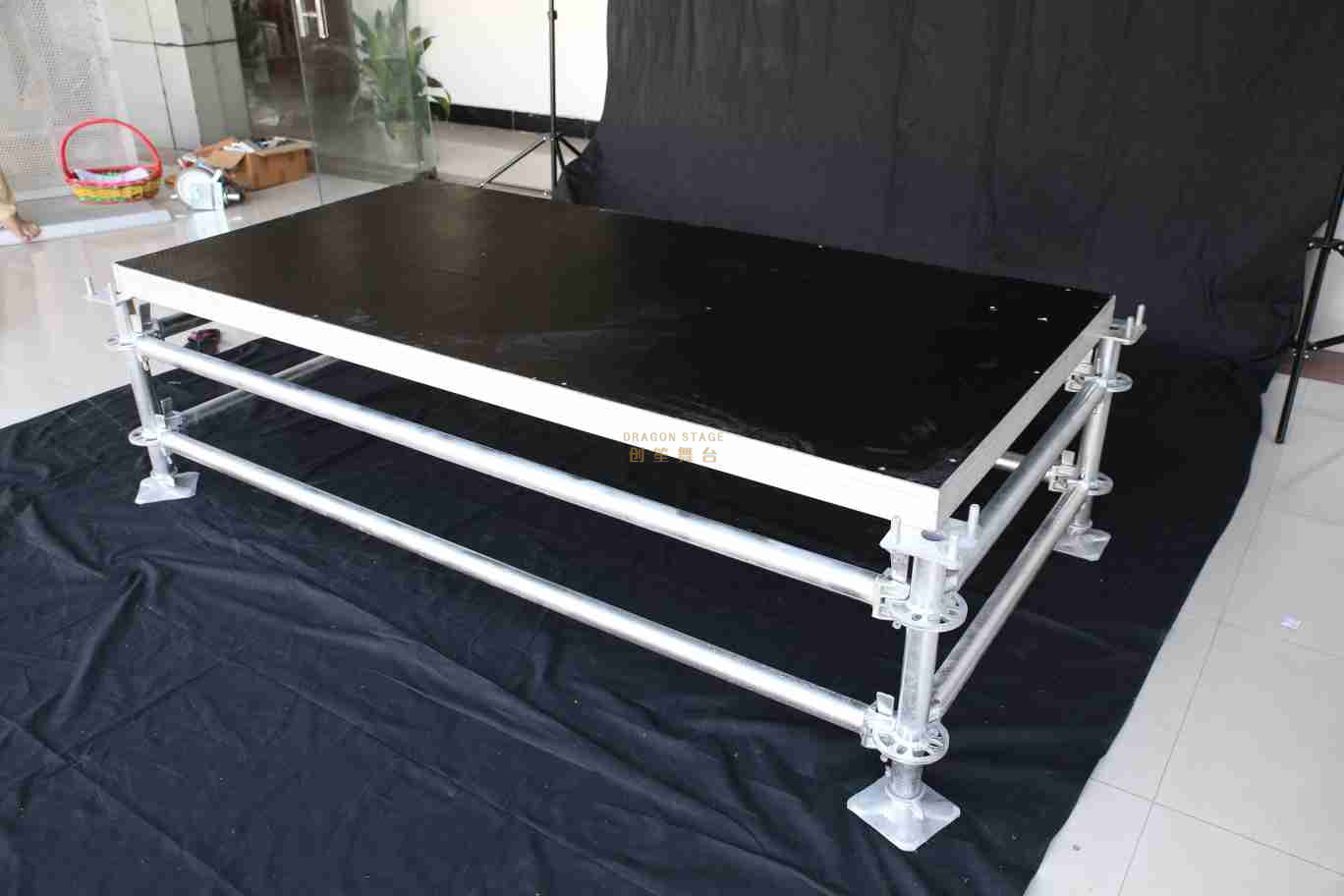
Event structures do not become safe simply because they are manufactured from aluminum or assembled according to drawings. Every stage platform, truss roof, lighting tower, scaffold system and temporary event structure relies on fundamental engineering principles that govern how loads move through a structure, how forces are balanced, and how stability is maintained under real operating conditions.
Structural engineering fundamentals provide the framework for understanding why a structure performs safely, why failures occur, and how engineers make design decisions regarding dimensions, materials, connections and load capacities.
This knowledge center organizes the key engineering concepts behind modular event structures and provides a structured learning path for event organizers, production companies, rental providers, engineers and procurement professionals.

Structural engineering for temporary event structures can be divided into six major disciplines:
Together these disciplines explain how stage and truss systems are designed, evaluated and operated safely.
Understanding structural loads is the starting point of all engineering calculations.
Every stage platform, truss roof or support tower must safely transfer loads from equipment, performers, audiences, wind forces and self-weight into the supporting structure and ultimately into the ground.
Key concepts include:
Recommended reading:
Understanding load behavior is essential before selecting structural dimensions, span lengths or support systems.
When it comes to working at heights, knowing the load capacity of scaffolding is crucial for safety. Scaffolding is designed to support workers, equipment, and materials—but the exact weight it can hold depends on the type and design. Recent tests conducted by TÜV Rheinland on Foshan Dragon Stage Eq
Read More
Ringlock Stage System Explained: Structure, Components and Load PrinciplesAnswer SectionA ringlock stage system is a modular steel support structure based on scaffold-style ringlock connections. It uses vertical posts, horizontal ledgers, diagonal bracing, and adjustable bases to create stable platf
Read More
Ringlock Stage Load Calculation: Load Path, Deck Support and Safety FactorsAnswer SectionRinglock stage load calculation is not only about checking the deck load capacity. A complete calculation should consider the stage deck, deck support method, horizontal ledgers, diagonal bracing, vertical posts
Read More
The load-bearing capabilities of steel Ringlock trusses will depend on a variety of factors, including the specific design of the truss and the materials used in its construction. Generally, steel Ringlock trusses are known for their high load-bearing capacity and strength, which make them a popular
Read MoreA structure may have sufficient load capacity and still become unstable.
Structural stability focuses on maintaining equilibrium under vertical and lateral forces while preventing excessive movement, deformation or collapse.
Important topics include:
Recommended reading:
Stability engineering is especially critical for outdoor structures exposed to wind loading and uneven ground conditions.
A lighting truss is a modular aluminum framework used to support lighting fixtures, LED screens, and stage equipment in events, concerts, and exhibitions. It provides a strong, lightweight, and flexible structure for safely mounting visual and rigging systems.Material: Aluminum alloy (6061-T6 / 6082
Read More
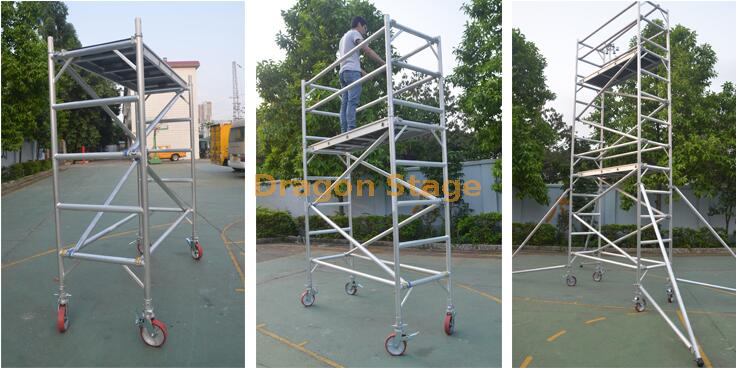
What is Aluminum Scaffolding? Structure, Features and Application GuideWhat is Aluminum Scaffolding?Aluminum scaffolding is a lightweight, modular working platform made from high-strength aluminum alloy, designed for safe access at height. It is widely used in construction, maintenance, and event se
Read More
When it comes to working at heights, knowing the load capacity of scaffolding is crucial for safety. Scaffolding is designed to support workers, equipment, and materials—but the exact weight it can hold depends on the type and design. Recent tests conducted by TÜV Rheinland on Foshan Dragon Stage Eq
Read More
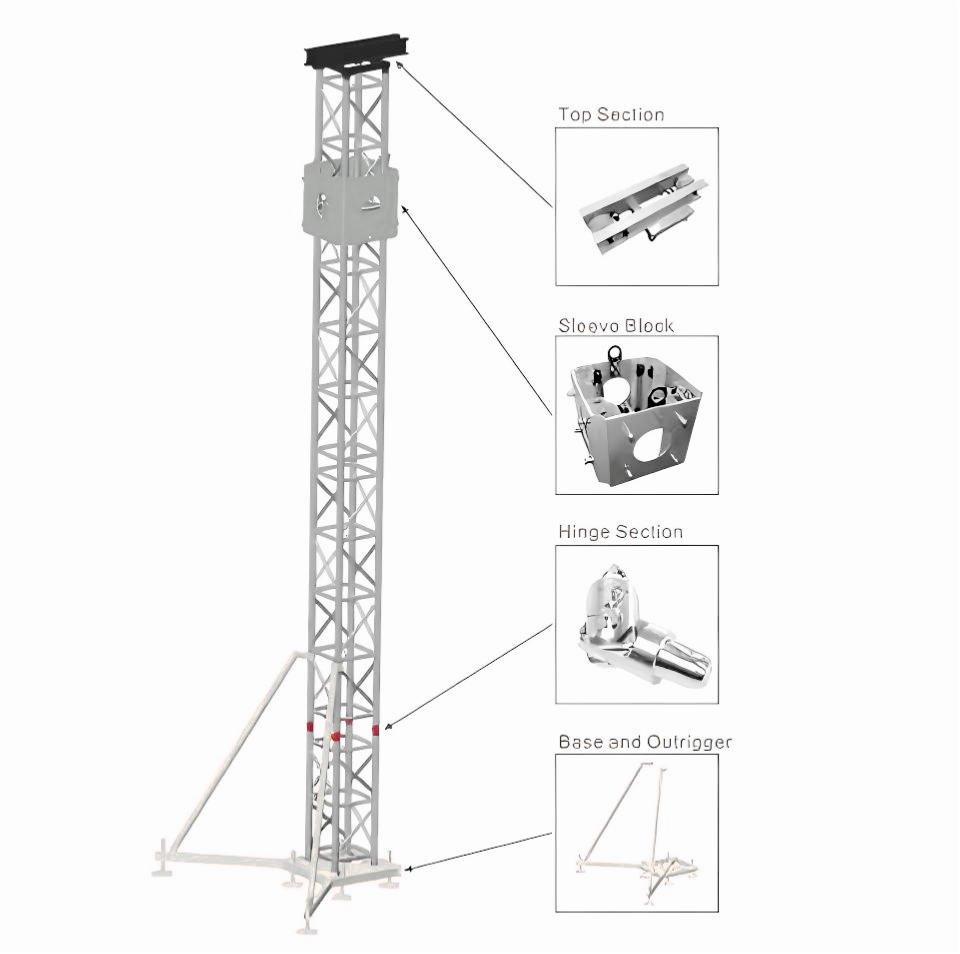
What Is a Truss Tower? Structure Breakdown and Component FunctionsOverview: How a Truss Tower Is BuiltA truss tower is not a monolithic structure, but a modular vertical structural system.It is assembled from multiple standardized components, each designed to perform a specific structural role withi
Read More
The maximum load capacity of an aluminum lighting truss depends on span length, truss size, material grade, and load type. Typically, a 290mm truss supports around 100–300 kg, while a 400mm truss can support 300–1000+ kg when properly installed and engineered.The maximum load capacity of a truss sys
Read MoreEngineering design is the process of transforming performance requirements into structural solutions.
Design decisions are influenced by:
Design engineers evaluate these variables to determine the most suitable structural configuration.
Recommended reading:
Engineering design is not merely selecting products; it is selecting structural behavior.
Every structure transfers loads through a defined path.
Understanding load paths helps engineers identify critical components, connection points and potential failure mechanisms.
A typical load path follows:
Equipment or Occupancy Load
↓
Deck Surface
↓
Beams and Trusses
↓
Support Columns
↓
Base Plates
↓
Ground Reaction
When any part of the load path becomes overloaded or improperly assembled, structural performance may be compromised.
Recommended reading:
Load path analysis is one of the most important concepts in modern structural engineering.
Structural performance depends heavily on material properties.
Different materials respond differently to compression, tension, bending, fatigue and environmental exposure.
Important considerations include:
Recommended reading:
Material selection directly affects safety margins, transportation efficiency and long-term durability.
IntroductionIn structural applications such as stage systems and truss structures, material data is often misunderstood.Many published values refer to aluminum sheet or plate, but in real structural systems, components are made from aluminum extrusion profiles.Using incorrect material data can lead
Read More
IntroductionIn stage and truss systems, safety does not start from design — it starts from material quality.Many suppliers claim to use high-grade aluminum, but without verified data, these claims cannot be trusted.At DragonStage, all structural materials are sourced from certified manufacturers and
Read More
IntroductionWhen choosing a stage platform, one of the most important decisions is the material.The two most commonly used materials are:aluminum (6061-T6 / 6082-T6)steelMany assume that steel is always stronger, while aluminum is only used for lightweight systems.In reality, the decision depends on
Read More
Aluminum is the primary material used in modern truss systems because it provides the best balance between strength, weight, corrosion resistance, and installation efficiency.Among all alloys, 6061-T6 and 6082-T6 are the most widely used for stage, lighting, and event truss structures.Compared to st
Read MoreEngineering safety is not achieved by avoiding loads.
Engineering safety is achieved by understanding failure mechanisms and controlling risk.
Common structural failures include:
Recommended reading:
Preventive engineering practices are significantly more effective than corrective actions after structural issues occur.
Engineering safety is not achieved by avoiding loads.
Engineering safety is achieved by understanding failure mechanisms and controlling risk.
Common structural failures include:
Recommended reading:
Preventive engineering practices are significantly more effective than corrective actions after structural issues occur.
To explore more specialized engineering topics, visit:
These resources expand on the engineering principles presented in this structural engineering fundamentals guide and provide practical applications for real-world event projects.
Structural engineering fundamentals form the foundation of every successful stage, truss, scaffolding and temporary event structure.
Whether evaluating load capacity, selecting materials, designing support systems or preventing failures, engineers rely on a common set of principles that govern structural behavior.
By understanding load transfer, stability, design logic, material performance and risk management, project teams can make safer and more informed decisions throughout the lifecycle of an event structure.