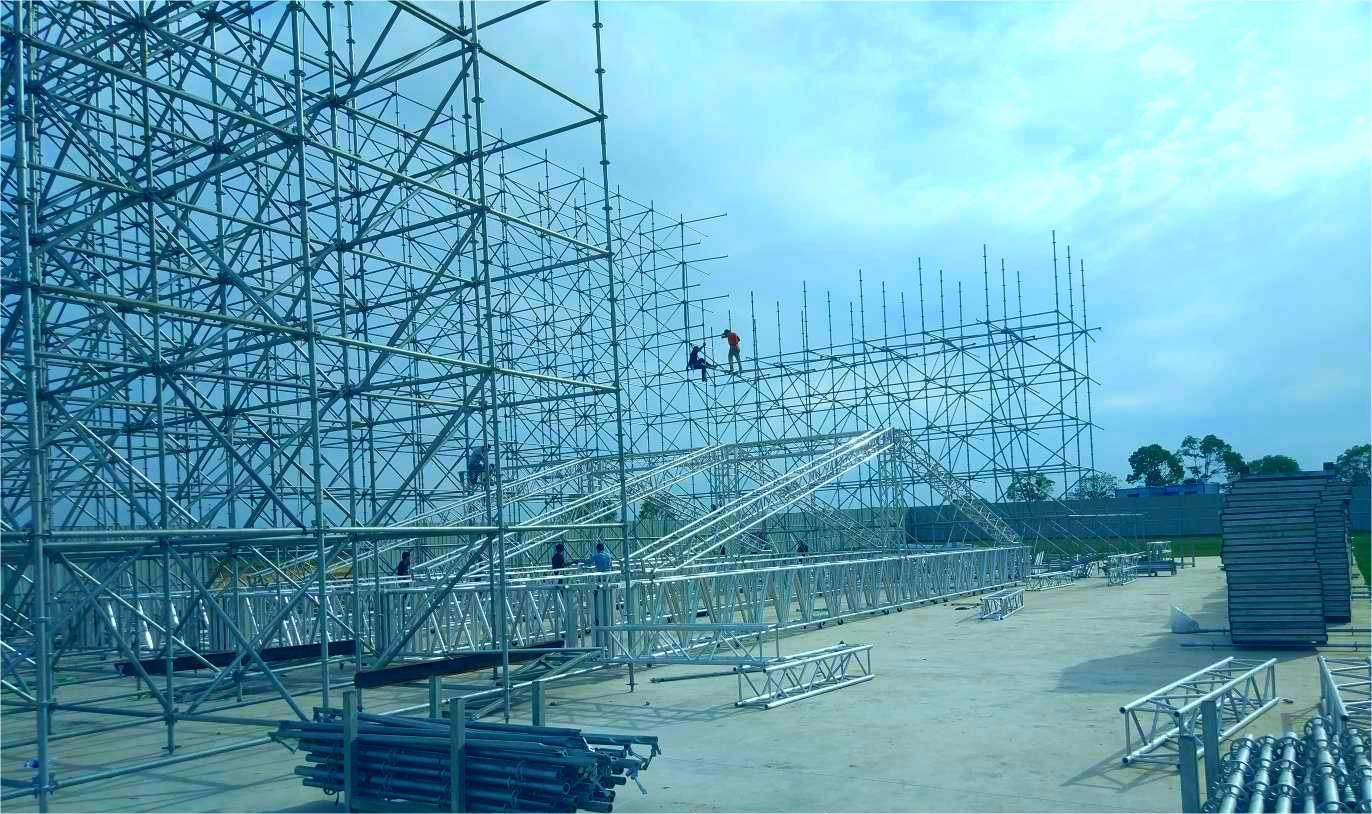
Event structures do not become safe simply because they are manufactured from aluminum or assembled according to drawings. Every stage platform, truss roof, lighting tower, scaffold system and temporary event structure relies on fundamental engineering principles that govern how loads move through a structure, how forces are balanced, and how stability is maintained under real operating conditions.
Structural engineering fundamentals provide the framework for understanding why a structure performs safely, why failures occur, and how engineers make design decisions regarding dimensions, materials, connections and load capacities.
This knowledge center organizes the key engineering concepts behind modular event structures and provides a structured learning path for event organizers, production companies, rental providers, engineers and procurement professionals.

Structural engineering for temporary event structures can be divided into six major disciplines:
Together these disciplines explain how stage and truss systems are designed, evaluated and operated safely.
Understanding structural loads is the starting point of all engineering calculations.
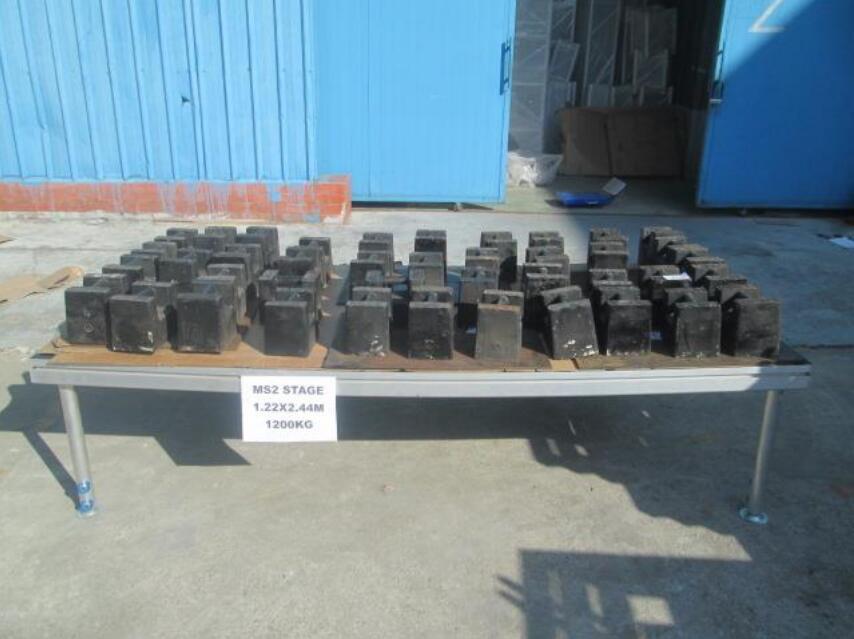
Every stage platform, truss roof or support tower must safely transfer loads from equipment, performers, audiences, wind forces and self-weight into the supporting structure and ultimately into the ground.
Key concepts include:
Recommended reading:
Understanding load behavior is essential before selecting structural dimensions, span lengths or support systems.
IntroMost stage suppliers claim “500 kg/m² load capacity” —but what does that actually mean in real projects?This article explains real stage load capacity, using tested data and real-world scenarios.1. What Does Stage Load Capacity Actually Mean?Stage load capacity is usually expressed as:kg per sq
Read More
IntroIf you cannot calculate stage load,you are relying on guesswork.This guide shows how professionals calculate stage capacity.1. Basic FormulaStage load is calculated as:Total Load = Load per m² × Area2. Real ExamplePlatform size: 2.44 × 1.22 mArea: 2.97 m²Load rating: 404 kg/m²Result:Total Load
Read More
IntroductionIn stage engineering, many people focus on formulas, but fewer understand what actually controls the result.Stage load calculation is not only about numbers — it is about material behavior.The same structure, with the same dimensions, can produce different safety outcomes depending on th
Read More
IntroductionChoosing the right aluminum scaffolding system is not only about size or price — it is about structural safety, material quality, and load performance.Many failures in scaffolding systems are not caused by design, but by incorrect assumptions about material strength and load capacity.To
Read More
IntroductionStage platform load calculation is a fundamental part of structural design in event and temporary systems.However, many calculations are simplified into formulas without understanding what actually affects the result.In reality, load capacity depends on:material propertiesstructural desi
Read MoreA structure may have sufficient load capacity and still become unstable.
Structural stability focuses on maintaining equilibrium under vertical and lateral forces while preventing excessive movement, deformation or collapse.
Important topics include:
Recommended reading:
Stability engineering is especially critical for outdoor structures exposed to wind loading and uneven ground conditions.
Why Container Efficiency Matters in Truss ProcurementIn global aluminum truss procurement, ocean freight has become a significant cost component. For many international projects, freight now accounts for 20–40% of the total landed cost. Under these conditions, container loading efficiency is not a s
Read More
Stage Platform Load Test Report – 806 kg/m² Verified CapacityTest OverviewThis report presents the load testing results of a 1.22m x 1.22m modular stage platform system.The test was conducted under controlled conditions to evaluate structural strength, load distribution, and safety performance.The s
Read More
Introduction: Real Load Testing for Scaffolding SafetyWhen selecting scaffolding systems, real safety is not based on claims — it must be verified through professional load testing.This report was conducted by TÜV Rheinland and confirms that multiple scaffolding systems from Dragon Stage have succes
Read More
IntroMost stage suppliers claim “500 kg/m² load capacity” —but what does that actually mean in real projects?This article explains real stage load capacity, using tested data and real-world scenarios.1. What Does Stage Load Capacity Actually Mean?Stage load capacity is usually expressed as:kg per sq
Read More
IntroIf you cannot calculate stage load,you are relying on guesswork.This guide shows how professionals calculate stage capacity.1. Basic FormulaStage load is calculated as:Total Load = Load per m² × Area2. Real ExamplePlatform size: 2.44 × 1.22 mArea: 2.97 m²Load rating: 404 kg/m²Result:Total Load
Read MoreEngineering design is the process of transforming performance requirements into structural solutions.
Design decisions are influenced by:
Design engineers evaluate these variables to determine the most suitable structural configuration.
Recommended reading:
Engineering design is not merely selecting products; it is selecting structural behavior.
Event Stage Design Guide: How to Create a Successful Event StageVenue, Theme, Production and Structural PlanningA well-designed event stage is often the focal point of any celebration, conference, or live performance. Whether for weddings, concerts, product launches, corporate meetings, or fashion s
Read More
Stage lighting is the lighting used to illuminate a stage, and it is a valuable tool for all types of events. In addition, stage lighting design is used to illuminate the stage in conformity with the event. It's a technique for drawing attention to people, stage backgrounds and equipment, and more a
Read More
IntroductionConcert stages are very different from standard event stages. They must support high loads, dynamic movement, and complex structural systems.A concert stage is not only a platform — it is part of a complete system that includes:lighting trusssound systemsLED screensroof structuresChoosin
Read More
IntroductionChoosing the right stage platform for a wedding is not only about appearance — it is about stability, safety, and overall event experience.A wedding stage must:look elegantbe structurally safefit the venue layoutsupport equipment and movementThe wrong stage choice can affect both visual
Read MoreEvery structure transfers loads through a defined path.
Understanding load paths helps engineers identify critical components, connection points and potential failure mechanisms.
A typical load path follows:
Equipment or Occupancy Load
↓
Deck Surface
↓
Beams and Trusses
↓
Support Columns
↓
Base Plates
↓
Ground Reaction
When any part of the load path becomes overloaded or improperly assembled, structural performance may be compromised.
Recommended reading:
Load path analysis is one of the most important concepts in modern structural engineering.
Production elements are added to a presentation space through stage design. Besides improving the stage's appearance, the goal is to enhance attendees' overall experience. Here are some tips for thinking about, drafting, and perfecting your event stage design.How to Design an Event StageDetermine Bu
Read More
Event Stage Design Guide: How to Create a Successful Event StageVenue, Theme, Production and Structural PlanningA well-designed event stage is often the focal point of any celebration, conference, or live performance. Whether for weddings, concerts, product launches, corporate meetings, or fashion s
Read More
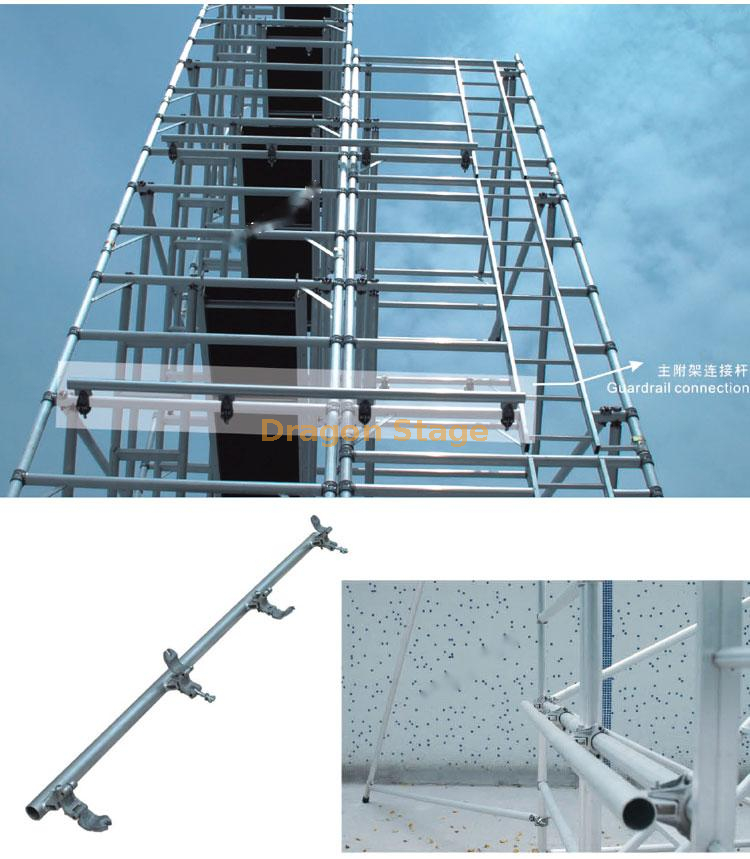
How to Connect Two Scaffold Towers Together SafelyUnderstanding Scaffold Connecting Bars and Auxiliary TowersFor projects that require larger working areas or bridge-type access platforms, two scaffold towers are often connected together using scaffold connecting bars. These components play an impor
Read More
Ringlock Stage System Explained: Structure, Components and Load PrinciplesAnswer SectionA ringlock stage system is a modular steel support structure based on scaffold-style ringlock connections. It uses vertical posts, horizontal ledgers, diagonal bracing, and adjustable bases to create stable platf
Read More
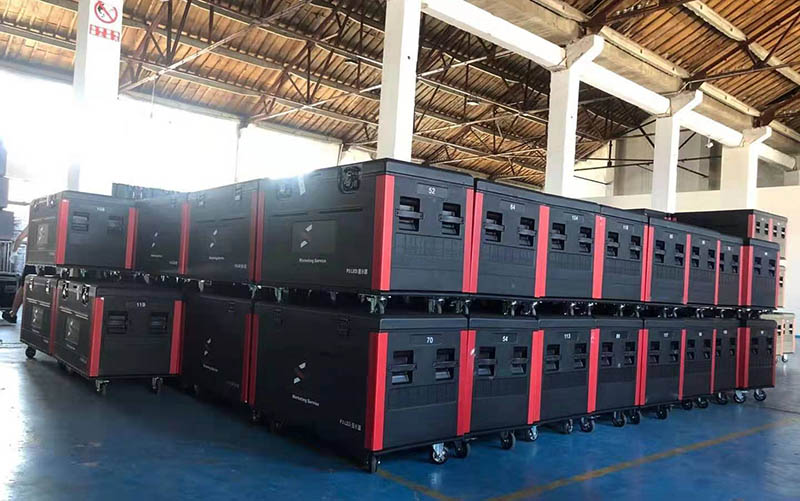
what is Material composition of flight case?Material composition of flightcase:1. PBS flame retardant material is used on the surface of flight case. It has the functions of fire prevention, waterproof, acid and alkali resistance. PBS material is a patented product of our company. This material has
Read MoreStructural performance depends heavily on material properties.
Different materials respond differently to compression, tension, bending, fatigue and environmental exposure.
Important considerations include:
Recommended reading:
Material selection directly affects safety margins, transportation efficiency and long-term durability.
HDPE, or High-Density Polyethylene, is a type of plastic that is commonly used in the manufacturing of cases for various products. Compared to other types of cases, such as those made from PVC, ABS, or polycarbonate, HDPE cases offer several advantages:Durability: HDPE is a highly durable material t
Read More
Ringlock trusses can be constructed from a variety of materials, including aluminum and steel. The specific material used in the construction of Ringlock trusses will depend on the specific application and requirements of the project.Aluminum Ringlock trusses are typically constructed from high-stre
Read More
Flight cases are typically constructed using a combination of materials that provide strength, durability, and protection for the equipment being transported. The type of material used in the construction of flight cases can vary depending on the specific needs of the equipment, but some of the most
Read More
The cost and efficiency of steel Ringlock trusses compared to other types of trusses will depend on a variety of factors, including the specific requirements of the project and the availability of materials and labor. However, there are some general considerations to keep in mind when comparing stee
Read More
What Materials Are Used for Lighting Trusses?The material used to manufacture a lighting truss directly affects its weight, strength, durability, transportation efficiency, and intended application. While several materials have been used throughout history, modern event production relies primarily o
Read MoreEngineering safety is not achieved by avoiding loads.
Engineering safety is achieved by understanding failure mechanisms and controlling risk.
Common structural failures include:
Recommended reading:
Preventive engineering practices are significantly more effective than corrective actions after structural issues occur.
Engineering safety is not achieved by avoiding loads.
Engineering safety is achieved by understanding failure mechanisms and controlling risk.
Common structural failures include:
Recommended reading:
Preventive engineering practices are significantly more effective than corrective actions after structural issues occur.
To explore more specialized engineering topics, visit:
These resources expand on the engineering principles presented in this structural engineering fundamentals guide and provide practical applications for real-world event projects.
Structural engineering fundamentals form the foundation of every successful stage, truss, scaffolding and temporary event structure.
Whether evaluating load capacity, selecting materials, designing support systems or preventing failures, engineers rely on a common set of principles that govern structural behavior.
By understanding load transfer, stability, design logic, material performance and risk management, project teams can make safer and more informed decisions throughout the lifecycle of an event structure.