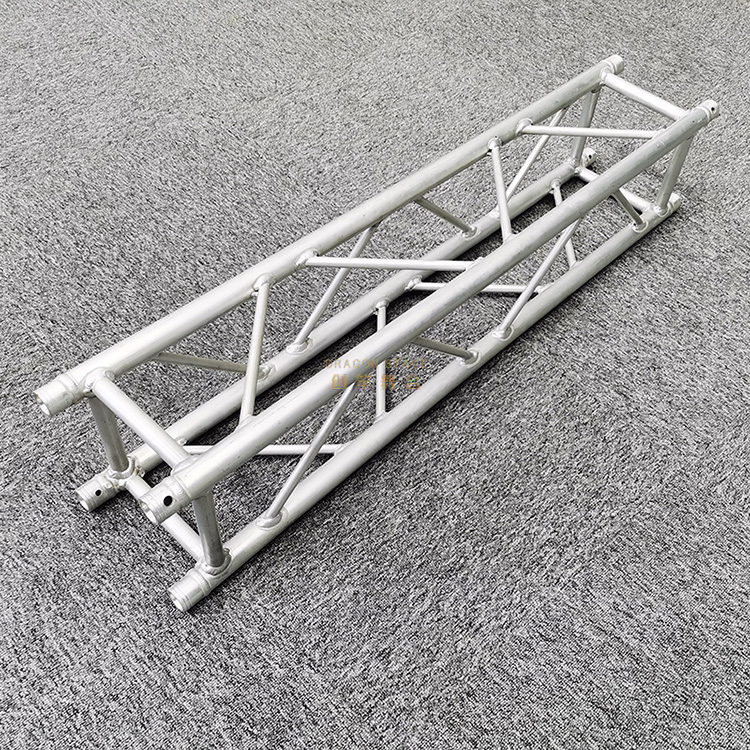
Safe event structures are not created by luck.
They are the result of engineering planning, proper installation, routine inspection and continuous risk management.
Whether a project involves a small indoor stage, a large outdoor concert roof, a lighting support system or a temporary access scaffold, every structure contains potential risks that must be identified and controlled before they become failures.
This knowledge center explains the most common safety challenges associated with modular stage systems, aluminum trusses, scaffolding structures and temporary event infrastructure.
The objective is not simply to avoid accidents, but to understand why risks occur and how engineering principles are used to prevent them.

This knowledge center covers:
These topics help project teams improve decision-making before, during and after installation.
Understanding safety begins with understanding structural behavior.
Learn how structural risks develop.
Topics include:
Before preventing failures, it is necessary to recognize warning signs.
Learn how structures respond to loads and environmental forces.
Topics include:
This knowledge helps explain why certain risks become critical.
Learn how engineering inspections identify issues before failures occur.
Topics include:
Inspection serves as the first line of defense against structural incidents.
Learn how engineering controls reduce risk.
Topics include:
Effective prevention is always less expensive than corrective action.
Understanding Safety Access Design Behind Large Temporary Event StructuresWhen audiences enter a stadium concert, their attention is usually focused on:The stage design.The lighting effects.The LED screens.The performers.The sound system.However, behind every successful event is another invisible sy
Read More
Understanding Cable Routing, Protection and Operational Safety Behind Stadium EventsWhen audiences watch a large concert, they usually focus on:Stage design.Lighting effects.LED screens.Sound quality.Performer interaction.However, behind every successful performance is a complex network that is rare
Read More
Understanding Weather Protection Strategies for Large Outdoor Event StructuresOutdoor concerts are temporary events, but the engineering challenges they face are similar to permanent facilities.One of the biggest challenges is weather.A large stadium concert structure must continue operating under c
Read More
When purchasing aluminum crowd control barriers for professional events, customers often ask an important question:What happens if there is a product defect after delivery?For professional event equipment, a clear warranty policy is not only about the warranty period. More importantly, it is about u
Read More
IntroductionIn stage systems, truss structures, and temporary load-bearing frames, most failures are not caused by extreme loads, but by incorrect assumptions about materials.Aluminum alloys such as 6061-T6 and 6082-T6 are widely used, but they behave differently under load, especially when span, co
Read MoreStructural safety begins with understanding how loads travel through a structure and how stability is maintained.
Key concepts include:
Recommended reading:
Many structural incidents occur during installation rather than operation.
Common installation risks include:
Recommended reading:
Exceeding structural capacity is one of the most common causes of failure.
Topics include:
Recommended reading:
Temporary structures are highly influenced by external conditions.
Important considerations include:
Outdoor installations require additional safety controls to manage environmental uncertainty.
Recommended reading:
Safety is maintained through continuous verification.
Key inspection areas include:
Routine inspections help detect problems before they develop into operational risks.
Recommended reading:
An overview of the most frequently encountered stage-related risks and practical methods for reducing them.
A practical inspection framework for identifying structural issues before operation.
Guidelines for maintaining structural integrity throughout the service life of a stage system.
Most structural incidents result from a combination of factors rather than a single mistake.
Typical causes include:
Loads exceed design assumptions.
Critical structural components are omitted.
Load paths become interrupted.
Structural stability is reduced.
Loads are transferred unevenly.
Wind and weather introduce forces beyond operational limits.
Understanding these mechanisms helps prevent failures before they occur.
Not necessarily. When properly engineered, installed and maintained, temporary structures can achieve high levels of safety and reliability.
There is rarely a single factor. Safety depends on design, installation, inspection, maintenance and operational management working together.
Temporary structures are repeatedly assembled, transported and reconfigured. Inspections verify that structural integrity has been maintained after each installation cycle.
Yes. Improper assembly, overloading, environmental conditions and maintenance deficiencies can all compromise an otherwise sound design.
Continue exploring:
Understand load paths, stability principles and structural behavior.
Learn installation procedures, assembly techniques and project implementation methods.
Explore material performance, structural components and connection systems.
Compare structural systems and identify appropriate solutions for different applications.
Safety is not a separate discipline from engineering—it is the outcome of sound engineering decisions.
By understanding structural risks, installation practices, inspection methods and preventive measures, project teams can improve safety performance throughout the lifecycle of stage systems, truss structures, scaffolding installations and temporary event infrastructure.
This knowledge center provides a foundation for identifying risks early, making informed decisions and promoting safer event structures through engineering awareness.