Aluminum Scaffolding Safety Guidelines: Installation, Movement and Working Precautions
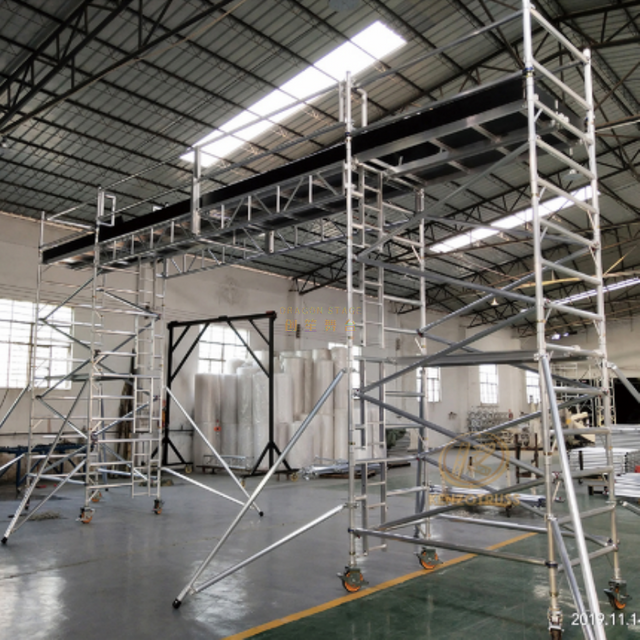
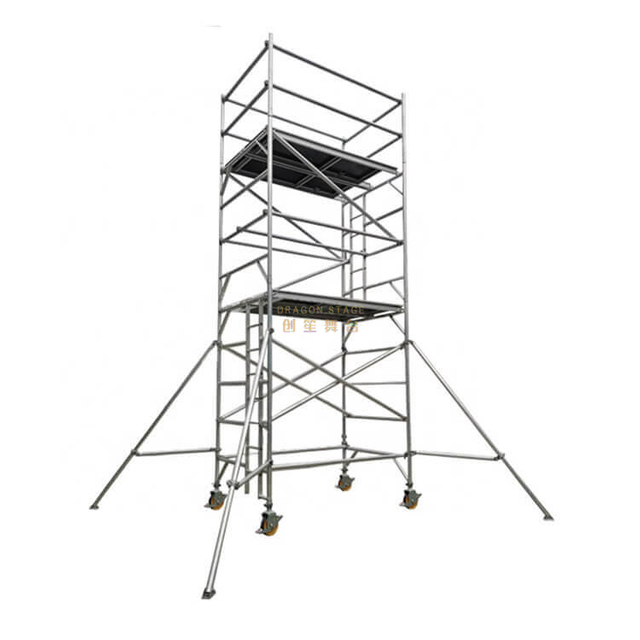
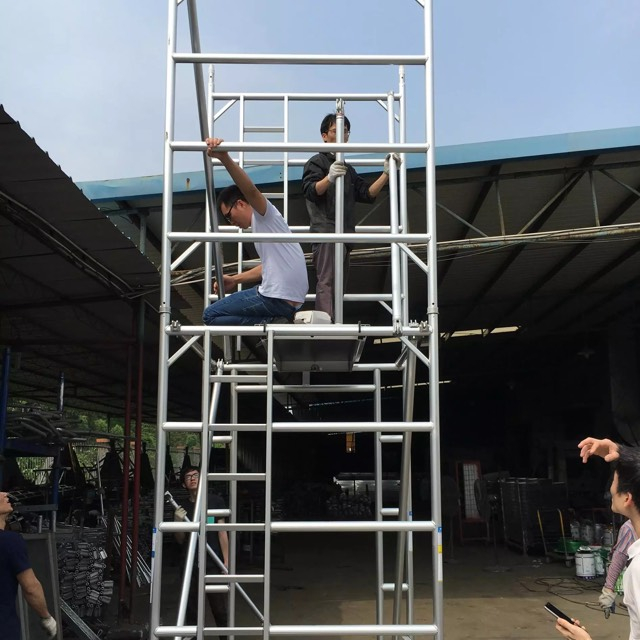
Safe operation is essential when using aluminum scaffolding. Proper inspection, installation, movement, and working procedures can significantly reduce the risk of accidents and improve efficiency.
For a complete overview of scaffold systems, please visit:
Avoid throwing tools or components onto the platform.
Indoor and Outdoor Height Recommendations
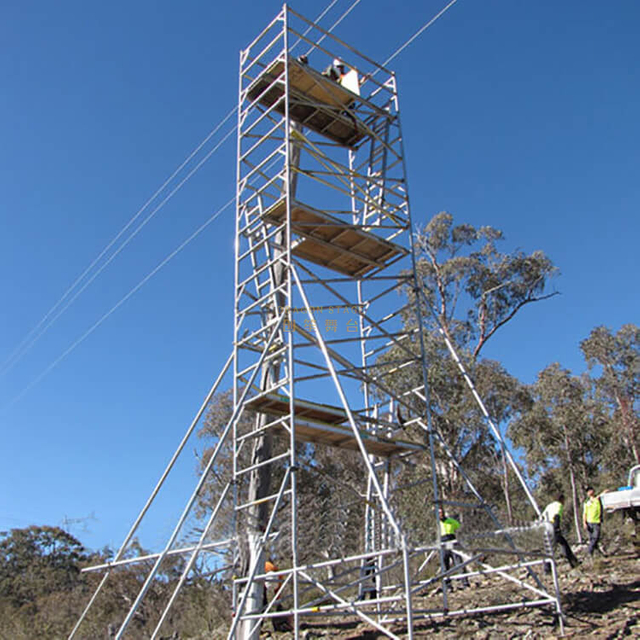
Indoor towers generally allow greater heights because wind loads are lower.
Outdoor towers require:
Lower height limits;
External supports;
Additional stabilizers.
Always follow the manufacturer's recommendations and local safety regulations.
Conclusion
Aluminum scaffolding provides a safe and efficient working platform when proper safety procedures are followed. Regular inspection, stable foundations, proper assembly, wind awareness, and safe operating practices are essential for preventing accidents and ensuring reliable performance.
Safe work at height always begins with proper preparation.
DragonStage 0.4m High 2-Step Quick Stage Stairs provide compact access for low portable stage platforms. The current product specification lists a 2-step configuration, approximately 1m overall length, and a suitable stage-height range of approximately 0.2–0.4m. Designed primarily as an accessory for Quick Stage systems used at weddings, performances, conferences, exhibitions, and temporary events.
The DragonStage 6x3x3m Aluminum Ground Support Lighting Truss System is a compact rectangular truss structure designed for stage lighting, DJ events, exhibitions, ceremonies, corporate events, and other temporary productions. The system provides a 6m wide × 3m deep × 3m high overhead lighting grid supported by four vertical towers.
this is a most welcome non roof Aluminum Outdoor Stage Lights Event Truss
total net sizes are 9x8x5m
The DragonStage 9x8x5m Aluminum Non-Roof Lighting Truss System is a modular ground-support structure for concerts, lighting productions, ceremonies, exhibitions, and temporary events. The main frame measures approximately 9m wide × 8m deep × 5m high and includes two 2m side wings, providing additional positions for sound, lighting, LED, or other event equipment according to the final project configuration.
Outdoor Aluminum Portable Small Lighting Truss 30x30x16.4ft 2 Wings 6.56ft
9x9x5m, wing width 2m
The DragonStage 9x9x5m Aluminum A-Frame Lighting Roof Truss System is a modular outdoor event structure for concerts, festivals, ceremonies, and temporary live productions. The main structure measures approximately 9m wide × 9m deep × 5m high, with two 2m-wide side wings for auxiliary sound, lighting, LED, or event equipment according to the final project layout.
Maximize your festival production with this 18m x 8m aluminum lighting roof truss system. Standing 8m high, it features integrated 4m LED screen wings and 3m sound wings for professional line array suspension. Engineered for major outdoor concerts and professional events requiring a massive performance area and heavy-duty structural load capacity.
Explore our professional 8m x 6m aluminum peak roof stage truss system, engineered for outdoor concerts and events. This robust, TUV-certified structure stands 5m high and includes dual 2m wide integrated speaker wings for optimal sound system suspension. Durable and easy to assemble for high-impact performances.
The DragonStage 8x6x3m Aluminum Lighting Truss System is a freestanding rectangular lighting grid designed for concerts, exhibitions, ceremonies, corporate events, and temporary productions. The system provides an 8m wide × 6m deep × 3m highoverhead truss area supported by four ground-support towers, creating multiple positions for stage lighting and event equipment
Dragonstage Aluminum Spigot 300x300mm / 289x289mm Square Box 6 Ways Corner Truss Cube Connector is an aluminum spigot with a 300x300mm square box with 6 ways corner truss cube connector. This aluminum spigot is perfect for hanging lights, air conditioning, and other things. The dimensions of the spigot are 300x300mm square box with 6 ways corner truss cube connector.
This box can be used to create a stable structure for your display or party. You can use this box to create a corner truss cube. It can be used for exhibitions, retail, and party displays. The box has a 400x400mm or 389x389mm square opening. The box has six ways to connect.
Our 290mm Aluminum Square Spigot Truss with 50x3mm main tubing is a heavy-duty solution for professional rigging. Utilizing a modular system logic, this versatile series is ideal for concert and event stages, offering exceptional load-bearing stability and rapid assembly for any production environment.
Aluminum Spigot Truss Sleeve Block for 290*290mm 400*400mm 390*390mmSpigot Truss System Tower Lifting Blocks
500x600mm / 520x760mm / 600x760mm
The DragonStage Aluminum Spigot Truss Sleeve Block is a tower connection and lifting component for modular ground-support truss systems. It is available for compatible 290×290mm, 390×390mm, and 400×400mm spigot truss configurations, with sleeve block size options including 500×600mm, 520×760mm, and 600×760mm. It is used to connect horizontal beam trusses to vertical tower trusses in temporary roof, lighting, LED, and event truss systems.
the outside multi-functional connecting plate for F34 290mm truss and F44 400mm truss
The DragonStage F44 400x400mm Sleeve Block is a multi-face connection component for ground-support truss towers. This version is configured for compatible F34 approx. 290mm square truss and F44 400mm square truss, providing four connection sides for building beam-to-tower junctions in temporary stage, lighting, LED, and event truss systems.
This 4m diameter round aluminum mobile stage with roof is a compact modular performance system designed for weddings, ceremonies, concerts, and outdoor events. It combines a round aluminum stage platform, four truss-supported roof towers, a waterproof black canopy, and an aluminum entrance stair in one portable set for repeated assembly and disassembly.
The DragonStage 3x3m Aluminum Goal Post Truss is a freestanding modular truss structure designed for sports events, entrances, branding, banners, lighting, and temporary event displays. The structure measures 3m wide × 3m high, with a 2.5m deep base frame extending along the ground on both sides.
The DragonStage 4x4m Ringlock FOH Platform / VIP Viewing Platform is a modular elevated structure for front-of-house control use or temporary VIP viewing use. The main platform is 4m wide and 4m deep, with a 1.5m platform height and a total structure height of 4.5m. A side 2m small platform with stair access makes entry safer and more practical for event operations
The DragonStage 12x4x8m Ringlock LED Screen and Line Array Hanging Structure is a double-row temporary event support system designed for hanging both LED screens and line array speakers. The overall structure is 12m wide, 4m deep, and 8m high, with a front row height of 8m and a rear row height of 4m. The top is equipped with 6 top section trusses for LED screen and speaker suspension.
The DragonStage 14x4x8m Ringlock LED Screen Hanging Structure is a temporary concert and event LED support system built with a double-row Ringlock frame. The front row reaches 8m high, while the rear row is 2m high, creating an overall structure approximately 14m wide × 4m deep × 8m high. The upper structure includes 4 top section trusses and a 14m-long aluminum truss beam for hanging the LED screen.
DragonStage 16x2x8m ringlock background structure combined with a 12.2x7.32m aluminum stage and a 14x10x6m aluminum bolt truss lighting roof. The system includes a 4m diameter circular truss, 1.22x1.22m stage decks, and 2 stage stairs, making it suitable for concerts, ceremonies, brand events, and temporary performance setups.
The DragonStage 6x1.5x4m Aluminum Truss Entrance Gantry is a temporary entrance and signage structure for sports competitions, festivals, exhibitions, and public events. The complete structure measures approximately 6m wide × 1.5m deep × 4m high and is assembled from 200mm aluminum spigot truss and cube joints. The upper and side truss sections provide practical positions for entrance signs, sponsor branding, event names, start/finish identification, and directional graphics.
DragonStage 4-tower ringlock line array hanging system with 1 main 10m tower and 3 auxiliary 6m towers. The main tower is designed for line array suspension, while the lower platform areas provide 3 ballast positions and 3 working platforms for temporary concert and event sound support.
DragonStage 2x2x11m Ringlock line array hanging system for temporary concert and event sound applications. The structure is 2m wide, 2m deep, and 11m high, with 2 bottom working platforms, 2 ballast positions, and 1 steel heavy-duty brace + top section for line array suspension.
The DragonStage 8x4x8m Double-Row Ringlock Line Array Hanging System is a temporary concert sound-support structure with an overall footprint of 8m wide × 4m deep. The front Ringlock row reaches 8m high, while the rear support row is 6m high. At the top, 4 steel heavy-duty brace + top section suspension sets provide multiple hanging positions for line array speaker systems.
DragonStage 2x2x8m Ringlock Line Array Hanging Tower is a compact temporary speaker support structure for concerts and outdoor events. It uses a modular ringlock frame, includes 1 working platform, 1 ballast at the base, and a top hanging section made with 2 steel heavy duty braces plus a top section. A waterproof roof is installed above the hanging area for basic weather protection.
The DragonStage 2x2x10m Ringlock Line Array Hanging Tower is a compact temporary sound-support structure for concerts and outdoor events. It uses a ringlock main frame, includes 1 working platform, 4 ballast units at the base, and a top hanging assembly made with 2 steel heavy duty braces plus a top section. The tower also includes a waterproof roofing cover above the hanging area.
The DragonStage 2x2x14m Ringlock Line Array Hanging Tower is a tall temporary sound-support structure for concerts and live events. The tower measures 2m wide × 2m deep × 14m high, with 4 working-platform levels, 4 ballast units at the base, and a top suspension assembly consisting of 2 steel heavy-duty braces plus a top section for line array hanging. A waterproof roof cover is installed above the top area to provide weather protection for the upper equipment zone.
The DragonStage Ringlock Line Array and LED Screen Suspension Tower is a compact temporary event structure built with a 2m wide × 2m deep × 10m high ringlock system. It includes 4 working platforms, 4 ballast blocks at the base, a top suspension section with 2 steel heavy duty braces for line array hanging, and an extended side projection for LED screen suspension.
The DragonStage Ringlock LED Background Structure with Ringlock Stage is a complete temporary event system combining a 12m wide × 2m deep × 10m high LED background structure with an 8m wide × 4m deep × 2m high Ringlock stage and 2 access stairs. It is suitable for concerts, festivals, ceremonies, and temporary stage productions that need both a tall LED background support structure and an elevated performance platform.
The DragonStage 2x4x8m Ringlock Line Array Hanging System is a temporary sound-support structure made from two connected ringlock towers. The overall structure is 2m wide, 4m deep, and 8m high at the highest point. The front tower is 8m high, the rear tower is 6m high. At the bottom, the system includes 1 ballast position and 1 working platform. At the top, two steel heavy-duty braces plus a top section form the main hanging structure for the line array.
The DragonStage Twin Ringlock LED Hanging Tower System is a temporary LED support structure made of two identical ringlock load-bearing towers connected by a 6m long 400mm aluminum truss for hanging an LED display screen. Each tower has a total footprint of 4m wide × 4m deep, with a front support section 4m wide × 2m deep × 8m high and a rear support section 4m wide × 2m deep × 2m high. Each tower base is arranged with 4 ballast units to form a practical temporary support solution for concerts, events, and outdoor screen installations.
The DragonStage 2x4x8m Ringlock LED Hanging System is a temporary ringlock-based LED support structure built from two connected towers. The main tower is 8m high, the auxiliary tower is 4m high, and the overall footprint is 2m wide × 4m deep. The second tower includes a ballast area at the bottom, while the top uses a projecting cantilever beam with 400mm aluminum truss for LED screen hanging. This design is suitable for concert, event, and temporary LED display applications.
The DragonStage 2x4x8m Ringlock Line Array Hanging Tower System is a temporary event sound support structure made from two connected ringlock towers. The main tower is 8m high and the auxiliary tower is 4m high. The main tower includes a working platform at the bottom, while the auxiliary tower supports a ballast area. A steel top beam is installed above the main tower for hanging the line array speaker system.
The DragonStage 4x2x8m Ringlock Line Array Support System is a hybrid ringlock + aluminum truss structure for temporary concert and event audio support. It combines a top aluminum truss beam for line array hanging, pallet working platforms, a water-ballast support platform, a side speaker bracket with aluminum truss, and front positions for LED matrix lights. The main structure is 4m wide × 2m deep × 8m high, with an overall width of approximately 4.5m including the projecting side bracket.
The DragonStage 6m wide × 4m deep × 6m high Ringlock System for LED Screen is a temporary ground-supported structure designed for concert, event, and outdoor visual display use. It is configured for a 6m × 4m LED screen, with 4 pieces of 2.8m top sections for the upper hanging points and 3 water ballast units arranged at the bottom as counterweight support. This system combines a modular ringlock structure with a practical LED hanging layout for temporary stage and event applications.
Maximize your event production with our 10m x 7m x 8m Aluminum Alloy Mobile Stage. This high-capacity roof truss assembly features four lifting towers for professional lighting and audio rigging, offering a durable, modular solution for concerts, festivals, and outdoor exhibitions.
Elevate your production with our professional 9m x 9m x 5m Aluminum Alloy Mobile Stage Truss. This comprehensive system includes a durable 81sqm stage platform and a robust lighting truss rig. Engineered for quick assembly and high load capacity, it's the perfect modular solution for concerts, exhibitions, and outdoor festivals.
Professional 14m x 8m outdoor event lighting truss system. Features a 6m height clearance, heavy-duty aluminum construction, and integrated stage platform. Perfect for concerts, festivals, and large-scale corporate productions. Shop durable global truss solutions today.